
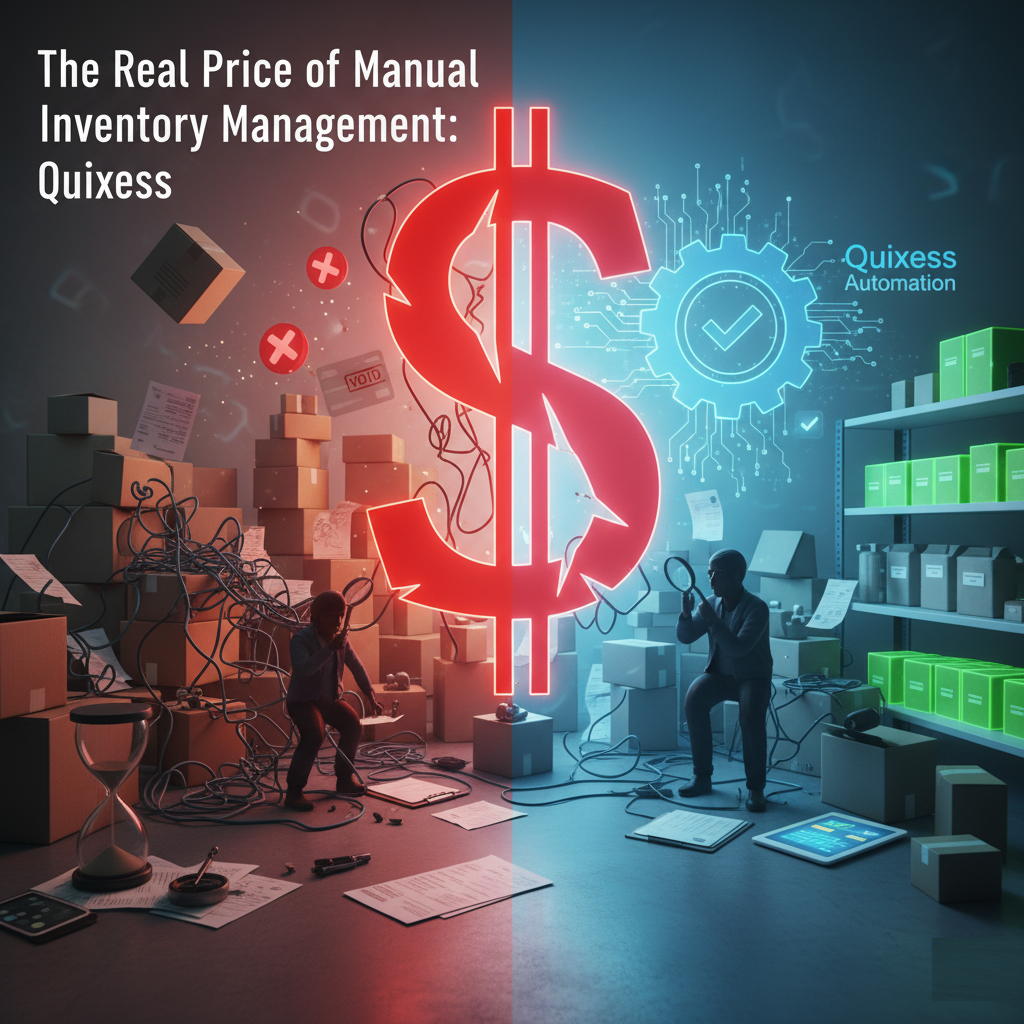
Inventory management is a core function for any business that sells products. Yet, many still rely on manual methods, often with the false belief that it saves money.
The truth is that manual inventory management is a costly practice.
It hides a variety of expenses, from lost time and human error to missed sales and damaged customer relationships.These hidden costs can silently erode profitability and hinder growth.
The Basics of Inventory Management
Inventory management is the backbone of any product-based business. It’s the system that ensures the right products are available, in the right quantity, at the right time.
Whether you’re managing a small online store or a large e-commerce enterprise, how you track, store, and replenish your stock determines both your profitability and your customer satisfaction.
At its core, inventory management involves monitoring stock levels, forecasting demand, ordering products, and maintaining accurate records.
Businesses typically use one of two main approaches: manual inventory systems or automated inventory systems.
The manual inventory system relies on human effort—spreadsheets, handwritten logs, and visual stock checks. While this method works for very small businesses, it often leads to inefficiencies as operations scale.
In fact, many small retailers operate under a periodic inventory system, where stock is counted only at specific intervals—often monthly or quarterly—rather than continuously.
This is a common manual inventory system example, especially among brick-and-mortar shops still using pen-and-paper ledgers.
Automated inventory systems, on the other hand, leverage technology to streamline these tasks.
With automation tools like Quixess, businesses can synchronize stock across multiple channels, prevent overstocking or stockouts, and gain real-time insights into inventory performance—something neither a periodic inventory system nor a periodic stock system can offer.
Efficient inventory management is more than just logistics—it’s strategic. It directly influences your cash flow, customer satisfaction, and ability to scale.
What Is an Automated Inventory System?
An automated inventory system uses technology to track inventory levels, manage stock movements, and generate data insights without relying on manual input.
Instead of manually entering data into spreadsheets or conducting frequent physical counts—as required under a periodic inventory system—automated systems use software integrations, sensors, and digital updates to monitor every product’s journey—from supplier to warehouse to customer delivery.
For instance, when an order is placed, the system automatically deducts the sold items from the inventory count across all sales channels.
When stock falls below a predefined threshold, it can even trigger reorder alerts or place purchase orders automatically.
This contrasts sharply with periodic system accounting, where the cost of goods sold is only calculated at the end of an accounting period.
In fact, a periodic inventory system measures cost of goods sold by using the formula: Beginning Inventory + Purchases – Ending Inventory.
This backward-looking method lacks the real-time accuracy modern businesses need. Meanwhile, a perpetual accounting system updates inventory records continuously with every transaction—much like what Quixess enables.
A perpetual method inventory approach ensures up-to-the-minute visibility, reducing guesswork and stock discrepancies.
You can even find a sample of perpetual inventory system in action across most large retailers today, where every barcode scan instantly adjusts inventory levels.
Automation reduces errors, speeds up order fulfillment, and enables businesses to operate with agility. It turns inventory management from a time-consuming chore into a competitive advantage.
Modern tools like Quixess take this concept further by offering supplier integration, multi-channel syncing, and real-time reporting—allowing business owners to focus on growth rather than daily operational chaos.
Role of Inventory Management in E-commerce
In the e-commerce landscape, effective inventory management is the difference between thriving and merely surviving.
Customers expect instant product availability, accurate stock information, and fast shipping. Falling short on any of these can result in lost sales, poor reviews, and reduced brand loyalty.
Manual tracking can’t keep up with the pace of digital retail. Each sale, return, and supplier update must reflect instantly across all platforms—whether on Shopify, Amazon, or your own website.
Without automation, inconsistencies can quickly spiral into costly mistakes. This is where transitioning from a periodic inventory method to a digital inventory solution becomes essential.
Unlike periodic methods that rely on physical counts and lagging data, digital inventory systems provide live synchronization and predictive analytics.
Automated inventory management systems empower e-commerce businesses with:
- Real-time data: Accurate stock levels across all channels.
- Efficient fulfillment: Orders routed automatically to the nearest warehouse or supplier.
- Better forecasting: Insights that help plan seasonal demand and avoid overstocking.
- Customer satisfaction: On-time deliveries and fewer order cancellations.
This is where Quixess steps in, bridging the gap between technology and usability. It allows sellers to automate processes end-to-end, from supplier sourcing to return management—all in one centralized platform.
What Is Manual Inventory Management?
A manual inventory system involves tracking stock using pen and paper, spreadsheets, or basic tools without automation. Businesses often use this method when they’re just starting out or have a small product catalog.
For example, a boutique candle store might use an Excel sheet to record how many candles were made, sold, or restocked each week. The store owner manually updates the data after each sale or shipment.
This is a classic manual inventory system example—simple, low-tech, and manageable only at a micro scale. While this approach works initially, it becomes overwhelming as order volume increases.
The time spent reconciling data or double-checking stock levels can eat into hours that could otherwise be spent on marketing or product development.
This is why understanding the advantages and disadvantages of manual inventory system is critical before scaling up.
Advantages of Manual Inventory Systems
- Low Cost for Small Operations: Manual tracking requires minimal upfront investment—no software licenses, training, or IT setup.
For small or seasonal businesses, this simplicity can be an advantage. - Full Control: Business owners have direct visibility and control over each entry. This can help them stay personally connected to their stock.
- Flexibility: There’s no dependency on software updates or internet connectivity. You can adjust records anytime, anywhere.
Disadvantages of Manual Inventory Systems
- Human Error: Mistakes in data entry or counting can cause discrepancies that ripple through the entire business. A single error may result in stockouts, overstocking, or missed reorder opportunities.
- Time-Consuming: Updating spreadsheets or conducting physical counts consumes hours that could be spent growing the business.
- Lack of Real-Time Data: Inventory information is often outdated by the time it’s reviewed—especially under periodic inventory system rules—leading to poor forecasting and missed opportunities.
- Scalability Issues: As order volume grows, manual methods quickly become unmanageable. Businesses risk losing track of orders or disappointing customers with delays.
- Hidden Costs: While manual tracking appears cheaper upfront, it often results in hidden costs—from labor inefficiencies to lost sales due to inaccurate data.
For businesses that want to remain competitive, moving from manual systems to an automated, real-time platform is no longer optional—it’s essential.
Manual vs. Automated Inventory System
The main difference between manual and automated inventory systems lies in efficiency, accuracy, and scalability.
A manual system relies entirely on human effort—employees update spreadsheets, count stock by hand, and reconcile records manually.
While it may work for small businesses or limited product lines, it’s slow, error-prone, and difficult to scale. Mistakes in data entry or miscounted items can lead to overstocking, stockouts, and lost sales.
Moreover, updating and verifying stock levels takes valuable time away from strategic business activities.
In contrast, an inventory perpetual system continuously tracks inventory changes, offering precision that manual or periodic approaches simply cannot match.
Automated inventory systems, like Quixess, eliminate these challenges. They track every product in real time, automatically updating stock levels across all sales channels the moment a sale or return occurs.
These systems not only reduce human errors but also provide actionable insights into sales trends, demand forecasting, and supplier performance.
Automation allows businesses to scale without being bogged down by repetitive tasks, ensuring operational efficiency and customer satisfaction.
In short, manual inventory system may suffice for very small operations, but for growing e-commerce businesses, automation—and ideally a shift toward a perpetual inventory system example like Quixess—is the only way to stay accurate, agile, and competitive.
Implementing Automated Inventory Management
Transitioning from a manual inventory system (or even a periodic inventory system) to an automated system may seem intimidating, but modern platforms make it straightforward.
Here’s how a typical implementation process looks:
- Evaluate Your Current System: Assess how you currently track inventory—whether via spreadsheets, periodic system accounting, or warehouse logs.
- Select the Right Tool: Choose a system like Quixess that supports your specific business model—multi-channel sales, supplier integration, and automated syncing.
- Migrate Your Data: Import existing stock data into the new platform. This ensures a smooth transition without losing historical insights.
- Integrate with Sales Channels: Connect your online stores, suppliers, and shipping systems to ensure a unified workflow.
- Train Your Team: Provide brief training to ensure everyone understands the new system’s features—including how it differs from under a periodic inventory system workflows.
- Monitor and Optimize: Use real-time analytics to fine-tune purchasing, pricing, and fulfillment strategies.
By following these steps, businesses can quickly move from chaos to control—transforming daily operations into streamlined, data-driven processes.
Inventory Management Software for Keeping Automated Inventory
Modern inventory management software is designed to simplify complex operations. Key features include:
- Real-Time Stock Updates: Automatically adjusts inventory after each sale or return—unlike periodic inventory method practices.
- Multi-Channel Syncing: Keeps listings consistent across all platforms.
- Demand Forecasting: Predicts future stock needs using data analytics.
- Supplier Integration: Connects with suppliers to automate reorders and product sourcing.
- Order Fulfillment Automation: Tracks every step from purchase to delivery.
- Comprehensive Reporting: Generates insights for better business decisions.
Software like Quixess offers all these features in one platform, enabling e-commerce businesses to manage everything—from sourcing to shipping—without switching between multiple tools.
This is a far cry from traditional inventory perpetual system setups that still require manual reconciliation or from outdated periodic stock system approaches that leave businesses flying blind between counts.
The True Cost of Human Error
Manual processes are prone to human error, which is perhaps the most significant hidden cost.
A simple mistake in a spreadsheet or a miscounted item during a physical audit—common under periodic inventory system reviews—can lead to a domino effect of problems.
This can result in inaccurate stock levels, leading to either costly overstocking or damaging stockouts.
The time spent correcting these errors is time taken away from more productive tasks. This is a key reason why businesses should look for the best inventory management software.
Without an accurate inventory management system, businesses lack the real-time data needed for smart decisions.
This can lead to poor forecasting, where a company buys too much of a slow-moving item or too little of a best-seller. These mistakes directly impact your bottom line.
Labor and Time: The Hidden Expenses
Manual inventory system is incredibly labor-intensive. Employees spend hours on repetitive tasks like data entry, stock counting, and reconciliation—tasks that would be automated in a perpetual accounting system.
These hours are a direct cost to your business. The salary you pay for this administrative work could be better used for activities that generate revenue, such as marketing, sales, or product development.
A business that is using a free inventory management app might be saving on software costs, but it is likely paying a much higher price in wasted labor—especially if it still operates under periodic inventory system constraints.
The time lost to these manual tasks is also a significant opportunity cost. It prevents your team from focusing on strategic growth. This is a fundamental challenge for many businesses.
They are stuck in a cycle of reactive work, trying to manage the symptoms of a broken system rather than fixing the underlying problem.
Lost Sales and Customer Dissatisfaction
Inaccurate inventory data leads directly to lost sales. If a customer tries to buy an item that your website says is in stock, but it’s actually not, they will be disappointed.
This negative experience can cause them to abandon your brand and shop with a competitor.
In a competitive market, a customer’s trust is a fragile thing. A single mistake can lead to lost loyalty and negative word-of-mouth.
The inability to track stock accurately—something a digital inventory platform solves instantly—means you can’t fulfill orders efficiently. This can lead to shipping delays and other customer service issues.
The importance of inventory management is therefore not just about stock, but about customer satisfaction and brand reputation.
For those interested in the details of how to avoid these issues, resources like an inventory management PDF or a dedicated inventory management course can provide valuable guidance—including inventory management examples from real-world businesses that transitioned from periodic inventory system to automated inventory perpetual system models.
The Power of an Inventory Management System
A modern inventory management system transforms your operations. It provides a single, real-time view of your entire stock.
This allows you to track every item from the moment it arrives in your warehouse to the moment it leaves for a customer.
This visibility helps you to make data-driven decisions about everything from purchasing to pricing. Tools like Quixess are designed to automate these processes.
When a sale is made on one of your e-commerce channels, the system automatically adjusts the stock levels across all your other platforms.
This prevents overselling and ensures that your online inventory is always accurate—something impossible under a periodic inventory system.
The Role of Quixess in Inventory Automation
Quixess is a powerful inventory management app that connects your disparate systems. It eliminates the need for manual data entry and provides automated alerts for low stock levels.
This is a proactive approach to management, rather than a reactive one—unlike the delayed insights you get under periodic inventory system reviews.
The solution provides a variety of features that are essential for modern businesses:
- Real-Time Syncing: Ensures that your inventory is always up-to-date across all your sales channels.
- Centralized Control: Manages all your inventory from a single dashboard, regardless of where it is stored.
- Automated Alerts: Notifies you when stock is low, so you can reorder before a stockout occurs.
- Detailed Reporting: Provides deep insights into sales trends, product performance, and stock velocity.
Beyond the Basics: Advanced Inventory Tools
Modern inventory management tools go far beyond simple stock counting. They can provide sophisticated analytics and forecasting capabilities. For example, a system can analyze historical sales data to predict future demand.
This allows you to order the right amount of stock at the right time, minimizing both storage costs and the risk of stockouts.
The availability of a wide range of inventory management software means that businesses of all sizes can find a solution that fits their needs.
From simple inventory management app free options for small businesses to enterprise-level systems, there is a tool for every stage of growth.
You can also find plenty of inventory management examples of successful companies who have leveraged automation to scale their operations—including those who moved from manual inventory system example workflows to full perpetual inventory system example deployments.
These case studies highlight the tangible benefits, such as reduced costs and increased sales.
A Look at Different Techniques and Applications
There are various inventory management techniques, such as Just-in-Time (JIT) and ABC analysis. These techniques are often difficult to implement manually.
However, a modern inventory management system automates these processes.
A system can classify your inventory into different categories based on value and sales velocity, helping you focus your efforts on the most important products.
A skilled professional in this area might have a specific inventory management job. They would use these tools to analyze data and develop strategies to optimize the flow of goods.
These roles are critical to a company’s financial health. For those looking to learn more, an inventory management course provides the perfect entry point.
The knowledge gained can be applied to a personal inventory management project to see the benefits firsthand.
The Investment That Pays for Itself
The decision to invest in a modern inventory management system is one that pays for itself many times over.
The money you save from reduced errors, increased efficiency, and improved customer satisfaction will far outweigh the initial cost. It’s a strategic move that sets your business up for long-term success.
The old manual inventory system ways—along with outdated periodic inventory system practices—are becoming a liability. Your competitors are likely already using automation to streamline their operations.
The real price of manual inventory management is the price of falling behind.
By embracing a solution like Quixess, you are not just improving your inventory process; you are building a smarter, more resilient business—powered by a true inventory perpetual system.
Ultimately, effective inventory management is the foundation of a profitable and scalable business, and it is a task that should be trusted to the power of automation—not guesswork, spreadsheets, or end-of-period calculations inherent in periodic system accounting.
Experience our premier-level service for free, giving you access to cutting-edge tools and support to elevate your business. After the beta period, enjoy a 10% discount on any subscription level you choose, ensuring ongoing value
About Quixess: Transform Your Business
Quixess is built for e-commerce sellers who want to simplify, automate, and scale.
Our platform streamlines your operations by integrating everything—order processing, supplier management, and inventory tracking—into one intelligent system.
By automating repetitive tasks, Quixess helps reduce errors, improve efficiency, and free your team to focus on business growth.
From small online boutiques to large-scale enterprises, Quixess adapts to your needs, transforming daily challenges into organized, data-driven workflows—whether you’re escaping a manual inventory system example or upgrading from a periodic inventory method.
Supplier Integration
Supplier integration is one of Quixess’s most powerful features. It connects your business with multiple suppliers, allowing you to source products seamlessly and maintain a resilient supply chain.
Step 1: Supplier Sourcing
Quixess helps identify reliable suppliers that meet your business standards for quality, cost, and delivery. This ensures a smooth and efficient supply chain.
Step 2: Supplier Integration
Integrate your chosen suppliers directly with the Quixess system. No manual setup—just seamless connectivity.
Step 3: Configure Your Supplier
Set preferences, update supplier details, and optimize fulfillment settings with just a few clicks.
Step 4: Connect Your Store
Link your e-commerce store to a vast supplier network, enabling instant product updates and availability.
Step 5: Publish Inventory
Effortlessly publish inventory across multiple marketplaces—keeping your catalog consistent and up to date everywhere you sell.
This process eliminates delays, reduces manual coordination, and ensures your business runs smoothly from sourcing to selling.
Automation: Smarter Management for Modern Businesses
Quixess automation is designed to handle complexity so you don’t have to. Managing multiple vendors, orders, and returns becomes effortless through intelligent automation.
Inventory Management
Track and control stock in real time, ensuring optimal inventory levels while minimizing waste. Quixess helps you maintain balance—never too much, never too little.
Order Processing
Quixess automates the order process from purchase to delivery. It checks inventory, confirms orders, processes payments, and sends updates automatically.
Order Fulfillment
From packaging to shipping and delivery, Quixess integrates with logistics partners to ensure on-time fulfillment and accurate tracking—reducing manual intervention.
Return Management
Returns are part of e-commerce, but they don’t have to be painful. Quixess automates the return flow, updating inventory, issuing refunds, and notifying customers seamlessly.
Benefits of Automated Management with Quixess
- Streamlined Operations
Automation reduces manual work, prevents bottlenecks, and keeps operations running smoothly. - Increased Efficiency and Productivity
Repetitive tasks like inventory updates or order tracking happen automatically, freeing up your team for strategic initiatives. - Scalability
Handle higher order volumes effortlessly without hiring additional staff or increasing administrative load. - Cost Savings
Cut operational expenses by reducing labor costs and eliminating costly human errors. - Competitive Advantage
Deliver faster, more reliable service than competitors still managing manually. - Reduced Errors
Automation eliminates data-entry mistakes and ensures consistency across systems. - Better Compliance
Stay audit-ready with accurate records and traceable inventory movements. - Real-Time Inventory Tracking
Every sale, restock, or transfer automatically updates your stock count—no guesswork, no gaps.
The Future of Inventory Automation
As e-commerce continues to evolve, automation isn’t just an upgrade—it’s a necessity.
Platforms like Quixess give businesses the power to unify their operations, streamline fulfillment, and manage suppliers intelligently. The result? Faster growth, fewer errors, and happier customers.
If your business is still relying on manual systems, the time to change is now. Automation with Quixess means fewer headaches, higher efficiency, and long-term scalability.
Ready to experience a smarter way to manage inventory?
Streamline Your Operations with Quixess, experience our premier-level service for free, giving you access to cutting-edge tools and support to elevate your business
.After the beta period, enjoy a 10% discount on any subscription level you choose, ensuring ongoing value
Join the Quixess today and get early access to our full suite of automation tools. Save time, reduce costs, and transform your business operations—before your competitors do.