

Return Rate Management Across Marketplaces: How to Reduce Refunds and Chargebacks on Amazon, Walmart, and Shopify
Returns and chargebacks silently erode profit margins across Amazon, Walmart, and Shopify. A fragmented return management approach creates inconsistent policies, delays refunds, and triggers preventable chargebacks that damage seller reputation and account health. Centralized return rate management across all channels reduces refunds, prevents disputes before they escalate, and improves customer satisfaction simultaneously.
Why Return Rate Management Matters Across Marketplaces
The Hidden Cost of Inconsistent Return Policies
Each marketplace operates under different return windows and refund timelines. Amazon allows 30 days for standard returns; Walmart extends to 90 days; Shopify leaves return windows to the seller’s discretion. Inconsistent policies across channels confuse customers and spike disputes. A 2025 study by the National Retail Federation found that inconsistent return policies increase customer dispute rates by 34% among multi-channel sellers. Each chargeback costs $15-$100 in fees, depending on your payment processor.
How Chargebacks Compound Across Multiple Channels
Chargebacks are the silent killer of multi-channel seller accounts. When customers dispute charges with their bank instead of requesting refunds through your return system, marketplaces interpret this as a red flag. Each marketplace monitors chargeback ratios independently. Amazon suspends accounts when chargeback rates exceed 1%; Walmart enforces a 0.9% threshold; Shopify flags accounts above 1.5%. A centralized return management system flags communication breakdowns and prevents disputes before they escalate.
Reduce Amazon Return Rates Through Proactive Quality Control
Align Product Descriptions with Customer Expectations
Amazon’s return rate threshold sits between 3-5%; exceed 5-10% and Amazon restricts selling privileges. Approximately 68% of Amazon returns stem from misaligned customer expectations caused by incomplete product descriptions.

Photo by Quixess Social
Implement detailed size charts comparing your brand’s sizing against standard measurements. Include material specifications, care instructions, and usage limitations upfront. High-resolution images showing scale and real-world application reduce return rates significantly. A 2025 analysis of top Amazon sellers found that those with detailed size charts and material specs experienced 22% lower return rates than competitors with minimal descriptions.
Monitor Return Reasons in Real Time
Amazon provides return reason data in Seller Central. Real-time monitoring reveals which products are driving returns before they breach your threshold. If 40% of returns for a product cite “item defective or doesn’t work,” that’s a sourcing problem. If 35% cite “item not as described,” your listing needs revision. If 25% cite “no longer needed,” that signals mismatched customer expectations. Order management platforms allow sellers to centralize Amazon return data alongside Walmart and Shopify returns, making pattern identification faster and enabling sellers to prioritize fixes based on impact.
Walmart Chargeback Prevention and Refund Automation
Understand Walmart’s Strict Chargeback Policies
Walmart enforces a 1% chargeback threshold. If your chargeback rate exceeds 1% of transactions, your account faces immediate suspension. Most Walmart chargebacks don’t stem from fraud or defects alone. Instead, they occur when refunds are processed slowly or customers never receive confirmation that their return was approved. A customer who waits five days without hearing about their refund is more likely to file a chargeback than one who receives an automated notification within 24 hours.

Photo by Quixess Social
Automate Refund Processing to Prevent Disputes
Implement automated refund workflows that process returns within 24-48 hours of approval. This speed reduces the window during which customers feel uncertain about their money and demonstrates to Walmart that your operation is efficient and trustworthy.
Shopify Refund Automation and Cross-Marketplace Return Logistics
Streamline Shopify Refund Workflows
Shopify allows significantly more flexible return policies than Amazon or Walmart, but inconsistent refund handling still damages brand reputation. Configure Shopify refund automation to process refunds based on return reason. A customer returning an item due to “wrong size” might receive an instant refund, while a “defective product” claim triggers a quality review before processing. Centralized platforms enable sellers to manage returns across Shopify, Amazon, and Walmart from one dashboard, eliminating the need to log into multiple platforms and reducing the risk of processing errors or missed deadlines.
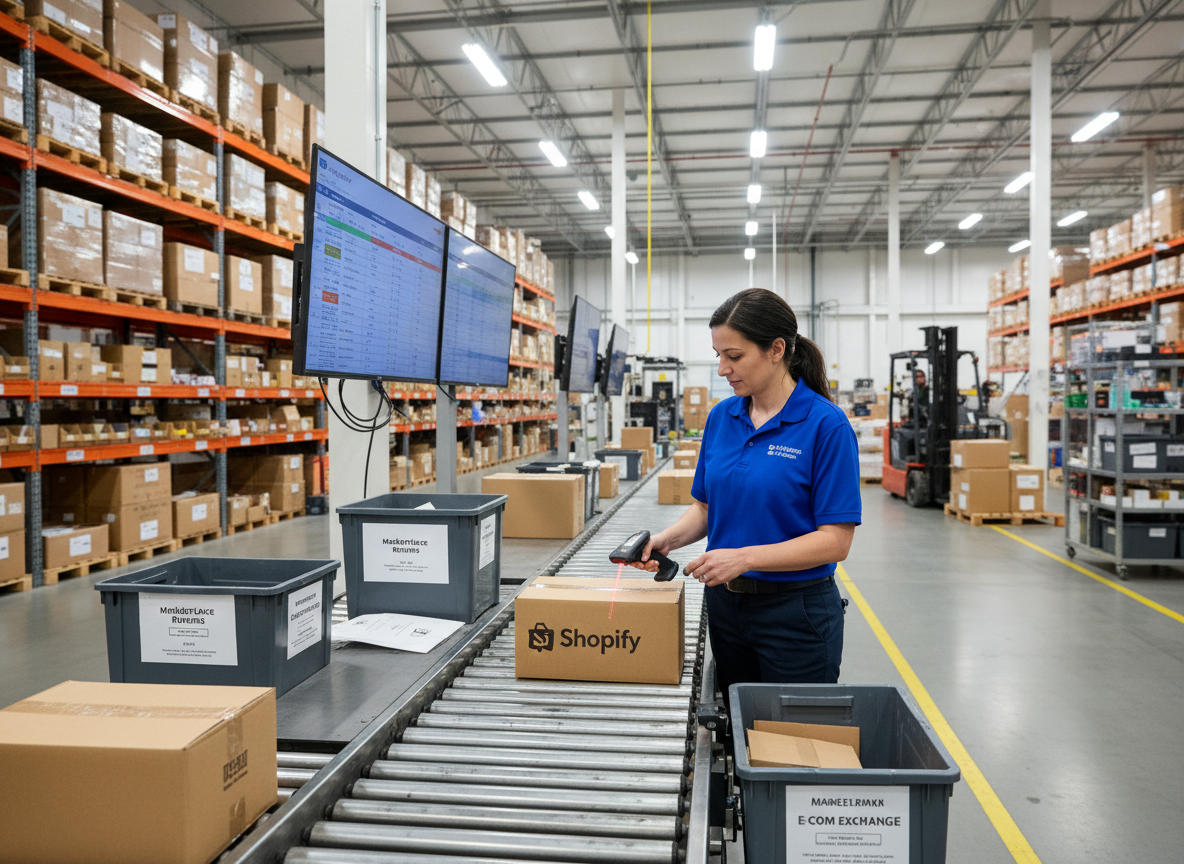
Photo by Quixess Social
Optimize Return Shipping and Inventory Recovery
Implement a unified return logistics strategy by using the same return address and process across all channels. This simplification reduces customer confusion and allows you to consolidate returned inventory in one location. Track returned inventory in real time so items can be restocked, refurbished, or liquidated quickly. Centralized inventory management across marketplaces ensures that restocked items are immediately available for sale rather than sitting in a warehouse, maximizing the value extracted from each return.
Conclusion
Return rate management across Amazon, Walmart, and Shopify requires consistency, speed, and visibility, three elements that manual processes cannot deliver at scale. By aligning return policies, automating refund processing, and tracking returns centrally, sellers protect account health, reduce chargebacks, and build customer trust. Audit your current return processes across all channels and identify where automation and centralization can save time, reduce disputes, and recover lost inventory value. If you’re managing returns through spreadsheets or disconnected systems, consolidating your return workflows into a single platform transforms returns from a liability into a manageable, predictable process that strengthens your marketplace standing.