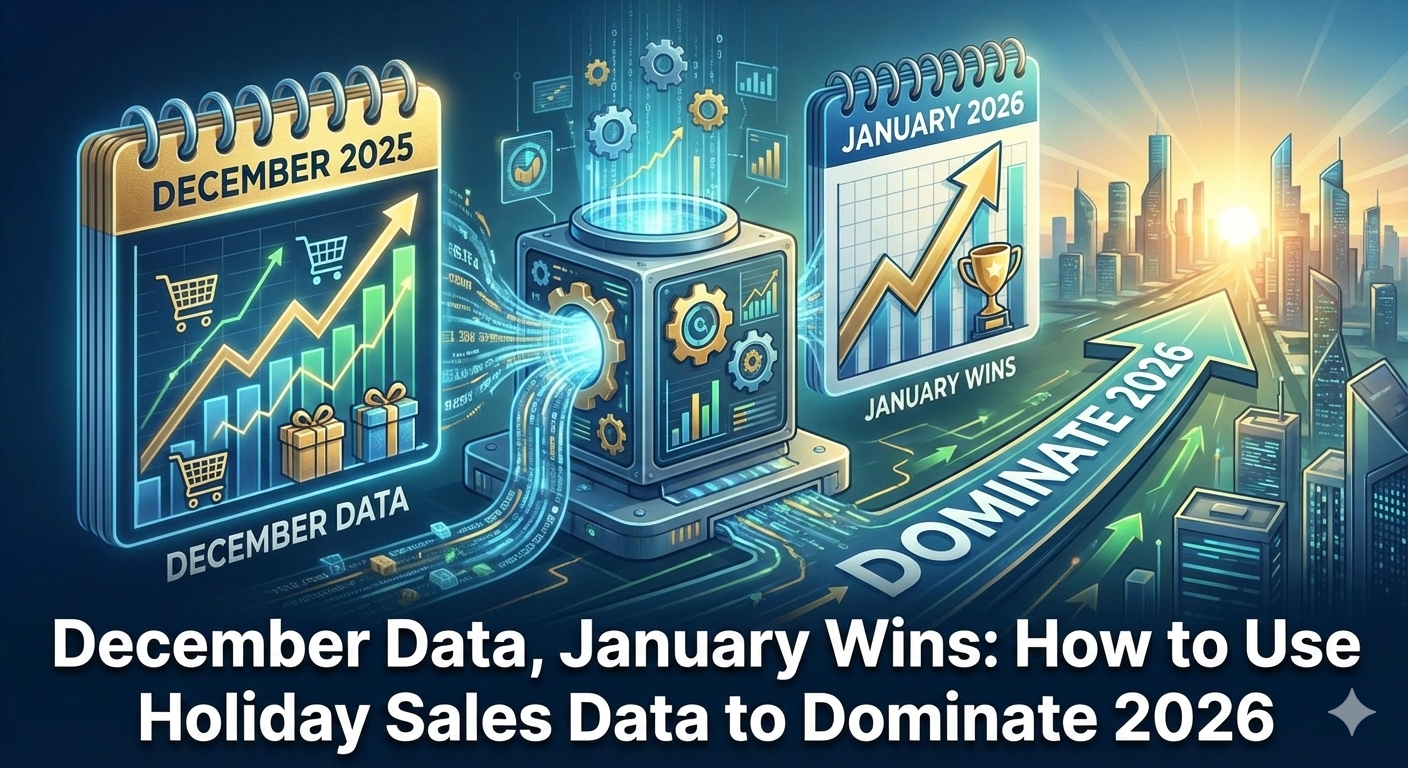
Learning how to use holiday sales data effectively can completely reshape your e-commerce approach for the entire year ahead.
The insights hidden in those December numbers reveal customer preferences, emerging patterns, and untapped opportunities that guide smarter, more confident decisions in 2026.
Consider Liam, a dedicated online seller from Denver who runs a store focused on wellness, fitness, and home organization products.
Back in December 2025, he experienced the usual holiday rush. Gift sets flew off the shelves bundled planners with pens, luxury skincare kits, and cozy wellness baskets for friends and family.
Customers bought generously, often adding extras at checkout. Liam felt the thrill of record days.
But something interesting happened when he sat down in early January to review his dashboard.
He noticed clear trends: certain items dominated as gifts, while others barely moved. Traffic sources varied by product. Some promotions converted amazingly, others fell flat.
Instead of closing the books and moving on, Liam dug deeper. He learned how to use holiday sales data to spot winners early, predict January shifts, and plan inventory for the rest of the year.
By mid-January, Liam launched targeted campaigns based on his findings. He promoted individual wellness items to past gift buyers with messages like “Treat yourself now.”
He restocked top performers and cleared slow movers strategically. The result? His typically quiet January became one of his strongest months ever. Sales stayed strong into spring.
Many sellers overlook this step. They celebrate December wins, then scramble in slower periods. Yet mastering how to use holiday sales data creates a real competitive edge.
Let’s explore the key insights from the 2025 season and practical, step-by-step ways to apply them for lasting success in 2026.
Major Highlights from the 2025 Holiday Shopping Season
The 2025 holidays proved resilient despite ongoing economic pressures like inflation and cautious spending.
Here are the standout numbers:
- Total U.S. retail sales for November and December climbed about 4.2%, pushing past the $1 trillion mark for the first time in history.
- Online sales drove much of the growth, rising 7.8% year-over-year.
- Cyber Week alone generated $44.2 billion in online spending, a solid 7.7% increase.
- Black Friday set a new online record at $11.8 billion.
- Cyber Monday followed closely with $14.25 billion, up 7.1%.
- Mobile shopping dominated, accounting for more than 50% of all transactions.
- Buy Now, Pay Later (BNPL) options exploded in popularity, surpassing $1 billion on Cyber Monday.
- AI-powered recommendations and search influenced billions in purchases, marking a major shift in how shoppers discover products.
- Early shopping spread out spending, with many deals starting in October.
Shoppers showed discipline too. They prioritized meaningful gifts, experiences, and essentials.
Deals mattered more than ever consumers hunted promotions aggressively while cutting back on non-essentials.
Why Holiday Data Is Your Secret Weapon for the Year Ahead
December isn’t just the end of one year it’s the foundation for the next.
Understanding how to use holiday sales data uncovers valuable clues:
- Which products resonated most (and why)
- Customer segments that spent the biggest
- Channels and traffic sources that delivered results
- Pricing strategies that worked best
- Promotions that drove urgency without eroding margins
- Common cart abandonment triggers
- Post-purchase behaviors like returns, reviews, and repeats
This information predicts post-holiday shifts. Gift-focused buyers become self-focused in January. Indulgers seek balance and resets.
Liam discovered that his wellness bundles sold primarily as gifts to women aged 35-54. In January, he targeted the same segment with personal offers and watched conversions soar.
Practical Guide: How to Use Holiday Sales Data Step by Step
Transform numbers into a clear action plan.
- Collect Comprehensive Data Pull reports from every platform: Shopify analytics, Amazon Seller Central dashboards, eBay performance summaries, Etsy shop stats, and any others. Include sales, traffic, conversions, average order value, customer demographics, and geographic details.
- Categorize and Rank Performance Sort products by revenue, units sold, profit margin, and customer ratings. Highlight surprises items that exceeded expectations or disappointed.
- Dive Into Customer Insights Examine search terms used on your site, popular browse paths, time spent on pages, and devices. Identify which emails or ads triggered purchases.
- Compare Year-Over-Year Trends Spot growth areas: Did mobile traffic increase? BNPL usage rise? Certain categories gain traction?
- Evaluate Marketing Effectiveness Measure ROI on ads, emails, social campaigns, and influencers. Note messaging that resonated.
- Forecast Inventory and Cash Flow Restock proven winners. Plan clearances for slow movers. Adjust for expected January demand.
- Segment Customers for Targeted Follow-Ups Group buyers: gift purchasers, high-spenders, first-timers. Prepare personalized January outreach.
Turn December Insights Into January Momentum
How to use holiday sales data creates powerful post-holiday strategies.
- Repurpose top gift items for personal use: “Loved gifting our planner set? Get one for yourself at 20% off.”
- Launch resolution-themed bundles based on holiday bestsellers.
- Email past buyers with tailored recommendations and encouragement.
- Use scarcity from low holiday stock to build urgency ethically.
- Highlight customer stories from holiday reviews to build trust.
Liam segmented gift buyers and sent January campaigns focused on self-improvement. His open rates climbed, and sales followed.
Seamlessly Manage Sales Across All Channels
Holiday shoppers jumped between platforms discovering on Instagram, researching on Amazon, buying on Shopify or Etsy.
Sync everything effortlessly. A single dashboard connects Shopify, Amazon, eBay, Wix, Etsy, Square, and WooCommerce in real time.
Enjoy benefits like:
- Instant inventory updates to prevent oversells
- Unified order processing and shipping
- Centralized customer communication
- Clear, one-view reporting on performance
This setup frees time for strategy while ensuring smooth experiences.
Ready to apply 2025 lessons for a stronger 2026?
Enjoy a 10% discount on any subscription level you choose, ensuring ongoing value and streamlined multi-channel operations.
Avoid These Common Data Analysis Traps
Even experienced sellers stumble here:
- Reviewing only top-line revenue, ignoring margins and costs
- Siloing data by platform instead of viewing holistically
- Delaying analysis until February or later
- Overlooking qualitative signals like reviews and support inquiries
- Failing to act on findings data without application wastes potential
Start your review in early January for maximum advantage.
The Long-Term Rewards of Consistent Data Habits
Sellers who regularly practice how to use holiday sales data build antifragile businesses.
They forecast demand accurately. They minimize waste and stockouts. They personalize offers effectively. They spot trends early. They scale with confidence.
Liam now conducts quarterly deep dives. His growth feels predictable and sustainable no more dramatic seasonal swings.
How to Use Holiday Sales Data to Dominate 2026 – FAQs
Q: Why is it important to analyze holiday sales data right after the season?
A: Holiday sales data reveals your top products, best traffic sources, and customer preferences. Analyzing it early ideally in January lets you make quick adjustments for post-holiday campaigns and plan inventory for the rest of the year while insights are fresh.
Q: What key metrics should I look at in my holiday sales data?
A: Focus on revenue by product, profit margins, average order value, conversion rates by channel, top traffic sources, customer demographics, return rates, and best-performing promotions. Compare everything to previous years for trends.
Q: How can holiday sales data help with January marketing?
A: It shows what gift buyers loved. Target them with personalized emails like “Gifted our planner? Get one for yourself.” Create resolution bundles from popular holiday items and use proven messaging that worked in December.
Q: What were the biggest holiday shopping statistics for 2025?
A: U.S. holiday retail sales grew about 4.2% to over $1 trillion. Online sales rose 7.8%, with Black Friday hitting $11.8 billion and Cyber Monday $14.25 billion. Mobile drove over half of purchases, and BNPL usage soared.
Q: How do I combine data from multiple platforms like Shopify, Amazon, and Etsy?
A: Use a single dashboard that pulls reports from Shopify, Amazon, eBay, Wix, Etsy, Square, and WooCommerce. This gives you a unified view of sales, inventory, and customers without manual spreadsheets.
Q: Can small sellers benefit from holiday sales data analysis?
A: Absolutely often more than big brands. Small sellers can spot niche winners, personalize faster, and adjust inventory quickly. Data helps level the playing field against larger competitors.
Q: What common mistakes do sellers make with holiday data?
A: Waiting too long to review, focusing only on revenue (not margins), ignoring customer feedback in reviews, and not acting on insights like restocking winners or targeting past buyers.
Q: How does holiday data help with inventory planning for 2026?
A: It shows evergreen performers vs. seasonal flops. Restock proven items early, clear slow movers strategically, and forecast demand based on repeat patterns and category growth.
Q: Should I look at qualitative data too, not just numbers?
A: Yes! Reviews, support tickets, and customer messages reveal why products succeeded or failed. Combine them with sales numbers for deeper understanding.
Q: How can I use holiday data to improve ad performance next year?
A: Identify winning creatives, audiences, and channels from December. Reuse or refine them for 2026. Note which messages (e.g., gift-focused) converted best and adapt for other seasons.
Q: Is holiday sales data useful even if my season was slow?
A: Especially then! It highlights what didn’t work wrong products, poor promotions, or weak traffic. Use it to pivot early and avoid repeating mistakes in 2026.
Q: How often should I review sales data throughout the year?
A: Monthly quick checks and quarterly deep dives keep you agile. Holiday data sets the annual baseline, but ongoing reviews help adjust to new trends.
Ready to turn your 2025 holiday insights into a stronger 2026?
Enjoy a 10% discount on any subscription level you choose, ensuring ongoing value and seamless multi-channel management.
How to use holiday sales data isn’t about looking back it’s about charging forward with clarity and confidence.
Data Drives Destiny
The 2025 holidays demonstrated consumer strength and adaptability. Shoppers spent thoughtfully, embraced technology, and valued meaningful purchases.
Master how to use holiday sales data to decode what worked, understand why, and replicate success bigger in 2026.
Dive into your numbers today. Identify patterns. Craft targeted plans. Turn quiet months into growth opportunities.
Your December data holds the keys unlock them now.
Enjoy a 10% discount on any subscription level you choose, ensuring ongoing value and seamless multi-channel management.
How to use holiday sales data isn’t about reflection alone it’s about building momentum that carries through the entire year.