Do you feel like your e-commerce business is running you, instead of the other way around? E-commerce automation is the quiet engine that separates thriving online businesses from those stuck in a cycle of tedious, manual work.
Consider this a wake-up call, because the digital economy never slows down, and neither should your efficiency.
We all start an online business with visions of sales charts rocketing skyward.
Consequently, we often get bogged down in the minutiae: chasing inventory, updating spreadsheets, sending follow-up emails, and manually processing returns.
This is where opportunity fades. Is the sheer volume of daily tasks silently stealing your profit margin?
The truth is, scaling an online store is no longer about working harder; it’s about working smarter.
In fact, modern tools are designed to handle 80% of the repetitive tasks that eat up your day.
We’re going to dive deep into how intelligent systems like Quixess E-commerce Automation can revolutionize your entire operation.
Therefore, prepare to discover the essential types of e-commerce automation and how they secure a future for your brand.
The Landscape of Modern E-Commerce
The digital selling environment is becoming increasingly fractured, creating both complexity and opportunity. It’s no longer enough to run a single Shopify store.
Today’s successful seller is omnichannel, juggling inventory, pricing, and fulfillment across various e-commerce platforms and marketplaces.
For instance, they might be selling on their proprietary site while also utilizing Amazon automation business strategies and listing products on the Walmart Marketplace
The Blurring Lines: Platforms vs. Marketplaces
We need to first clarify the playing field. An e-commerce platform (like Shopify or BigCommerce) is your owned digital storefront—your brand, your rules, your customer data.
Conversely, a marketplace (like Amazon or eBay) is a third-party site where you rent a digital shelf alongside countless competitors.
The interesting shift is that many ecomm platforms are now introducing marketplace features. Which e-commerce platforms are introducing marketplace features like Prime?
This fusion demands sophisticated e-commerce automation to keep all streams of data flowing seamlessly.
Managing diverse inventory across these varied channels is the first major hurdle that automation must solve. Ultimately, this is the foundation of any sustainable growth strategy.
The Rise of Niche E-commerce Models
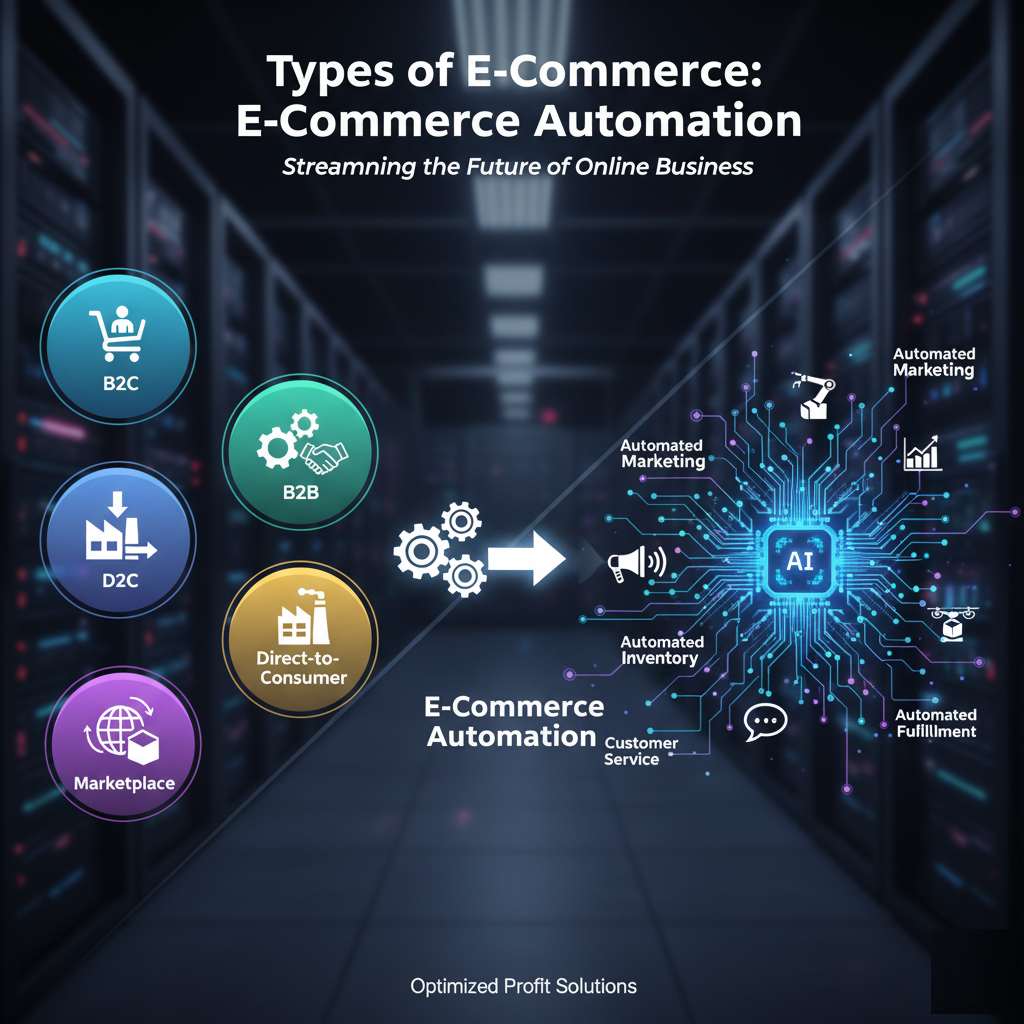
Beyond the major players, the business models themselves are diversifying. Specifically, two models that rely heavily on automation for efficiency are dropshipping and print-on-demand.
Both allow sellers to operate without holding physical stock, shifting the complexity from warehousing to digital logistics.
- Dropshipping: This model requires specialized drop ship automation software. The key challenge here is syncing stock levels instantly with suppliers. A 40-cent discrepancy on one product, when multiplied across thousands of daily orders, can quickly become a five-figure problem.
- Print on Demand (POD): Automation here handles transferring a customer’s design choice to the best fulfillment partner. The best print on demand sites are those that integrate flawlessly with your selling channels, ensuring design files are sent and tracking numbers are returned with zero human intervention.
Backend Operations Automation
Backend operations are the unsung heroes—or hidden villains—of any online store. This category of e-commerce automation focuses entirely on the tasks that happen after the customer clicks “Buy.”
Furthermore, these systems ensure profitability and compliance.
Inventory and Product Sourcing Automation
Nothing kills customer trust faster than selling an item you don’t actually have. Therefore, inventory management must be the bedrock of your automation efforts.
- The Problem: Manually updating stock levels across five different channels (your store, Amazon, eBay, etc.) is simply impossible. You’re guaranteed to oversell or undersell, impacting both revenue and marketplace standing.
- The Automation Solution: An ecommerce automation engine connects to every sales channel and central warehouse. When a sale occurs on Channel A, the engine instantly deducts that item’s stock from the inventory pool for all other channels (B, C, D, and E). Thus, all listings are perpetually accurate.
- Product Sourcing Automation: For dropshipping or private-label models, the automation extends to suppliers. This software monitors supplier stock and pricing, automatically adjusting your own prices to maintain your desired profit margin. Moreover, if a supplier runs out of stock, the system can automatically pause the listing or switch to a secondary supplier without you lifting a finger.
Pricing and Repricing Intelligence
Price is the primary battleground on large marketplaces. As a matter of fact, successful sellers on Amazon make hundreds of price changes per day.
- The Problem: Setting a fixed price means you’re either leaving money on the table when competitors sell out, or losing the “Buy Box” when a competitor drops their price by a single penny.
- The Automation Solution: Dynamic pricing tools—a core component of e-commerce automation companies’ offerings—monitor the pricing of your top competitors in real-time. They use set rules (e.g., “Always be 5 cents cheaper than Competitor X, but never drop below a 15% margin”) to instantly adjust your price, giving you a competitive edge 24/7. Obviously, this is essential for high-volume, low-margin goods.
Stop Leaving Money on the Table!
If the thought of setting dynamic price rules and having perfect inventory synchronization across your e-commerce platforms excites you, it’s time to stop thinking and start acting.
The competition isn’t waiting. Consequently, you must embrace e-commerce automation.
Ready to reclaim hours of your day and unlock hidden profit?
We’ll show you exactly where your business is bleeding time and how our custom ecommerce automation engine can fix it.
Fulfillment and Logistics Automation
Fulfillment is the point where the rubber meets the road. Indeed, a perfectly executed marketing campaign can be ruined by a single late shipment or a messy return process.
E-commerce automation is essential here because logistics move at the speed of the marketplace, not the speed of a single person updating a spreadsheet.
Are you currently wasting time manually printing shipping labels for every order?
Shipping and Label Generation Automation
Generating a label seems simple enough, but the cumulative time spent clicking, copying addresses, and updating carriers is staggering.
Specifically, high-volume businesses see this task consume hours every day.
- The Problem: Manually choosing the best carrier (USPS, FedEx, etc.) based on weight, destination, and cost for every single order is a task prone to human error and inefficiency. Consequently, you end up overpaying for shipping or facing customer complaints about slow delivery.
- The Automation Solution: Logistics software, driven by an ecommerce automation engine, connects to all your carriers and your selling channels. Furthermore, it instantly retrieves the order details, calculates the best rate, and generates the shipping label in one click. In addition to this, it also automatically sends the tracking number back to the customer and updates the order status in your e-commerce platforms and marketplaces.
- Real-World Example: Consider an Amazon automation business selling hundreds of items daily. Without automation, this would require a full-time employee just for shipping. With it, the process is reduced to a few minutes of batch processing, freeing up capital for growth.
Multi-Warehouse and Drop Ship Automation
As your business grows, you may add a second warehouse, or you might rely heavily on drop ship automation software to fulfill orders directly from suppliers.
Therefore, managing which order goes where becomes a complex routing challenge.
- The Challenge: If a customer orders two items, and one is in Warehouse A while the other is in Warehouse B, the system must split the order, calculate two shipping labels, and track two separate shipments. Moreover, the customer should only receive one notification that makes sense.
- The Automation Solution: Smart fulfillment automation manages the logic. For example, it uses pre-set rules to route the order to the nearest warehouse that has all the items. If two items are required from two different locations, the system handles the split and ensures the customer experience remains unified. This is particularly vital for companies using product sourcing automation for a diverse inventory base.
Returns and Refunds Automation
No one likes dealing with returns, but they are a non-negotiable part of e-commerce.
Nonetheless, automating the returns process can turn a negative customer experience into a positive one.
- The Problem: Manually authorizing returns, generating return labels, and then processing the refund after the item is checked in is slow, often taking several days of employee time. As a result, customers get frustrated by the waiting period.
- The Automation Solution: A simple online portal handles the entire flow. The customer initiates the return, the system checks the order history and automatically generates a pre-paid return label based on the reason code. Hence, the refund can often be processed the day the item is scanned by the carrier, drastically improving customer satisfaction. This efficiency is critical for maintaining high seller ratings on platforms like Walmart Marketplace.
Customer Service and Marketing Automation
The most critical part of turning one-time buyers into loyal customers is the communication that happens around the purchase.
E-commerce automation is a powerful tool for personalization, making every customer feel valued without demanding hours from your marketing team.
Thus, this category directly impacts Lifetime Customer Value (LCV).
Are your customers hearing from you only when you want them to buy something new? This oversight is a common pitfall that automation easily fixes.
Therefore, we must shift the focus from transactional messages to building an ongoing relationship.
Furthermore, this is where the intelligence of e-commerce automation companies truly shines.
Post-Purchase and Loyalty Automation
The moment a customer’s package is delivered is the best time to start thinking about the next sale.
Consequently, smart marketing relies on triggers and sequences, ensuring timely and relevant messaging.
- The Trigger: A customer’s order status changes to “Delivered.”
- The Action: The system automatically sends an email 48 hours later asking for a product review and a rating. Afterward, it sends a follow-up email a week later with a personalized coupon code for a related product. Specifically, this code might be 15% off a complementary item, intelligently selected based on their initial purchase.
- The Benefit: This entire sequence requires zero manual effort. It builds the foundation of a loyal customer base, dramatically boosting organic reviews and repeat purchases. In addition to this, this process is scalable whether you sell ten items or ten thousand, which is the hallmark of effective e-commerce automation.
Abandoned Cart and Replenishment Sequences
Abandoned cart recovery is one of the highest Return on Investment (ROI) forms of e-commerce automation.
Despite customers leaving their cart, there’s still a high chance they will complete the purchase with a small nudge.
- Abandoned Cart Automation: When a logged-in user leaves without purchasing, the system automatically sends a series of time-delayed emails: one after an hour, one after 24 hours (often with a small incentive), and a final one after three days. Therefore, your store recaptures lost sales without human intervention. This targeted outreach can recover up to 15% of otherwise lost revenue, proving its value instantly.
- Replenishment Automation: For consumable products (coffee, supplements, skincare, etc.), automation tracks the typical usage period. Finally, a prompt email is sent exactly when the customer is about to run out, encouraging a re-order. This kind of predictive personalization is why top ecomm platforms are integrating these features as standard. How much more loyal would your customers be if you helped them remember to restock before they ran dry?
Automated Review and Feedback Loops
Reviews are the lifeblood of trust in e-commerce, yet asking for them manually is tedious and inconsistent.
Moreover, different e-commerce platforms have different requirements for displaying reviews.
- The Solution: Automation tools are configured to send review requests only after a specific time delay that allows for product usage. In fact, the systems are often integrated to send review requests to both the third-party marketplace (Walmart Marketplace or Amazon) and your proprietary website. This two-pronged approach maximizes social proof across your entire ecosystem.
- Managing Negative Feedback: The system can also be programmed to filter. If a customer clicks a “1 or 2-star” rating in the email, they are directed to a private feedback form instead of a public review page. Consequently, you can address the issue directly before it harms your public reputation on e-commerce platforms and marketplaces.
Integrating Customer Service Automation
The goal here is not to replace human customer service, but to streamline the initial contact.
Hence, human agents can focus on complex issues that actually require empathy and creative problem-solving.
- Chatbot Triage: Modern e-commerce automation integrates smart chatbots that can handle 70% of common queries. For example, “Where is my order?” or “How do I return this?” These bots instantly access the data from the ecommerce automation engine (shipping status, return policy) and provide immediate answers.
- Case Routing: If the chatbot cannot solve the issue, it automatically creates a support ticket and routes it to the correct human department (e.g., billing, fulfillment, or technical support). Therefore, the customer gets a faster, more accurate resolution, greatly improving the service experience. Ultimately, this frees up your team to manage more strategic product sourcing automation efforts.
Quixess E-Commerce Automation Difference: A Unified Engine
You are now managing inventory across e-commerce platforms, running a complex Amazon automation business, perhaps utilizing one of the best print on demand sites, and automating follow-up marketing.
However, imagine trying to manage five different software tools for all these tasks. This would defeat the purpose of automation.
This is the power of a unified system like Quixess E-commerce Automation. Specifically, it acts as the single ecommerce automation engine that connects all these disparate parts.
For instance, a single sale on your Shopify store instantly triggers:
- Inventory deduction on Walmart Marketplace.
- The best carrier rate calculation for fulfillment.
- A “Thank You” email.
Quixess is built to eliminate the integration headaches common with lesser e-commerce automation companies.
The Future is Automated
The future of retail belongs to those who embrace e-commerce automation. It is not a luxury; it is the infrastructure required to compete with large-scale organizations.
Despite the complexity of the modern omnichannel world, automation provides clarity.
By utilizing an ecommerce automation engine to handle repetitive tasks in fulfillment, inventory, and customer communication, you gain the most valuable commodity: time.
Ultimately, you can then spend that time on strategic growth, creative design, and competitive analysis, not on mundane admin tasks.
Moreover, automation gives the small or medium-sized business the power to operate with the efficiency of a massive corporation.
Are you content with leaving profits on the table due to manual errors and slow processes?
Therefore, it is time to move past tedious, outdated methods.
The most successful businesses are built on scalable systems, and the right e-commerce automation platform is the blueprint for your long-term success.
Ready to reclaim hours of your day and unlock hidden profit?
Take the next step now:
Map out your path to true scalable efficiency. The key to mastering your digital storefronts and marketplaces lies in embracing e-commerce automation.