
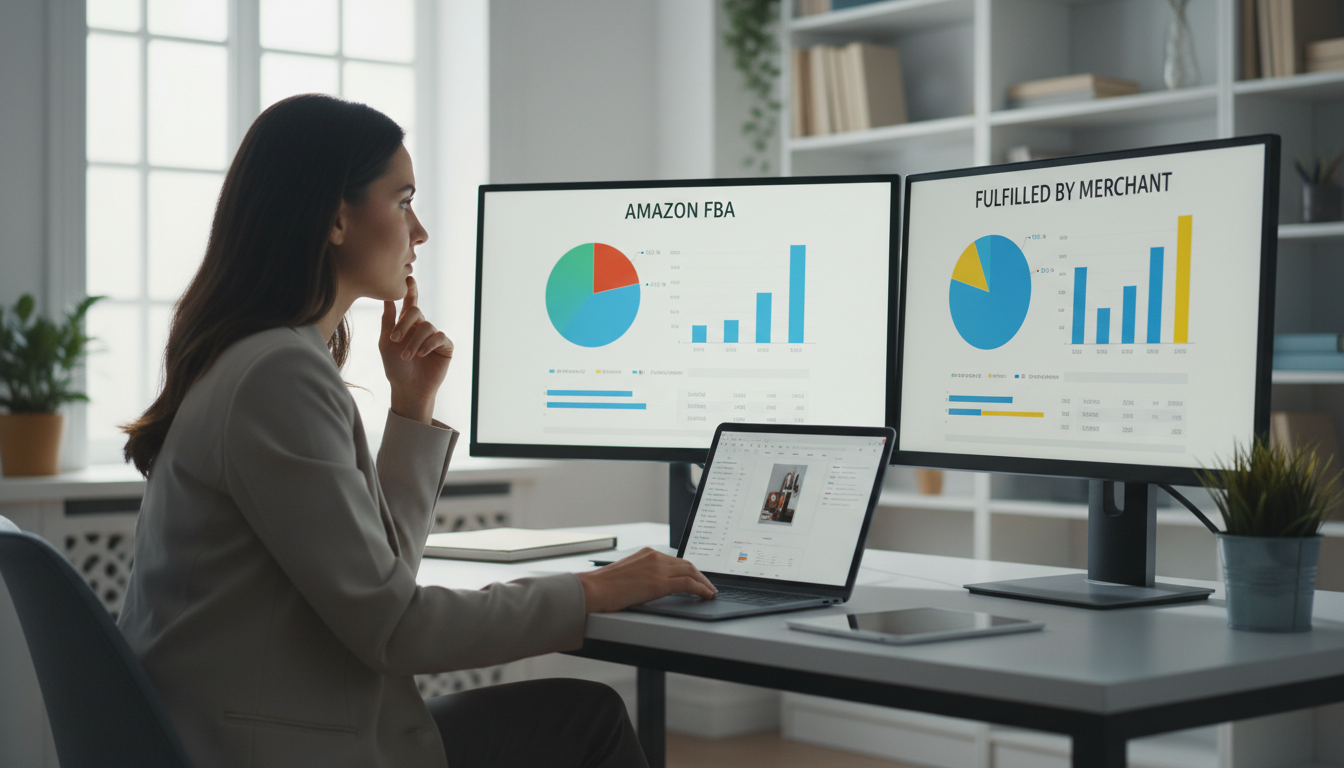
Amazon FBA vs. Fulfilled by Merchant: Which Fulfillment Strategy Maximizes Profit Margins in 2026?
Many Amazon sellers face a critical decision that directly impacts their bottom line: should you pay Amazon’s fulfillment fees or handle shipping yourself? In 2026, fulfillment costs have shifted significantly, making the comparison more nuanced than ever. The right choice depends on your product type, sales volume, and operational capacity. This article breaks down the real numbers behind each strategy and how a hybrid approach can optimize your earnings.
Understanding the Cost Structure: Amazon FBA vs. Fulfilled by Merchant
What’s Included in FBA Fees
Amazon FBA charges a multi-layered fee structure that varies by product size and weight. For standard-size items in 2026, average FBA fees range from 40-50% of your product price when combining fulfillment fees, referral commission, and storage costs. Fulfillment fees typically run $2.50-$4.50 per unit for standard items, while oversized products can exceed $15 per unit. Monthly storage fees add $0.87 per cubic foot for standard-size inventory and $1.23 per cubic foot for oversized items. Long-term storage fees become particularly painful in Q4, adding $6.90 per unit for inventory exceeding 365 days. A seller moving 100 units monthly at $30 per unit would pay approximately $1,500-$1,800 in combined FBA fees, storage, and referral commissions.
What Merchant Fulfillment Actually Costs
Merchant fulfillment eliminates Amazon’s storage fees but introduces different expenses. Shipping costs range from $3-$8 per package depending on weight and destination, while packaging materials add $0.50-$2 per order. If managing returns and customer service yourself, factor in labor costs of $15-$25 per hour. For 100 orders monthly, these costs total $600-$1,200 without accounting for warehouse space or infrastructure. The hidden advantage: merchant fulfillment eliminates long-term storage penalties and gives you complete control over inventory aging. However, you’ll need proper returns management infrastructure and potentially third-party logistics providers. For sellers with inventory spread across multiple marketplaces, coordinating fulfillment becomes exponentially more complex without proper systems.
When FBA Wins: High-Volume, Fast-Moving Products
The Prime Advantage and Customer Expectations
FBA products receive Prime eligibility, which directly impacts conversion rates. In 2026, products with Prime badges convert 20-30% higher than non-Prime alternatives in most categories. This advantage alone justifies FBA fees for fast-moving SKUs because higher conversion rates offset fulfillment costs through increased volume. Customers expect two-day delivery on Amazon, and FBA is the only way to reliably meet that expectation at scale. For trending items and seasonal products, FBA’s speed creates a competitive advantage. The 20-30% conversion lift translates to roughly $6-$9 additional revenue per unit on a $30 product, which easily covers FBA fees.
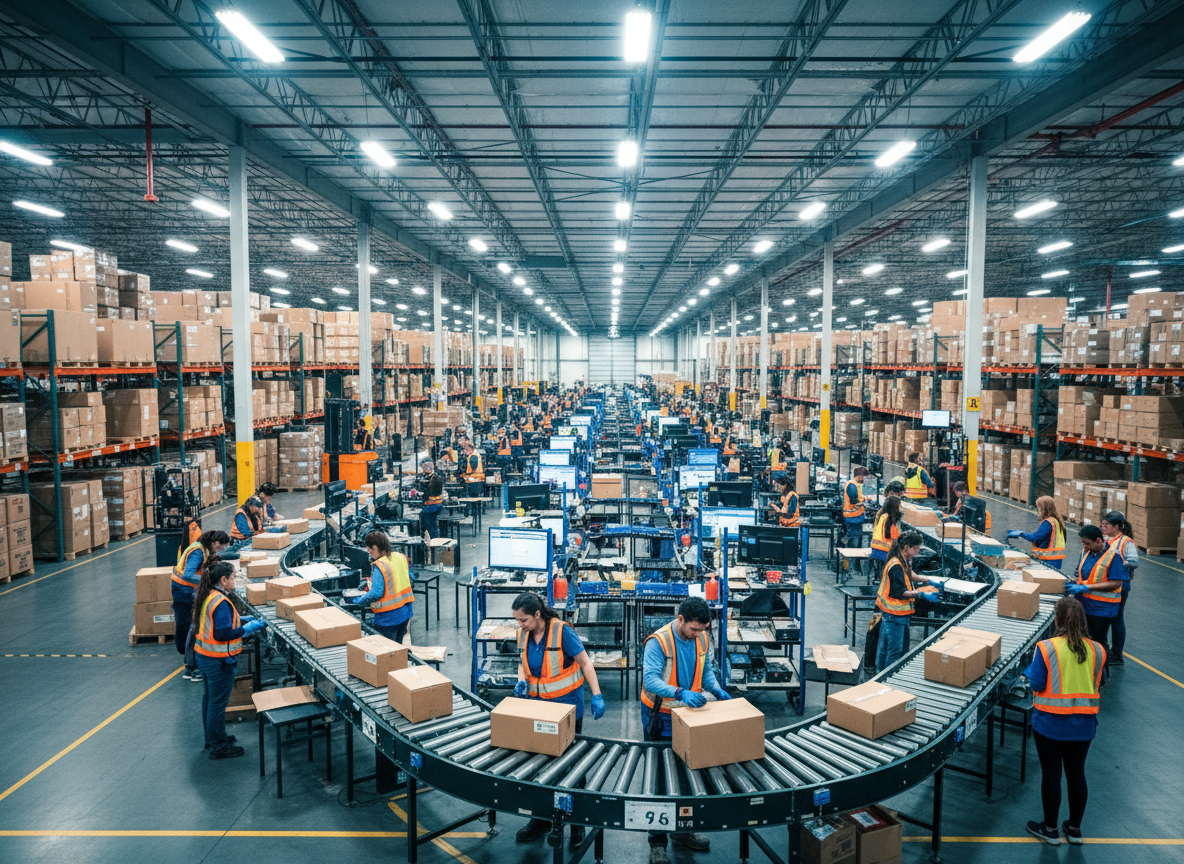
Photo by Quixess Social
Scaling Without Operational Burden
FBA removes the operational complexity of managing fulfillment yourself. When scaling across multiple marketplaces, Amazon, Walmart, Shopify, coordinating shipments from a single warehouse becomes a logistical nightmare. FBA centralizes this burden, allowing you to send inventory to Amazon once and let them handle all customer shipments, returns, and service inquiries. For growing businesses without logistics infrastructure, FBA eliminates the need to hire fulfillment staff or rent warehouse space. A seller moving from 500 to 5,000 units monthly would typically need to hire 1-2 full-time employees and secure additional warehouse space, costs that easily exceed FBA fees.
When Merchant Fulfillment Maximizes Profit: Low-Margin and Niche Products
Controlling Costs on Thin-Margin Items
Not every product thrives under Amazon’s fulfillment model. For items with margins under 30%, FBA’s fee structure, typically 45-65% of the sale price, can erode profitability dangerously. A seller offering a $25 product with 25% margin ($6.25 profit) faces FBA fees of $11-16, resulting in a loss before accounting for COGS. Merchant fulfillment preserves 15-20% more profit on these thin-margin items by eliminating Amazon’s handling, storage, and fulfillment fees. A seller managing 500 units monthly of a $20 product with 28% margins would retain approximately $1,400 more in profit annually by self-fulfilling rather than using FBA.

Photo by Quixess Social
Flexibility for Specialized Fulfillment
Heavy or oversized products face disproportionate FBA penalties. Merchant fulfillment can reduce fulfillment costs by 40-60% for these categories by leveraging existing 3PL relationships or regional carriers specializing in bulky goods. Beyond cost savings, merchant fulfillment enables custom packaging and branded unboxing experiences that build customer loyalty and justify premium pricing.
The Hybrid Approach: Strategic Channel Selection and Automation
Using FBA and FBM for Different Products
Streamlining Multi-Channel Operations
Managing dual fulfillment channels manually invites errors and lost profitability insights. Automation platforms enable sellers to manage inventory, pricing, and orders across FBA and merchant-fulfilled channels without manual updates. Centralized systems prevent inventory conflicts, a critical pain point when products sell simultaneously across channels. Real-time visibility into which fulfillment method drives profit for each SKU allows you to pivot quickly: move products to FBA when demand spikes or switch to merchant fulfillment when FBA capacity becomes constrained. For deeper insight into managing inventory across multiple sales channels, explore our guide on managing stock across Amazon, Walmart, and Shopify without overselling.

Photo by Quixess Social
Conclusion
The best fulfillment strategy depends on your product margins, inventory turnover, and operational capacity. Use a profitability calculator to compare FBA versus merchant fulfillment for each product category; the math will reveal which method preserves more profit. Consider a hybrid approach: leverage FBA’s Prime advantage for fast-moving items while using merchant fulfillment for niche or high-margin products. If managing multiple fulfillment channels feels overwhelming, automation tools can simplify inventory sync, order routing, and profitability tracking across both methods, helping you scale without operational headaches.