

Marketplace Shipping Label Integration: How to Reduce Fulfillment Time Across Amazon, Walmart, and Shopify
Managing shipping labels across Amazon, Walmart, and Shopify manually drains productivity and costs money. In 2026’s competitive e-commerce landscape, fulfillment delays directly damage customer satisfaction and seller ratings. Marketplace shipping label integration automates this process, syncing orders across channels and generating accurate labels instantly.
The Fulfillment Challenge: Why Manual Shipping Label Management Slows You Down
The hidden cost of managing labels across multiple platforms
Online sellers managing inventory across Amazon, Walmart, and Shopify face a fragmented operational nightmare. Each platform has its own dashboard, label format, and shipping rules. Sellers switching between these systems waste an estimated 2-4 hours daily just creating shipping labels. A seller with 100 daily orders across three channels spends roughly 10-20 hours per week on label creation alone, time that could be spent on marketing or product development.
This fragmentation creates visibility gaps that compound the problem. When orders live in separate systems, sellers lose real-time insight into fulfillment status, and inventory levels become inconsistent across channels, leading to overselling. Many sellers still rely on spreadsheets to track orders, multiplying inefficiencies.
Common errors that delay shipments and frustrate customers
Manual data entry introduces costly mistakes. Typos in addresses, incorrect zip codes, and wrong package weights are common. Studies show manual label generation increases data entry errors by up to 40%, forcing sellers to issue reshipped orders at their own cost. A single wrong address triggers customer complaints, returns, and negative reviews that damage seller ratings across all platforms.
These errors cascade into lost customer lifetime value. Customers who receive delayed or misaddressed shipments are less likely to repurchase. On Amazon, Walmart, and Shopify, poor fulfillment metrics directly impact search visibility. Reducing order management mistakes starts with automating the label creation process, which eliminates human error at the source.
Automated Shipping Labels: How Marketplace Shipping Label Integration Works
What is marketplace shipping label integration?
Marketplace shipping label integration connects all your sales channels, Amazon, Walmart, Shopify, and others, into a single operational hub. Instead of logging into three separate dashboards, you access one unified interface where all orders appear in real-time. The system automatically pulls order data from each marketplace, standardizes the information, and prepares it for label generation without manual re-entry.
Quixess, for example, connects directly to Amazon Seller Central, Walmart Seller Center, and Shopify’s order management API, creating seamless data flow and a single source of truth.
How automation syncs orders and generates labels instantly
When a customer places an order on any sales channel, the integration captures that data automatically. Within seconds, the order appears in your unified dashboard with complete information: customer name, shipping address, package weight, and item details. The system validates this data against carrier requirements before label generation begins.
Label generation happens with zero manual input. The solution automatically selects the optimal carrier based on rules you’ve configured, for example: “Route packages under 1 pound to USPS Priority Mail,” “Use FedEx for West Coast deliveries over 5 pounds,” or “Prefer UPS for international orders.” The system applies these rules consistently to every order, generating accurate shipping labels in seconds. Tracking information syncs back to Amazon, Walmart, and Shopify automatically, so customers receive updates without additional steps from your team.
Key Benefits of Reducing Fulfillment Processing Time
Speed: Ship Orders Faster and Meet Marketplace SLAs
Manual shipping label management creates bottlenecks that delay fulfillment. Automated integration eliminates these delays entirely. Orders that previously took 24-48 hours to ship can now move through fulfillment within hours of purchase.
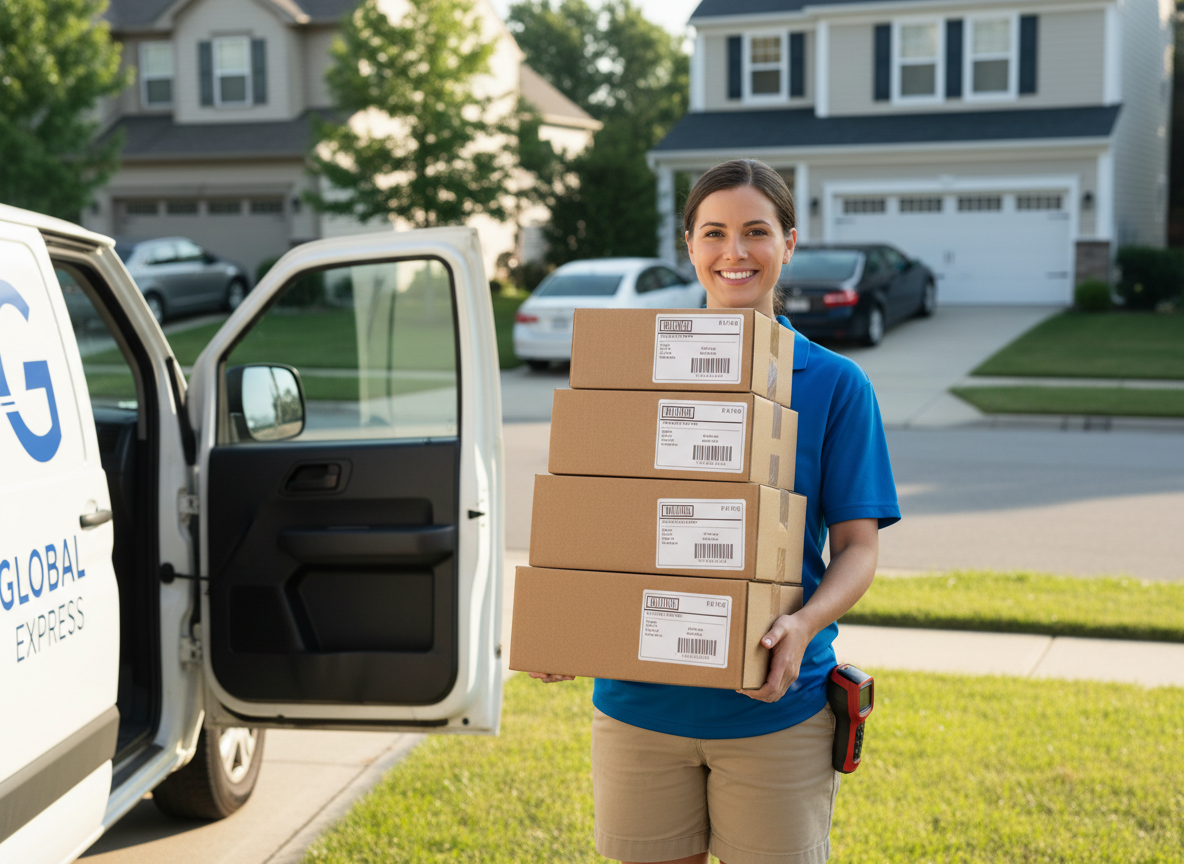
Photo by Quixess Social
Marketplace sellers face strict Service Level Agreements requiring orders to ship within specific timeframes. Amazon expects Prime orders to ship within one business day, while Walmart enforces similarly aggressive timelines. Meeting these deadlines becomes significantly easier when label generation happens automatically, translating directly into better seller ratings and reduced risk of account penalties.
Accuracy: Eliminate Address Errors and Reduce Returns
Human data entry introduces costly mistakes. Address typos, misread zip codes, and carrier selection errors result in misdelivered packages and returns. Automated label generation reduces human error by 95%, cutting expensive reshippments that damage margins and customer trust. When the system pulls address data directly from marketplace orders and validates it against carrier databases, errors become nearly impossible.
A single misdelivered package costs $15-30 in return shipping and reprocessing fees. For sellers processing hundreds of orders daily, automated accuracy means fewer support inquiries, reduced refund requests, and lower operational costs.
Scalability: Handle More Orders Without Adding Staff
Growth typically requires hiring additional fulfillment staff. Marketplace shipping label integration breaks this linear relationship. Sellers can process 3-5x more orders daily without increasing operational overhead, enabling rapid scaling without proportional cost increases. Real-time tracking updates keep customers informed throughout shipping, reducing support inquiries by up to 40%.
Implementing Shopify Amazon Walmart Shipping Sync in Your Business
Choosing the Right Integration Platform
Selecting an integration solution requires evaluating several critical capabilities. Look for platforms that connect all three marketplaces without requiring separate integrations for each channel. Quixess provides centralized shipping label management that handles Amazon, Walmart, and Shopify simultaneously, allowing sellers to manage fulfillment from a single dashboard.

Photo by Quixess Social
Ensure the solution offers carrier rate shopping to find the cheapest shipping options automatically. This feature compares rates across USPS, UPS, FedEx, and regional carriers in real-time, optimizing costs on every shipment. The platform should support label template customization to match each marketplace’s specific requirements and provide comprehensive reporting to track fulfillment metrics.
Setup Steps and Best Practices
Implementation should follow a structured approach. First, connect your marketplace accounts and configure carrier credentials. Test the system with a small batch of 50-100 orders before going live across all channels, verifying that labels print correctly, tracking numbers sync back to marketplaces, and customer notifications trigger as expected.
Configure label templates to match each marketplace’s unique requirements. Amazon, Walmart, and Shopify have slightly different label specifications and barcode formats. Proper template setup ensures compatibility and prevents label rejection issues. Monitor fulfillment metrics weekly to identify bottlenecks and optimize carrier selection based on delivery performance and cost.
Conclusion
Marketplace shipping label integration transforms fulfillment from a time-consuming manual process into an automated workflow that scales with your business. By syncing orders and generating labels automatically across Amazon, Walmart, and Shopify, sellers reduce processing time, eliminate costly errors, and improve customer satisfaction while maintaining competitive advantage in a crowded marketplace.