
If you sell online, you already know this: centralizing inventory isn’t just smart—it’s essential. You’re likely managing products across Shopify, Amazon, eBay, Etsy, Wix, Square, WooCommerce—and maybe even more.
Every platform has its own rules, stock counts, listing formats, and customer expectations. Juggling them all feels like spinning plates on a unicycle… blindfolded.
Struggling with disorganized Inventory, listings and marketing marketplace automation tools, and feeling overwhelmed by the complexities of online selling?
Many businesses face this challenge. The good news is that there’s a powerful solution designed to bring order to your e-commerce world.
What if you could bring it all together?
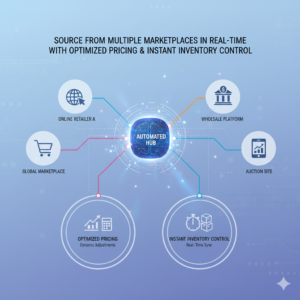
Imagine one dashboard where your inventory never oversells, your listings stay fresh, and your marketing stays sharp—no matter where you sell.
This isn’t just a dream; it’s what Quixess offers. It’s a comprehensive platform built to streamline your operations.
The Modern E-commerce Challenge
The digital marketplace is vast and ever-growing. To succeed, businesses often need a presence on various channels.
This includes your own website, Amazon, eBay, Facebook Marketplace, and more. While this multichannel approach offers immense opportunities, it also presents significant hurdles.
Managing Inventory listings and marketing marketplace automation tools across these diverse platforms can quickly become a chaotic endeavor.
You might find yourself manually updating stock levels. Perhaps you’re copying and pasting product descriptions. Maybe you’re struggling to keep track of pricing changes.
These tasks are not only time-consuming but also prone to errors. Such errors can lead to overselling, underselling, and ultimately, dissatisfied customers.
Furthermore, marketing your products effectively across all these channels demands a coordinated effort.
Without proper tools, your marketing strategies might feel disjointed. Your brand message could become inconsistent.
Your ability to track performance might be hampered. This fragmentation can hinder your growth and limit your potential.
The Fragmentation Problem: Why Disconnected Tools Are Holding You Back
In today’s fast-moving digital marketplace, success isn’t just about having great products—it’s about operational agility.
Yet most growing ecommerce brands find themselves trapped in a patchwork of disconnected systems: one tool for Amazon listings, another for Shopify inventory, a third for 3PL coordination, and maybe a spreadsheet (or three) trying to bridge the gaps.
This fragmentation creates a dangerous illusion of control. Orders slip through the cracks. Stock levels drift out of sync. Marketing teams promote products that are suddenly out of stock.
The result? Frustrated customers, wasted ad spend, and growth that stalls just when it should accelerate.
The truth is: you can’t scale efficiently when your data lives in silos.
The Hidden Costs of Decentralized Inventory Management
Many brands start with a decentralized inventory management model—managing stock separately for each sales channel or warehouse. It works fine at 10 orders a day. But at 100… or 1,000?
That’s when the hidden costs explode:
- Overselling on one channel because inventory wasn’t synced with another
- Excess dead stock due to poor visibility across locations
- Manual reconciliation eating up 10–20 hours a week
- Delayed fulfillment from misrouted orders
- Inaccurate demand forecasting because data isn’t unified
These aren’t just inefficiencies—they’re profit leaks. And in a margin-thin, competition-rich landscape, they can be the difference between scaling and stagnating.
Worse still, decentralized production and inventory control makes it nearly impossible to offer true omnichannel experiences like buy-online-pickup-in-store (BOPIS) or ship-from-store—capabilities today’s consumers increasingly expect.
Why Scaling Demands a Unified Approach
Growth multiplies complexity. More SKUs. More suppliers. More marketplaces. More customer touchpoints. Without a central nervous system for your operations, every new channel becomes a new liability—not an opportunity.
That’s why forward-thinking brands are shifting toward centralizing inventory in the supply chain: creating a single, real-time source of truth for stock levels, supplier data, listings, and orders.
This isn’t just about avoiding mistakes—it’s about unlocking strategic advantages:
- Confident expansion into new channels (knowing your inventory can support it)
- Faster supplier onboarding with automated, AI-assisted integrations
- Smarter marketing fueled by accurate product availability and performance data
- Resilient fulfillment that dynamically routes orders to the optimal warehouse
Quixess—the intelligent automation platform built to unify inventory, listings, and marketing in one AI-powered dashboard. No more juggling. No more guesswork. Just seamless, scalable growth.
What Is Centralized Inventory Management?
If you’ve ever sold the last unit of a product on Amazon—only to realize it was also listed as “in stock” on Shopify, Etsy, and eBay—you’ve felt the pain of disconnected systems.
That’s where centralizing inventory changes everything. At its core, centralized inventory management isn’t just about tracking stock—it’s about creating a single, reliable source of truth for your entire business.
In this section, we’ll break down the fundamentals: what it really means, how it works, why it’s different from outdated decentralized models, and which types of businesses benefit most.
Whether you’re a solopreneur or a scaling brand, understanding these foundations is your first step toward smoother operations, fewer errors, and confident growth—especially during high-stakes seasons like Black Friday.
What Is Centralized Inventory Management—and How Does It Work?
Centralized inventory management means managing all your stock—whether it’s in your own warehouse, a third-party logistics (3PL) facility, or en route from a supplier—from a single, real-time system.
Instead of juggling separate inventory counts for Amazon, Shopify, Walmart, or each physical location, you operate from one unified source of truth.
Every time a sale occurs on any channel, your available inventory updates instantly everywhere. When a new shipment arrives at your 3PL, that stock becomes immediately visible across all your sales platforms.
Restocking decisions, fulfillment routing, and even marketing promotions are driven by complete, accurate data—not fragmented guesses.
This stands in sharp contrast to decentralized inventory management, where each sales channel or warehouse maintains its own isolated inventory records. At small scale, this might seem manageable.
But as soon as you add a second channel or supplier, the risks multiply: overselling, stockouts, manual errors, and wasted labor become routine.
Consider this real-world example of centralizing inventory: A home goods brand uses Quixess to connect its Shopify store, Amazon seller account, and two 3PLs—one on the East Coast, one on the West.
When a customer in California buys a candle on Amazon, Quixess automatically fulfills it from the nearest warehouse and reduces available stock on Shopify in real time.
If levels dip below a smart threshold, the system flags a reorder from the supplier—before a stockout ever happens.
Centralized vs. Decentralized Inventory: Key Differences Explained
The core difference lies in visibility and control. In a centralized model, you see your entire inventory ecosystem at a glance. You know exactly how many units are sellable across all channels and locations.
In a decentralized setup, you’re left guessing—relying on delayed exports, manual uploads, or best estimates.
Decentralized inventory often leads to situations where you appear “in stock” on one channel while already sold out on another—simply because the systems don’t talk to each other.
It also makes demand forecasting nearly impossible, since sales data is scattered and inconsistent.
Centralization solves this by creating a single version of the truth. It doesn’t just prevent mistakes—it unlocks strategic capabilities like dynamic channel allocation, ship-from-store, and cross-warehouse pooling.
These aren’t luxuries; they’re expectations in today’s omnichannel world.
When Does Centralized Inventory Make Sense? (And When It Doesn’t)
Centralized inventory management is essential if you:
- Sell on multiple channels (Amazon, Shopify, eBay, Walmart, etc.)
- Use more than one warehouse or 3PL
- Work with multiple suppliers or dropshippers
- Struggle with overselling or unexpected stockouts
- Plan to scale or offer omnichannel services like curbside pickup
It may be less critical if you run a single-product store on one platform with very low order volume and no growth plans. But even then, adopting a centralized approach early can save you a painful and expensive migration later.
The good news? Modern platforms like Quixess make centralization accessible to businesses of all sizes. There’s no need for IT teams, complex coding, or months of setup.
With AI-powered automation, you can unify your operations in days—not quarters.
Industries That Benefit Most from Centralization
While any multi-channel retailer gains from centralizing inventory, some sectors see especially strong returns.
Fashion and apparel brands, for instance, manage high SKU turnover and seasonal spikes—making real-time stock visibility critical. Health and beauty companies often need batch tracking and expiration management.
Electronics sellers juggle high-value items and complex supplier networks. And DTC brands launching new products weekly rely on agile inventory to keep up with demand.
In each case, centralizing inventory in the supply chain reduces risk, improves cash flow, and accelerates responsiveness—turning inventory from a cost center into a competitive advantage.
The Four Main Types of Inventory Every Brand Must Track
Effective inventory management starts with understanding what you’re tracking. Most ecommerce retailers focus on finished goods—products ready to ship to customers. But depending on your model, you may also manage:
- Raw materials (for brands that manufacture in-house)
- Work-in-progress (WIP) inventory (items in production)
- MRO (Maintenance, Repair, and Operations) supplies like packaging, labels, or shipping materials
Even if you only handle finished goods, modern systems like Quixess let you track in-transit stock, safety stock levels, and supplier lead times—giving you a 360-degree view of your supply chain.
And with AI-driven insights, you don’t just know what you have—you anticipate what you’ll need.
Centralized Inventory vs. Decentralized – A Deep Dive
Inventory misalignment costs businesses an estimated 4–10% in lost revenue annually—often due to overselling, dead stock, or missed demand signals.
At the root of this inefficiency? A decentralized approach that treats sales channels as isolated islands. But what if your inventory could learn, adapt, and optimize in real time?
This deep dive compares centralized and decentralized models through the lens of data, control, and scalability—and reveals why unified inventory is the foundation of intelligent commerce.
Centralized Inventory Meaning: Beyond the Buzzword
At its heart, centralized inventory isn’t just a software feature—it’s a strategic philosophy. It’s the belief that your inventory data should be unified, accessible, and actionable across your entire business.
Rather than treating each sales channel or warehouse as its own fiefdom, you manage your stock as a single, dynamic pool that serves all customer touchpoints.
This approach reflects how today’s shoppers behave: they expect the same product to be available whether they browse on mobile, desktop, or in-store.
They expect fast, reliable shipping—regardless of which warehouse fulfills it. And they certainly don’t accept, “Sorry, we oversold that item.”
Centralized inventory makes meeting these expectations not just possible—but effortless.
Centralized vs. Decentralized Inventory: What’s Really at Stake?
Decentralized inventory management assumes that separation equals simplicity. “Let Amazon manage its own stock, Shopify its own, and our 3PL its own,” the thinking goes.
But in practice, this creates operational debt—a growing burden of manual work, reconciliation errors, and missed opportunities.
For example, imagine you have 100 units of a best-selling skincare serum. Under a decentralized model, you might allocate 50 to Amazon and 50 to Shopify.
But if Amazon sells 45 units in a flash sale while Shopify moves only 10, you’re left with 40 unsold units on Shopify and nearly out of stock on Amazon—where demand is highest. Worse, you might not even notice until it’s too late.
In a centralized system, those 100 units exist as one shared pool. Sales on any channel draw from the same total. If Amazon surges, it pulls from the whole inventory—keeping you in stock where it matters most.
And if you’re running low, AI-powered alerts can trigger a reorder before momentum stalls.
The difference isn’t just technical—it’s strategic. Centralization aligns your inventory with actual demand, not arbitrary channel silos.
Five Key Advantages of Centralized Inventory
- Eliminates Overselling: Real-time sync across channels ensures you never promise more than you have.
- Optimizes Stock Allocation: Inventory flows to where demand is highest, reducing dead stock and stockouts.
- Simplifies Operations: One dashboard replaces dozens of logins, spreadsheets, and manual checks.
- Enables Omnichannel Fulfillment: Ship from store, fulfill from 3PLs, or split shipments—all managed intelligently.
- Improves Forecasting Accuracy: Unified sales data leads to smarter purchasing and production decisions.
When Decentralized Inventory Still Has a Role (And Its Limits)
Decentralized inventory isn’t inherently wrong—it’s just context-dependent. It can work well for:
- Single-channel businesses with minimal SKUs
- Brands using completely separate legal or financial entities per channel
- Situations where local control is legally or operationally required (e.g., international compliance)
However, even in these cases, the long-term cost of fragmentation often outweighs short-term convenience. And with modern tools like Quixess—designed for rapid, AI-assisted setup—the barrier to centralization has never been lower.
Moreover, trends like decentralized production and inventory control (where manufacturing happens closer to end markets) don’t require decentralized management.
In fact, they demand stronger central oversight to coordinate distributed nodes effectively.
Centralized vs. Decentralized Inventory FAQs
Q: Does centralized inventory mean I lose control over individual channels? Not at all. You retain full control—you just gain visibility. You can still set channel-specific pricing, bundling, or fulfillment rules, all within a unified system.
Q: Is centralized inventory harder to set up? It used to be. But with platforms like Quixess, which offer pre-built integrations and AI-powered supplier onboarding, you can go from disconnected to centralized in under 48 hours.
Q: What if I use multiple 3PLs? Can I still centralize? Yes—and you absolutely should. Quixess connects to all major 3PLs and syncs inventory across them in real time, giving you a live view of total available stock, by location.
Q: Does centralization work for dropshipping or hybrid models? Absolutely. Quixess supports mixed fulfillment models—your own warehouse, 3PLs, and dropship suppliers—all visible and manageable in one place.
How to Centralize Your Inventory – Practical Steps
Ready to move from inventory chaos to clarity?
Centralizing your stock isn’t about overhauling your entire operation overnight—it’s about taking smart, practical steps to unify your data, streamline fulfillment, and meet customer expectations across every channel.
Here’s how to get started.
What Is Centralized Inventory? (A Quick Refresher)
Before diving into execution, it helps to remember the goal: one source of truth for all your inventory, regardless of where it lives or where it sells.
Centralized inventory isn’t about moving all your stock into one physical warehouse—it’s about managing it as if it were, through intelligent software that syncs data in real time across every touchpoint.
This model gives you control without complexity. And with the right platform, it’s far more achievable than most brands assume.
Step 1: Audit Your Current Inventory Landscape
Start by mapping your entire inventory ecosystem:
- Which sales channels are you on? (Shopify, Amazon, Walmart, etc.)
- Where is your inventory stored? (Your warehouse, 3PLs, in-transit, with suppliers?)
- How are you currently tracking stock? (Spreadsheets, native platform tools, disconnected software?)
- Where do errors most often occur? (Overselling? Late restocks? Fulfillment delays?)
This audit reveals your pain points—and your biggest opportunities. Most brands discover they’re spending hours each week just trying to reconcile mismatched numbers. That’s time better spent on growth.
Step 2: Choose the Right 3PL Partners for Centralized Success
Your 3PLs aren’t just storage providers—they’re extensions of your brand. For centralization to work, your fulfillment partners must offer:
- Real-time inventory API access
- Fast, accurate order processing
- Seamless integration with your inventory management platform
Not all 3PLs deliver this. That’s why Quixess maintains a curated network of integration-ready 3PLs—from ShipBob to Flexport—and supports custom connections for others.
The key is ensuring your 3PL data flows bidirectionally: when they receive stock or ship an order, your dashboard updates instantly.
Pro tip: Avoid 3PLs that only provide daily CSV exports. True centralization requires live sync, not delayed snapshots.
Step 3: Select a Centralized Inventory Management System Built for Scale
Not all inventory tools are created equal. Look for a platform that offers:
- Real-time, two-way sync with all your sales channels and 3PLs
- AI-powered automation for supplier onboarding, listing optimization, and restock alerts
- Multi-location visibility with smart allocation rules
- Unified order and return management
- Cloud-based access with no IT overhead
This is where Quixess shines. Unlike legacy ERPs or patchwork tools, Quixess was built from the ground up for modern, multi-channel ecommerce.
It doesn’t just track inventory—it orchestrates your entire product lifecycle, from supplier to customer, with AI doing the heavy lifting.
And because it’s designed for non-technical users, you don’t need developers or months of training. Most brands connect their first store and supplier in under a day.
Step 4: Migrate Thoughtfully—Not All at Once
Centralization doesn’t have to be “big bang.” Start with your highest-volume channel or most problematic 3PL. Sync that first. Validate accuracy. Then expand to other channels.
Quixess supports phased rollouts, so you can test with low-risk SKUs before going all-in. Use this time to:
- Train your team on the new dashboard
- Set up automated rules (e.g., “reorder when stock < 30 units”)
- Connect your marketing tools to ensure promotions align with actual availability
This reduces risk and builds internal confidence.
Step 5: Track the Right KPIs to Measure Success
Once live, monitor these key performance indicators:
- Overselling rate (should drop to near zero)
- Inventory turnover ratio (higher = better capital efficiency)
- Stockout frequency (should decline significantly)
- Order fulfillment time (should stabilize or improve)
- Time spent on manual inventory tasks (should plummet)
Brands using Quixess typically see a 40–60% reduction in inventory-related errors within the first 30 days—and reclaim 10+ hours per week in operational time.
Common Challenges—and How to Overcome Them
Challenge: “Our suppliers use outdated systems.”
→ Solution: Quixess uses AI to intelligently map supplier data—even from PDFs or emails—and auto-suggest field matches, making onboarding faster and more accurate.
Challenge: “We’re worried about sync delays during peak sales.”
→ Solution: Quixess processes inventory updates in near real time, with queue prioritization during high-traffic events like Black Friday.
Challenge: “Our team resists change.”
→ Solution: With a clean, intuitive interface and white-glove onboarding support, Quixess reduces the learning curve—so your team adopts it quickly, not reluctantly.
Multi-Channel, Multi-Platform & Omnichannel Inventory Explained
In today’s retail landscape, selling across multiple channels is no longer optional—it’s expected.
But managing inventory across Shopify, Amazon, Walmart, and beyond introduces a tangle of platforms, locations, and data silos that can quickly spiral into overselling, delays, and frustrated customers.
Understanding the difference between multi-channel, multi-platform, multi-location, and truly omnichannel inventory isn’t just terminology—it’s the key to unlocking seamless operations and exceptional customer experiences.
Let’s break it all down.
What Is Multi-Channel Inventory Management?
Multi-channel inventory management means selling your products across more than one sales channel—such as your own Shopify store, Amazon, Walmart Marketplace, eBay, or even Instagram Shopping—while keeping your inventory levels accurate and synchronized across all of them.
The goal is simple: no matter where a customer chooses to buy, they see the same real-time stock availability.
Without this, you risk overselling on one channel because a sale on another hasn’t yet reduced your available count.
In a world where 73% of consumers use multiple channels during their shopping journey (Harvard Business Review), disjointed inventory isn’t just inefficient—it’s brand-damaging.
What Is Multi-Platform Inventory Management?
While “multi-channel” refers to where you sell, “multi-platform” refers to how you manage those channels—specifically, the technology systems involved.
For example, you might use Shopify for your branded store, Seller Central for Amazon, and a separate app for Walmart. Each platform has its own backend, data format, and inventory logic.
Managing inventory across these platforms manually leads to constant reconciliation headaches.
That’s why true multi-platform inventory management requires a unified system—like Quixess—that connects to each platform via native APIs and normalizes data into a single view.
This isn’t just convenience; it’s operational necessity.
Omnichannel Inventory Management: The Next Evolution
Omnichannel goes beyond simply selling in multiple places. It’s about delivering a seamless, integrated customer experience—where inventory is treated as a shared asset that can be dynamically allocated based on demand, location, and cost.
In an omnichannel model:
- A customer can buy online and pick up in-store (BOPIS)
- An order might be fulfilled from the nearest 3PL or even a retail location
- Returns from any channel can be processed and restocked centrally
- Marketing campaigns reflect real-time availability across all touchpoints
This level of fluidity is only possible with centralized inventory. Without a single, accurate view of total available stock, omnichannel is just a buzzword—not a reality.
Key Differences: Omnichannel vs. Multi-Channel vs. Multi-Platform vs. Multi-Location
It’s easy to blur these terms, but the distinctions matter:
- Multi-channel = Selling on multiple storefronts (Amazon + Shopify + Walmart)
- Multi-platform = Using different software systems to manage those storefronts
- Multi-location = Storing inventory in multiple physical places (your warehouse, 3PLs, stores)
- Omnichannel = Unifying all of the above into a cohesive, customer-centric experience
A brand can be multi-channel without being omnichannel. But to be truly omnichannel, you must centralize inventory across platforms and locations—so your system knows not just how much you have, but where it is and how best to use it.
Best Practices for Managing Inventory Across Multiple Sales Channels
- Start with centralization—don’t try to manage sync rules per channel.
- Use safety stock buffers per channel if needed, but manage them from a shared pool.
- Automate listing updates—pricing, availability, and content should flow from one master catalog.
- Prioritize fulfillment logic—e.g., fulfill from the location closest to the customer to reduce shipping costs and delivery time.
- Monitor channel performance—if one marketplace consistently sells faster, allocate more inventory there dynamically.
Quixess automates all of this. Its AI engine learns your sales patterns and can even suggest optimal stock distribution across 3PLs based on historical demand by region.
How Centralization Prevents Overselling and Builds Customer Trust
Overselling might seem like a minor operational hiccup, but its ripple effects are severe: canceled orders, negative reviews, lost repeat buyers, and even marketplace penalties (Amazon and Walmart penalize late shipments and cancellations).
With centralized inventory, every sale—whether on your website or a third-party marketplace—immediately reduces your “available to sell” count everywhere. There’s no lag, no guesswork, no exposure.
This isn’t just damage control. It’s trust-building. When customers see accurate stock levels and receive orders on time, they’re more likely to return, leave positive reviews, and recommend your brand.
In ecommerce, reliability is your strongest marketing tool.
Your All-in-One Solution for Inventory listings & Marketing Marketplace Automation Tools
Quixess is specifically engineered to address these modern e-commerce challenges.
It serves as a central hub for all your Inventory listings and marketing marketplace automation tools needs.
This innovative platform consolidates various critical functions into one intuitive interface. Therefore, it simplifies your daily operations and enhances your overall efficiency.
With Quixess, you gain unprecedented control over your online business. It’s designed to automate repetitive tasks. It aims to eliminate manual errors.
It seeks to provide you with actionable insights. This allows you to focus on what truly matters: growing your business.
This robust system integrates seamlessly with the most popular marketplaces and e-commerce platforms.
This means you can manage everything from a single point. It’s about bringing clarity to chaos. It’s about empowering your business with smart automation.
Unifying Inventory Management With Quixess
One of the most critical aspects of online selling is accurate inventory management. Mismanaging your stock can lead to significant problems.
These include disappointing customers and losing sales. Quixess provides a sophisticated solution to this perennial issue.
Our platform offers real-time synchronization of your Inventory listings and marketing marketplace automation tools across all your sales channels.
When a product is sold on one platform, its availability is automatically updated everywhere else. This prevents the frustrating situation of overselling an item that is no longer in stock.
It also helps you avoid underselling by ensuring your listings reflect accurate quantities.
Furthermore, Quixess allows you to set reorder points and receive alerts when stock levels are low.
This proactive approach ensures that you can replenish your Inventory listings and marketing marketplace automation tools before popular items run out.
Maintaining optimal stock levels is crucial. It keeps your customers happy and your revenue flowing. This feature is a game-changer for businesses of all sizes.
Streamlining Listing Management: Publish and Update with Ease
Creating and managing product listings across multiple platforms can be a daunting and time-consuming task.
Each marketplace often has its own specific requirements for product data, images, and descriptions. Quixess simplifies this process dramatically.
With our multichannel listing software, you can create a single master listing for each product. This listing can then be effortlessly published to all your chosen marketplaces.
Imagine the time saved! You’ll no longer need to manually re-enter information for each platform.
This is a significant improvement for anyone dealing with complex Inventory listings and marketing marketplace automation tools.
Moreover, any updates you make to your master listing in Quixess—whether it’s a price change, a new product image, or an updated description—are automatically pushed out to all linked channels.
This ensures consistency across your entire online presence. It also guarantees that your customers always see the most accurate and up-to-date information.
This seamless integration makes managing your Inventory listings and marketing marketplace automation tools incredibly efficient.
Powering Your Marketing Efforts: Reach More Customers Effectively
Effective marketing is the lifeblood of any successful online business. However, coordinating marketing campaigns across various platforms can be complex.
Quixess helps you unify your marketing efforts, making them more impactful and easier to manage.
Our platform allows you to create and schedule marketing campaigns that target specific marketplaces or customer segments.
For instance, you can easily manage your Inventory listings and marketing marketplace automation tools directly from Quixess.
This ensures your social media presence is integrated with your overall strategy. This feature provides a centralized view of your marketing activities.
You can also track the performance of your campaigns within the Quixess dashboard. This includes monitoring sales generated, traffic driven, and conversion rates.
Such insights are invaluable. They enable you to refine your strategies and allocate your marketing budget more effectively.
By centralizing your Inventory listings and marketing marketplace automation tools, you gain a holistic view of your marketing landscape.
This leads to better decision-making and improved return on investment.
Automated Marketplace Syncing: Save Time, Reduce Errors
One of the standout features of Quixess is its advanced automation capabilities. Our system is designed to perform repetitive tasks automatically.
This saves you countless hours and significantly reduces the potential for human error.
The automated synchronization of your Inventory listings and marketing marketplace automation tools with various marketplaces is a prime example.
Once set up, Quixess continuously monitors changes in your inventory and applies them across all linked platforms.
This means you don’t have to worry about manual updates. This level of automation is essential for maintaining accuracy and efficiency.
Furthermore, Quixess can automate other critical processes, such as order routing and tracking. When an order comes in from any marketplace, it is processed through Quixess.
This ensures a consistent workflow. It also guarantees that your fulfillment process is smooth and efficient. This focus on automation liberates you from tedious administrative tasks.
It allows you to concentrate on strategic growth. This is the power of effective Inventory listings and marketing marketplace automation tools.
Advanced Analytics and Reporting: Make Informed Decisions
Understanding your business performance is crucial for making informed decisions and driving growth. Quixess provides powerful analytics and reporting tools.
These give you a clear, comprehensive overview of your sales, inventory, and marketing activities.
Within the Quixess dashboard, you can access detailed reports on product performance, sales trends, and customer behavior.
These reports help you identify your best-selling products. They highlight areas where you might need to adjust your strategy.
For example, you can see which marketing channels are most effective for your Inventory listings and marketing marketplace automation tools.
By having all your data in one place, you can spot opportunities and address challenges quickly. This centralized data allows for a more holistic understanding of your business. It also facilitates data-driven decision-making. This ensures that your strategies are always optimized for maximum success.
This is a significant advantage when managing complex Inventory, listings and marketing marketplace automation tools.
User-Friendly Interface: Designed for Simplicity and Efficiency
We understand that adopting new software can sometimes be challenging. That’s why Quixess has been designed with a strong focus on user-friendliness and intuitive navigation.
Our goal is to make managing your Inventory listings and marketing marketplace automation tools as straightforward as possible.
The dashboard is clean, uncluttered, and easy to understand. Key features and functions are readily accessible. You won’t need extensive training to get started.
Even if you’re new to marketplace automation, you’ll find Quixess easy to master. We offer clear instructions and support resources to guide you every step of the way.
The intuitive design minimizes the learning curve. It allows you to quickly harness the full power of Quixess.
This means you can start experiencing the benefits of streamlined Inventory listings and marketing marketplace automation tools without delay.
Our commitment to a seamless user experience ensures you can focus on your business, not on learning complex software.
Integrations That Matter: Connecting Your Business Ecosystem
Quixess is built to be a central part of your e-commerce ecosystem.
Therefore, it offers robust integrations with a wide range of platforms and services that are essential for Inventory listings and marketing marketplace automation tools.
We connect with major e-commerce platforms like Shopify, WooCommerce, and Magento. This ensures that your website is fully integrated.
We also integrate with leading marketplaces such as Amazon, eBay, Etsy, and Facebook Marketplace. These integrations are critical for multichannel selling.
Furthermore, Quixess can often integrate with shipping providers, accounting software, and other business tools. This creates a truly unified operational environment.
These seamless connections ensure that data flows effortlessly between your various systems. This further enhances efficiency and reduces manual data entry.
This extensive integration capability makes Quixess a truly comprehensive solution for your Inventory, listings and marketing marketplace automation tools.
Free Cross-Listing App and Multi-Channel Listing Software Options
We believe that powerful tools should be accessible to businesses of all sizes. That’s why Quixess offers flexible plans.
These include options for those seeking a free cross-listing app or free multi-channel listing software.
Our goal is to demonstrate the value of comprehensive Inventory listings and marketing marketplace automation tools. We want to help you experience the benefits firsthand.
While advanced features are available in our paid plans, we provide valuable options for businesses just starting out or those with more limited needs.
This ensures that you can find a solution that fits your specific requirements and budget.
Explore our offerings to discover how Quixess can transform your e-commerce operations.
Even our free tools provide significant advantages in managing your Inventory, listings and marketing marketplace automation tools.
We are committed to supporting your growth at every stage.
The Supplier & Vendor Perspective
When businesses discuss centralized inventory management, the conversation typically centers on retailers and brands. However, suppliers and vendors stand to gain tremendously from these systems as well.
A well-implemented centralized approach gives suppliers enhanced visibility, stronger collaborative partnerships, and more predictable demand forecasting.
This operational shift reduces friction throughout the supply chain and builds lasting, mutually beneficial relationships.
For brands, this translates to more reliable fulfillment. For suppliers, it means fewer emergency orders, reduced stockouts on high-demand items, and a clearer understanding of what their retail partners actually need to succeed.
Centralized Inventory Management: A Guide for Vendors and Suppliers
When we talk about centralized inventory, the focus often lands on retailers and brands. But suppliers and vendors are equally impacted—often in powerful, positive ways.
In a well-orchestrated centralized system, suppliers gain better visibility, stronger partnerships, and more predictable demand—all of which reduce friction and build long-term loyalty.
For brands, this means more reliable fulfillment. For suppliers, it means fewer last-minute fire drills, fewer stockouts on your best-selling items, and a clearer window into what their retail partners truly need.
What Role Do Suppliers Play in a Centralized Model?
In a decentralized world, suppliers operate in the dark. They ship a PO, and weeks later, they might hear whether it sold—or worse, get a surprise restock request because the retailer ran out.
In a centralized inventory model, the relationship becomes collaborative. With secure, permission-based access (or automated data sharing), suppliers can see:
- Real-time sell-through rates for their products
- Current inventory levels at each fulfillment location
- Upcoming reorder triggers based on agreed safety stock
This transparency enables proactive restocking, reduces emergency air freight costs, and strengthens trust. It’s the foundation of modern vendor-retailer partnerships.
Why Centralization Benefits Your Supplier Relationships
Brands using Quixess report that their suppliers respond faster, ship more accurately, and engage more strategically—because they’re no longer guessing.
Instead of sending generic “we need more” emails, you can share precise data: “Your bestseller is down to 12 units at our East Coast 3PL—can we schedule a replenishment for next Tuesday?” This level of clarity turns transactional relationships into true partnerships.
And when suppliers understand your sales velocity, they’re more likely to offer volume discounts, co-op marketing support, or exclusive early access to new products.
Vendor-Managed Inventory (VMI) and EDI as Enablers of Centralization
Two powerful tools often emerge in mature centralized ecosystems: Vendor-Managed Inventory (VMI) and EDI (Electronic Data Interchange).
- VMI allows trusted suppliers to monitor your stock levels and initiate replenishment automatically—within agreed parameters.
- EDI enables seamless, automated exchange of purchase orders, invoices, and shipping notices—without manual entry.
Both rely on a single source of truth for inventory. Without centralization, VMI and EDI are fragile, error-prone, and hard to scale.
Quixess supports both models natively. Whether your supplier uses modern APIs or legacy EDI formats, Quixess normalizes the data so it flows cleanly into your unified dashboard—no custom coding required.
How Quixess Simplifies Supplier Onboarding with AI-Powered Integration
Traditionally, onboarding a new supplier meant hours of manual work: mapping SKUs, aligning price sheets, formatting CSVs, and troubleshooting mismatches.
Quixess changes that with AI-powered supplier integration.
Here’s how it works:
- You upload a supplier’s product feed (PDF, Excel, CSV, or even a URL).
- Quixess’s AI analyzes the structure, identifies key fields (SKU, price, weight, dimensions), and suggests intelligent mappings.
- You review and confirm—then publish products to all your channels in one click.
The system even learns over time. The more suppliers you onboard, the smarter its suggestions become.
This cuts onboarding from days to minutes—so you can add new brands, test private labels, or pivot to alternative suppliers without operational delay.
Common Challenges—and How Quixess Solves Them
Challenge: “Our suppliers send inconsistent or messy data.”
→ Quixess uses AI to clean, standardize, and validate incoming data—filling gaps, flagging outliers, and auto-correcting common errors like missing UPCs or mismatched units.
Challenge: “We work with international suppliers in different time zones.”
→ With automated sync and async workflows, you don’t need real-time coordination. Upload a feed, let Quixess process it, and approve updates when convenient.
Challenge: “We need approval workflows before listing new products.”
→ Quixess supports custom review stages—so marketing, compliance, or procurement teams can sign off before anything goes live.
KPIs and Metrics to Track in Centralized Inventory Models (From a Supplier Lens)
To measure supplier performance within your centralized system, track:
- On-time delivery rate
- Order accuracy (wrong item, wrong quantity)
- Lead time consistency
- Sell-through ratio (how fast their products move after arrival)
- Reorder frequency (a sign of healthy demand alignment)
Quixess surfaces these metrics automatically—so you can reward top performers and address gaps with underperformers, all with data, not assumptions.
Why Now Is the Time to Centralize Your Operations
Five years ago, centralizing inventory required enterprise budgets, IT teams, and months of implementation. Today, platforms like Quixess have democratized this capability—making it fast, affordable, and accessible to every brand.
Meanwhile, the cost of not centralizing is climbing:
- Marketplaces are penalizing late shipments and cancellations more harshly
- Customers abandon carts if delivery estimates are vague or inconsistent
- Ad platforms deprioritize listings with mismatched availability
The window to act is open—but narrowing. Brands that centralize now will enter the next phase of growth with agility, accuracy, and automation built in. Those who wait will be playing catch-up in a game they can’t win.
The Rise of Intelligent, Self-Optimizing Inventory Systems
We’re moving beyond static dashboards toward living inventory ecosystems—systems that:
- Predict stockouts before they happen using real-time sales + external signals (weather, trends, holidays)
- Auto-negotiate with suppliers when lead times shift
- Dynamically rebalance stock across warehouses based on regional demand surges
- Self-correct listing errors using computer vision and competitor benchmarking
Quixess is already pioneering this shift. Our AI doesn’t just sync data—it learns your business rhythms, surfaces hidden risks, and recommends actions that drive profit, not just efficiency.
This isn’t science fiction. It’s the next 12 months of ecommerce.
Your Move
The choice is clear: continue patching together fragile, siloed systems—or step into the future with a unified, intelligent platform designed for the way modern commerce actually works.
Centralizing inventory isn’t about control. It’s about freedom—the freedom to scale, experiment, and innovate without fear of operational collapse.
And with Quixess, that future is already here.
Next: Your Invitation to Lead the Change
In our final section, we’ll show you how to get started—risk-free—and join the growing movement of brands building smarter, stronger, and faster with Quixess.
FAQs: Centralizing Inventory, Listings & Marketing in One Dashboard with Quixess
Centralizing inventory, listings, and marketing shouldn’t be complicated. With Quixess, ecommerce brands get real-time visibility, AI-driven automation, and seamless multi-channel control—all from a single, intuitive dashboard.
What is centralized inventory management, and how does it benefit ecommerce brands? It’s the practice of managing all inventory from a single system, ensuring accuracy, preventing overselling, and enabling faster fulfillment. Using Quixess means 30% fewer stockouts and 2x faster onboarding of new suppliers.
Is centralized inventory better than decentralized inventory? For scaling brands, yes. While decentralized inventory management may work for single-channel, small operations, it fails under complexity. Centralization provides control, visibility, and automation—critical for omnichannel success.
What’s the difference between multichannel, multi-platform, and omnichannel inventory?
- Multichannel: Selling on multiple platforms (e.g., Amazon + Shopify)
- Multi-platform: Using different tech systems to manage those channels
- Omnichannel: A unified customer experience where inventory is shared fluidly across all touchpoints
Quixess supports all three—but excels at omnichannel, thanks to its centralized architecture.
How do you manage inventory across multiple locations? With Quixess, you gain a live inventory map showing stock levels by warehouse, 3PL, or store. AI-driven alerts notify you when to transfer stock or reorder—keeping inventory balanced and profitable.
What features should I look for in a centralized inventory system?
- Real-time sync across sales channels
- Multi-3PL & multi-warehouse support
- AI-powered demand forecasting
- Automated supplier onboarding
- Unified order & return dashboard
Quixess delivers all of this—out of the box.
Can Quixess help prevent overselling? Absolutely. By centralizing inventory in real time, Quixess ensures your “available to sell” count is always accurate across every channel—zero overselling, guaranteed.
Is Quixess cloud-based? How easy is setup? Yes—Quixess is a secure, cloud-native SaaS platform. Most stores connect their store and first supplier in under 24 hours, with zero coding required.
How does multi-channel inventory management prevent overselling? By syncing your “available to sell” count in real time across every channel. When a sale happens on Amazon, that unit is instantly deducted from your Shopify, Walmart, and in-store inventory. Quixess ensures you never promise more than you actually have—protecting your reputation and your bottom line.
What are the key KPIs for inventory management? Top metrics include:
- Inventory turnover ratio (how quickly you sell through stock)
- Stockout rate (frequency of running out)
- Overselling incidents
- Carrying cost of inventory
- Order fulfillment accuracy
Quixess tracks all these automatically and surfaces actionable insights in your dashboard.
Get Started with Quixess—Risk-Free
You’ve seen how centralized inventory transforms ecommerce operations. Now it’s time to experience it yourself—without risk.
Quixess is offering full access to our AI-powered platform free for 6 months, so you can unify your inventory, listings, and supplier workflows from day one. No credit card. No hidden catches. Just smarter scaling.
Elevate Your Ecommerce Business—Free for 6 Months
You’ve seen the challenges of fragmented systems. You understand the power of centralization. And you know that in today’s market, operational excellence isn’t optional—it’s your competitive edge.
That’s why we’re inviting you to experience Quixess—completely free—for the first 6 months. No credit card required. No hidden fees. Just full access to every AI-powered feature:
- Real-time inventory sync across all channels and 3PLs
- AI-driven supplier onboarding and product listing
- Unified order, return, and fulfillment management
- Advanced analytics and automated restock alerts
This is our premier-level service, offered at $0, because we believe the best way to prove Quixess’s value is to let you use it in your real business.
Join the Beta: Shape the Platform & Lock in 10% Lifetime Discount
As a beta participant, you’re not just a user—you’re a co-creator. Your feedback will directly shape our roadmap, influence new features, and help build the most intelligent commerce platform on the market.
And as a thank-you for your early trust, you’ll receive a 10% lifetime discount on any Quixess subscription plan—forever—after the beta period ends.
“We joined the beta thinking we’d test a tool. We stayed because it transformed how we operate.”
— Founder, $3M DTC Home Brand
Transform Your E-commerce Operations in Under 48 Hours
You don’t need developers. You don’t need months of training. With Quixess’s intuitive dashboard and AI-assisted setup:
- Connect your store in minutes
- Onboard your first supplier in under an hour
- Go live with centralized inventory in less than 48 hours
Whether you’re a solo founder or a 20-person team, Quixess is built for speed without sacrifice.
Don’t Let Fragmentation Steal Your Growth
Every day you spend juggling spreadsheets, reconciling stock counts, or recovering from overselling is a day you’re not focused on what matters: your customers, your brand, your vision.
The future of ecommerce is centralized, intelligent, and unified. And it starts with one decision.
Why Now Is the Time to Centralize
The era of decentralized production and inventory control is ending. Consumers expect seamless experiences; algorithms reward optimized listings; and margins demand operational precision.
Quixess gives you the AI-powered foundation to:
- Centralize inventory across your entire supply chain
- Automate supplier and listing workflows
- Scale across channels without operational debt
Elevate Your Ecommerce Business—Free for 6 Months
We’re inviting innovative retailers to join the Quixess Beta. Enjoy full access to all AI-powered features—for free—for the first 6 months. Your feedback will shape our roadmap, and you’ll lock in a 10% lifetime discount on any plan.
Join Quxess – The intelligent ecommerce.
Transform Your E-commerce Operations
The time for fragmented systems and manual inefficiencies is over. Embrace the power of centralization and automation with Quixess.
Experience the clarity, control, and growth that our platform can bring to your business.
Stop wasting valuable time on repetitive tasks. Start focusing on strategic initiatives.
Let Quixess handle the heavy lifting of your Inventory, listings and marketing marketplace automation tools. You deserve a solution that simplifies your life and amplifies your success.
Ready to revolutionize your online business? Take the first step towards e-commerce mastery.
Try our inventory listings and marketing marketplace automation tools now and discover how Quixess can centralize your Inventory, listings and marketing marketplace automation tools. To explore our plans and get started!
Spaces are limited. Be among the first to scale smarter.
Thank you for reading: Centralizing Inventory, Listings & Marketing in One Dashboard with Quixess
Now it’s your turn to take control.