
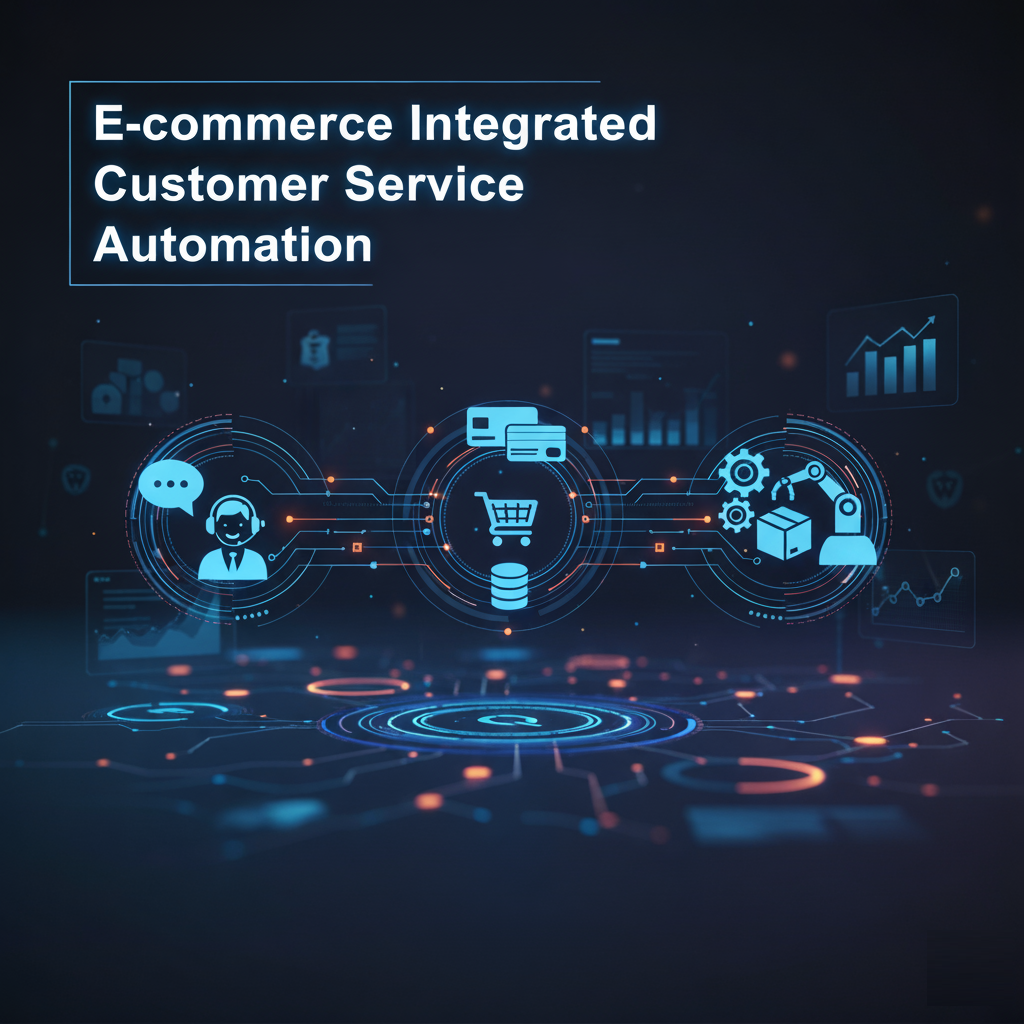
In today’s fast-paced digital world, E-commerce Integrated Customer Service isn’t just a nice-to-have; it’s a critical component for online businesses striving for success.
Imagine a world where every customer query, whether it arrives via chat, email, or phone, is handled efficiently and effectively, leading to happier customers and a more streamlined operation.
This isn’t a distant dream; it’s the reality that Quixess brings to the table through powerful automation. The challenges of managing customer service in e commerce support services are growing.
With multiple sales channels and increasing customer expectations, businesses often find themselves swamped.
From tracking orders to resolving complex issues, the sheer volume can be overwhelming. This is where automation steps in, transforming the way companies interact with their clientele.
It’s about more than just speed; it’s about creating a consistent, positive experience that builds loyalty and drives repeat business.
Quixess offers solutions designed to integrate seamlessly into your existing e-commerce platforms. This means less manual work for your team and more reliable support for your customers.
By automating routine tasks and centralizing communication, Quixess helps businesses overcome the common pitfalls of disjointed e commerce customer to customer interactions.
What Is E-commerce Customer Service?
At its core, e-commerce customer service means helping shoppers before, during, and after they buy—entirely online. Think live chat during checkout, automated return labels, or real-time tracking updates.
Unlike brick-and-mortar stores, there’s no smiling face behind a counter. Everything happens through screens, bots, emails, or apps.
But great e-commerce integrated customer service goes further. It links your store, inventory, CRM, shipping, and support into one smooth operation.
No more “I’ll check and get back to you.” No duplicate orders. No confused agents. Just clarity, speed, and care—delivered at scale.
Peak shopping season isn’t just about deep discounts and midnight doorbusters anymore. For online retailers, it’s the ultimate stress test of their e-commerce integrated customer service.
When traffic spikes, carts overflow, and questions flood in from all corners—your support system either soars or crumbles.
In today’s high-stakes digital marketplace, success hinges not on how many products you sell, but how well you serve. That’s where modern, seamless e-commerce integrated customer service becomes your secret weapon.
And this year, with consumer expectations higher than ever, businesses can’t afford to wing it—especially when e commerce customer to customer and customer to customer e commerce interactions are shaping brand reputation in real time.
Why Is E-commerce Customer Service Important?
Because online shoppers can’t touch, try, or ask in person. They rely on trust, speed, and reliability. Miss one of those, and they’re gone—likely to a competitor with better support.
In today’s hyperconnected landscape, e-commerce integrated customer service isn’t just about answering questions—it’s about building relationships, fostering confidence, and creating a seamless journey from browsing to post-purchase care.
Consider this:
- 90% of customers say immediate responses influence their loyalty (Forrester).
- 68% will abandon a purchase after just one bad service experience (PwC).
- During Black Friday, support tickets can surge 300–500% in 24 hours.
Without e-commerce integrated customer service, you’re not just risking sales—you’re risking your brand’s reputation.
And in an era where customer to customer e commerce plays a powerful role—through reviews, social proof, and peer recommendations—every interaction matters more than ever.
A single unresolved issue can ripple across platforms, influencing dozens of potential buyers.
That’s why businesses investing in truly integrated support systems are not only surviving peak seasons—they’re thriving.
They turn support from a cost center into a competitive advantage, powered by automation, real-time data, and a holistic view of the customer journey.
After all, in the world of e-commerce integrated customer service, excellence isn’t optional—it’s essential
Understanding Customer Expectations in the Digital Age
Today’s shoppers expect more than fast shipping. They want anticipatory support—intelligent, proactive, and tailored to their journey.
In an era defined by instant gratification and seamless digital experiences, e-commerce integrated customer service is no longer just a backend function; it’s a frontline promise to your customers.
Here’s what they truly care about:
- 24/7 availability – “I need help now, not tomorrow.”
- Personalization – “Don’t treat me like Ticket #4582.”
- Self-service options – “Let me track my order or start a return without calling anyone.”
- Consistency – “If I message via chat, email, or phone, the answer should be the same.”
These aren’t luxuries. They’re baseline expectations. And e-commerce integrated customer service is the only way to meet them—all at once—by unifying data, channels, and teams into a single, responsive ecosystem.
Businesses that master this integration don’t just satisfy customers—they earn trust, drive retention, and generate powerful word-of-mouth. In fact, E commerce integrated customer service reviews
Elements of Good E-commerce Customer Service
Great support isn’t magic. It’s built on clear, intentional pillars that work in harmony—and when powered by e-commerce integrated customer service, they create a customer experience that feels effortless, reliable, and human.
Here’s what truly matters:
- Speed: Fast replies, instant resolutions—because waiting erodes trust.
- Accuracy: Correct info every time—no “Let me check” or contradictory answers across channels.
- Empathy: A human tone, even in automation—acknowledging frustration, celebrating milestones, and showing you care.
- Accessibility: Support on every channel—chat, email, social, phone—so customers choose how they want to connect.
- Proactivity: Alerting customers about delays, out-of-stocks, or tracking updates before they even ask, turning potential frustration into appreciation.
When these elements work together through e-commerce integrated customer service, customers don’t just get answers—they feel valued, heard, and respected.
And this level of service doesn’t go unnoticed. Shoppers increasingly seek out E commerce integrated customer service reviews before making a purchase, using real user experiences to judge a brand’s reliability and responsiveness.
Likewise, having a visible and responsive E commerce integrated customer service number builds trust—especially for high-value orders or complex inquiries—proving you’re not hiding behind bots, but ready to assist when it matters most.
In today’s competitive landscape, these aren’t just “nice-to-haves.” They’re the foundation of loyalty, repeat business, and organic growth.
Because when your e-commerce integrated customer service operates as a unified, intelligent system, every interaction becomes a quiet promise kept—and a reason to come back.
Best Practices for Effective E-commerce Customer Service
Peak shopping season success starts long before the sale. In fact, the most successful online retailers treat the weeks leading up to peak shopping season as a critical rehearsal period—fine-tuning every touchpoint to ensure flawless execution when customer volume explodes.
Here’s how top brands prepare:
- Pre-load FAQs with peak shopping season–specific answers (shipping cutoffs, return windows, promo rules, gift-wrapping options).
- Train AI chatbots on seasonal queries—“Will my order arrive by Christmas?” or “Can I change my delivery address?”—so they resolve issues instantly without human intervention.
- Sync inventory in real time across all sales channels to prevent overselling—a major holiday nightmare that damages trust and triggers negative E commerce integrated customer service reviews.
- Empower agents with unified dashboards showing order history, customer preferences, past chats, and return behavior—enabling faster, more personalized support.
- Automate post-purchase communications: order confirmations, real-time shipping updates, delivery alerts, and even proactive delay notifications—reducing inbound tickets and anxiety.
And crucially, ensure your E commerce integrated customer service number and E commerce integrated customer service email are clearly displayed, consistently monitored, and seamlessly connected to your support ecosystem.
Customers should never feel lost in a loop—they need to know help is just a call or message away, especially during high-stress shopping moments.
These aren’t just “nice-to-haves.” They’re e-commerce integrated customer service essentials—non-negotiable components of a system designed to scale, adapt, and delight, even under pressure.
When everything works together—automation, human support, data, and communication channels—you don’t just survive peak shopping season. You build loyalty that lasts long after the last package is delivered.
Advantages and Benefits of Providing Great E-commerce Customer Service
Investing in support isn’t a cost—it’s a powerful growth engine that fuels every stage of the customer lifecycle.
In today’s digital-first retail environment, e-commerce integrated customer service is the backbone of trust, efficiency, and long-term profitability.
Here’s the real-world payoff:
- Higher conversion rates: Shoppers are far more likely to complete a purchase when they know help is just a click or call away—especially during peak shopping season when urgency meets uncertainty.
- Lower return rates: Clear product information, accurate size guides, and live assistance (via chat, E commerce integrated customer service email, or E Commerce customer service Number) drastically reduce purchase errors and buyer’s remorse.
- Increased loyalty: According to Salesforce, 77% of customers stick with brands that “get” them—anticipating needs, remembering preferences, and solving problems before they escalate.
- More referrals: Happy customers don’t just return—they rave. They leave glowing reviews, tag your brand on social media, and organically drive new traffic through word-of-mouth.
- Reduced operational chaos: When your support, sales, inventory, and fulfillment systems talk to each other through truly e-commerce integrated customer service, your team spends less time chasing data and more time delivering value—fewer miscommunications, fewer duplicate tickets, fewer frantic escalations.
And let’s not underestimate accessibility: prominently displaying your E Commerce customer service Number and E commerce integrated customer service email builds immediate credibility.
It signals transparency and accountability—key differentiators in a crowded online marketplace.
In short: better e-commerce integrated customer service = more revenue, less stress, stronger brand reputation, and a smoother experience for both customers and your internal teams—especially when demand surges during peak shopping season.
It’s not just about answering questions. It’s about creating a seamless, human-centered journey that turns first-time buyers into lifelong advocates.
How to Build a Winning E-commerce Customer Service Strategy
Start with your customer journey map. Where do people get stuck? Where do they ask questions? At which touchpoints do frustration or abandonment occur—during checkout, post-purchase tracking, or return initiation?
Then ask the hard-hitting questions:
- What channels do they prefer? Is it quick answers via E commerce integrated customer service chat, detailed help through E Commerce customer service Number, or asynchronous support via email?
- What’s our slowest response time? Are we failing customers at peak hours or during peak shopping season?
- Where do orders get lost or duplicated? Are inventory and CRM systems out of sync, causing confusion and eroding trust?
Next, choose tools that connect, not complicate. Your helpdesk, e-commerce store, warehouse management system, shipping provider, and email platform should all communicate in real time.
That seamless flow of data—customer history, order status, return eligibility, agent notes—is the very heart of e-commerce integrated customer service.
And don’t forget accessibility: offering multiple, synchronized entry points like E commerce integrated customer service chat for instant help and a reliable E Commerce customer service Number for complex issues ensures no customer falls through the cracks.
Finally, test relentlessly—especially before peak shopping season. Run mock traffic surges. Simulate return floods. Stress-test your chatbots, phone lines, and email queues.
Train your team (both human agents and AI assistants) on high-pressure scenarios: delayed shipments, promo code failures, inventory mismatches.
Because when systems are unified and teams are prepared, even the busiest days feel manageable.
Preparation beats panic every time—and with a truly integrated approach to e-commerce integrated customer service, you’re not just responding to customers… you’re anticipating their needs, earning their trust, and turning support into your strongest competitive advantage.
Common E-commerce Customer Service Pitfalls to Avoid
Even seasoned retailers stumble during peak shopping season—not because they lack products or marketing, but because their support systems crack under pressure.
The difference between a flawless season and a reputational nightmare often comes down to preparation and integration.
Watch out for these critical mistakes:
- Siloed systems: Your Ecommerce customer service agent in chat has no visibility into real-time inventory, shipping delays, or past interactions? That’s a disaster waiting to happen—and a fast track to frustrated customers and negative reviews.
- Over-automation: Bots that can’t escalate to a human or respond with cold, generic replies erode trust. Automation should enhance E commerce integrated customer service chat, not replace empathy or flexibility.
- No post-purchase support: Did you know that nearly 40% of service requests happen after checkout? From tracking inquiries to return requests, ignoring this phase means customers won’t just leave—they’ll remember the poor experience next time, leading to abandoned carts and lost lifetime value.
- Ignoring social media: A complaint on X (formerly Twitter) or Instagram can go viral before your team even sees it. Social channels are now frontline Ecommerce customer service touchpoints—delayed or absent responses signal indifference to your audience.
- Assuming “one size fits all”: A B2B buyer placing a bulk order needs detailed invoicing, contract support, and dedicated reps. A DTC holiday shopper wants fast, friendly help via E commerce integrated customer service chat. Treating them the same undermines both relationships.
The fix? True e-commerce integrated customer service—where order data, customer history, inventory status, and communication channels flow freely across your entire operation.
When your systems talk to each other, your teams stay aligned, and every interaction—whether via Ecommerce customer service phone, email, social, or E commerce integrated customer service chat—feels personal, informed, and timely.
In short: integration isn’t just about technology. It’s about ensuring every customer, at every stage, feels seen, heard, and valued—especially when it matters most.
Power of E-commerce Integrated Customer Service Automation
Why is E-commerce Integrated Customer Service so vital? Think about your own experiences as a customer. When you have a question or an issue, you want quick, accurate answers.
You don’t want to explain your problem multiple times to different people or on different channels. Ecommerce customer service that’s fragmented creates friction; e-commerce integrated customer service eliminates it.
Integration means all your customer’s information—orders, preferences, support tickets, and communication history—is unified in one central hub This single view of the customer is incredibly powerful.
Your ecommerce customer service team can instantly see past purchases, previous conversations across email, chat, or phone, and even browsing behavior that led to a purchase.
This context helps them resolve issues faster and offer more personalized support.
For example, if a customer calls about an order, the representative can immediately pull up their account, see exactly what they bought, check shipping status, and know if they’ve already reached out via Ecommerce customer service email or live chat.
This avoids frustrating repetitions, builds trust, and significantly shortens resolution time—especially critical during peak shopping season, when volume spikes and patience runs thin.
Furthermore, integrating customer service tools directly with your e-commerce platform prevents data silos. A silo happens when different parts of your business don’t share information.
In ecommerce customer service, this leads to confusion, conflicting answers, delayed resolutions, and even overselling or shipping errors.
An E-commerce Integrated Customer Service system breaks down these barriers, ensuring that every team—sales, marketing, logistics, and support—is working with the same real-time, up-to-date information.
This seamless flow of data makes your entire operation more efficient and responsive.
Stop the Overselling: A Key Benefit
One of the significant advantages of robust E-commerce Integrated Customer Service is its ability to prevent overselling.
Imagine a scenario where a popular item sells out on your website, but due to a delay in inventory updates, customers can still place orders.
This leads to disappointment, cancellations, and a lot of extra work for your customer service team who have to explain the situation.
Integrated systems, like Quixess, sync inventory levels across all your sales channels in real-time.
This means that when an item is sold on one platform, its availability is immediately updated everywhere else.
This proactive approach stops overselling before it happens. Customers only see products that are actually in stock, reducing frustration and improving their overall shopping experience.
It’s a simple yet incredibly effective way to enhance customer satisfaction.
When inventory is accurate, your support team spends less time dealing with angry customers about out-of-stock items and more time on valuable interactions.
This not only saves time and money but also protects your brand’s reputation.
Avoiding the “cost of doing nothing” – where overselling creates chaos – is a direct result of effective E-commerce Integrated Customer Service.
Centralizing Communication: The Integrated Number and Email
Think about the traditional ways customers reach out: phone calls and emails.
An effective E-commerce Integrated Customer Service system transforms these channels from isolated points of contact into connected parts of a larger support network.
For many customers, having an E-commerce integrated customer service number is crucial. They want to speak to a real person, especially for complex issues.
With Quixess, when a customer calls, their details and previous interactions are immediately available to the agent.
This means faster resolutions, as the agent doesn’t need to ask for order numbers or personal details repeatedly. The customer feels understood and valued, rather than just another caller.
Similarly, an E-commerce integrated customer service email system streamlines written communication.
Instead of emails getting lost in a generic inbox, they are automatically routed to the right team or agent. This ensures that every email is seen and responded to promptly.
Quixess can even categorize emails based on keywords, assigning them to specialists for specific types of queries. This intelligent routing means customers get expert help faster.
Both phone and email support benefit immensely from integration. Imagine a customer calls about an issue they first raised via email.
The agent can instantly see the email conversation, understanding the history without asking the customer to repeat themselves.
This not only saves time but also significantly improves the customer experience, making interactions feel smooth and effortless.
Real-time Support: E-commerce Integrated Customer Service Chat
In today’s digital landscape, instant gratification is often expected, and this extends to customer support.
This is where E-commerce integrated customer service chat comes into its own. Live chat offers immediate assistance, making it a favorite for many online shoppers.
Implementing a chat function through Quixess means customers can get answers while they’re still browsing your site or in the middle of a purchase.
This real-time interaction can be crucial for converting sales or preventing cart abandonment.
For instance, if a customer has a question about shipping costs or a product feature, they can get an answer instantly without leaving the page.
Beyond live agent chat, automation can power chatbots that handle frequently asked questions (FAQs).
These bots can provide instant answers to common queries 24/7, even outside business hours.
For more complex issues, the chatbot can seamlessly transfer the customer to a human agent, providing all the prior chat history.
This ensures a smooth transition and that the customer doesn’t have to start over.
An effective E-commerce integrated customer service chat system enhances availability, reduces response times, and improves overall customer satisfaction.
Fantastic! Let’s continue by exploring the profound operational advantages that a well-implemented E-commerce Integrated Customer Service system, like Quixess, brings to your business and team.
This will highlight the strategic value beyond just direct customer interactions.
Operational Efficiency: More Than Just Happy Customers
While customer satisfaction is a primary goal, E-commerce Integrated Customer Service also drives significant operational efficiency for your business.
When systems are connected, manual tasks decrease, and workflows become smoother. This translates into tangible benefits that impact your bottom line.
Consider the role of an E-commerce customer service job.
Without integration, an agent might spend valuable time navigating between different software programs: one for order details, another for shipping information, and yet another for communication history.
This constant switching wastes time and increases the risk of errors. With an integrated platform, all necessary information is accessible from a single dashboard.
This empowers your team to work faster and more accurately.
Furthermore, automation from Quixess reduces the workload on your human agents.
Routine inquiries, such as “Where is my order?” or “What is your return policy?”, can be handled by self-service options or chatbots.
This frees up your team to focus on more complex, high-value issues that truly require human intervention and empathy.
This smart allocation of resources means your existing team can handle more inquiries without feeling overwhelmed, leading to higher job satisfaction and lower employee turnover.
Role of E-commerce Customer Service Software
At the heart of an efficient operation is robust ecommerce customer service software. This software is the engine that powers the integration, automation, and data centralization essential for modern online retail.
Quixess provides a comprehensive suite of tools designed specifically for the unique demands of customer support for ecommerce—from real-time order tracking and AI-powered chat to unified agent dashboards and post-purchase engagement workflows.
Good E-commerce customer service software doesn’t just manage communications; it also offers deep analytical capabilities.
Imagine being able to identify common customer pain points, understand peak inquiry times during peak shopping season, and measure agent performance across channels—whether it’s email, social, or live ecommerce customer service interactions.
These insights are invaluable for continuous improvement. For instance, if many customers ask about product assembly, you might create a new video tutorial or update your product description to preempt those questions.
Moreover, the right software scales with your business. As your e-commerce store grows, so does your customer base and the volume of inquiries.
A scalable solution ensures that your customer support for ecommerce remains fast, accurate, and empathetic—without requiring a complete overhaul of your systems or constant retraining.
This foresight is crucial for long-term business health.
Quixess is built to grow alongside your e-commerce venture, ensuring your e-commerce integrated customer service remains top-notch, no matter your size—whether you’re handling dozens of orders a day or thousands during peak shopping season.
Understood. Let’s continue by highlighting the specific features and benefits that Quixess brings to the table, emphasizing its unique selling points within the e-commerce integrated customer service landscape.
This will provide concrete examples of how it delivers on the promises discussed earlier—such as unified customer views, cross-channel consistency, real-time inventory sync, and intelligent automation that enhances (rather than replaces) human customer support for ecommerce.
With Quixess, businesses don’t just respond to customers—they anticipate needs, resolve issues before they escalate, and turn every support interaction into an opportunity to build loyalty.
Choosing the Right Tools: E-commerce Customer Service Software
Generic helpdesks weren’t built for e-commerce. They lack order context, inventory visibility, and return automation.
Quixess is different. We’re built from the ground up for online retailers—so every feature serves your unique workflow.
Look for these must-haves:
- Native integrations with Shopify, WooCommerce, Amazon
- Real-time inventory and order visibility in support tickets
- Automated returns and exchanges
- Unified inbox for chat, email, and social
- AI that suggests responses based on order data
Only with these can you deliver true e-commerce integrated customer service.
What Is Integrated Customer Service Software in E-commerce?
It’s a platform where your store, customers, suppliers, and support team all speak the same language.
When a customer messages, “Has my order shipped?” your agent sees:
- The product
- The supplier
- Real-time tracking
- Past interactions
- Return eligibility
All in one screen. No switching tabs. No “Let me check.”
That’s e-commerce integrated customer service—and it’s what Quixess delivers.
Traditional vs. E-commerce–Specialized Customer Service Software
In traditional retail, customer support for ecommerce simply doesn’t exist—because the model itself is built for in-person interactions.
But when traditional customer service approaches are applied to online stores, they fall short in critical ways: order lookups require agents to hand-enter details, inventory visibility is limited or nonexistent, returns demand custom-built (and often broken) workflows, supplier information remains hidden from support teams, and peak events like peak shopping season can easily overwhelm systems and staff.
E-commerce–specialized customer service software flips this reality entirely. Orders auto-sync directly from the store into the support dashboard, eliminating tedious manual entry and human error.
Real-time inventory visibility spans multiple warehouses and sales channels, empowering agents with accurate, up-to-the-minute stock data—so they never promise what isn’t available.
Returns are streamlined with built-in, one-click automation that integrates shipping labels, refund rules, and restocking logic, making the process frictionless for both customers and teams.
Full supplier and product context—lead times, variants, backorder status—is readily available within the agent interface, enabling faster, more informed resolutions.
And when peak shopping season hits, the system scales effortlessly—handling spikes in tickets, chat volume, and order changes without slowing down.
What used to be chaos becomes seamless, confident customer support ecommerce that builds trust instead of frustration. The difference isn’t small—it’s transformative.
With true e-commerce integrated customer service, businesses don’t just keep up—they stay ahead, delivering consistent, intelligent, and human-centered experiences at every touchpoint.
Whether it’s a simple tracking question or a complex multi-order issue, customer support for ecommerce powered by specialized software ensures every interaction reflects your brand’s reliability and care.
Key Features to Look for in an E-commerce Customer Service Platform
- Unified communication inbox
- Live order and inventory dashboard
- AI-powered agent suggestions
- Automated return workflows
- Multi-channel support (chat, email, phone)
- Supplier integration
- Real-time sync across all systems
These aren’t “nice-to-haves.” They’re the foundation of modern e-commerce integrated customer service.
Best Practices for Implementing a Specialized E-commerce Customer Service Solution
- Start with a pilot: integrate one store first.
- Map key customer journeys (e.g., “track order,” “start return”).
- Migrate historical data carefully.
- Train agents on both tools and empathy.
- Set up KPIs from day one—track CSAT, resolution time, error rates.
Quixess makes onboarding smooth, with dedicated support and pre-built templates.
When to Integrate an E-commerce Support Platform
You’re ready if:
- Your team spends more time searching for info than solving problems.
- Customers complain about inconsistent answers.
- Returns take days to process.
- You’re scaling but feel like you’re hitting a wall.
Don’t wait for a crisis. Build your e-commerce integrated customer service system now—so you’re ready for whatever comes next.
Experience our premier-level service for free, giving you access to cutting-edge tools and support to elevate your business. After the beta period, enjoy a 10% discount on any subscription level you choose, ensuring ongoing value
Quixess in Action: Features That Transform Support
So, how does Quixess actually deliver on the promise of seamless e-commerce integrated customer service?
It’s through a carefully designed suite of features that directly address the pain points of both customers and businesses.
Quixess isn’t just another tool; it’s a strategic partner for your e-commerce growth—engineered to elevate customer support ecommerce and customer care ecommerce to new levels of efficiency and empathy.
One of its core strengths lies in its advanced ticketing system.
When a customer reaches out—whether through an e-commerce integrated customer service email, live chat, social media, or phone call—Quixess automatically creates a unified ticket.
This ticket centralizes all communications, internal notes, order history, return status, and relevant customer data in one intuitive view.
Agents can instantly see the full context of every interaction, ensuring they’re always fully informed—no guesswork, no blind spots.
This eliminates the need for customers to repeat themselves, a common frustration that erodes trust and damages brand perception.
In the world of customer care ecommerce, consistency and continuity aren’t optional—they’re expected.Beyond basic ticketing, Quixess offers intelligent routing powered by AI and business rules.
This means customer inquiries aren’t just randomly assigned. Instead, they’re smartly directed to the agent or department best equipped to handle them.
For example, a question about a technical product might go to a certified tech specialist, while a billing inquiry is routed to the finance support team—and a return request triggers an automated workflow with label generation.
This ensures customers get accurate, efficient help the first time, significantly reducing resolution times and increasing satisfaction.
During peak shopping season, when ticket volume surges and response expectations intensify, this intelligent system prevents bottlenecks and maintains service quality without overburdening your team.
This proactive, insight-driven approach to e-commerce integrated customer service—backed by seamless automation, contextual awareness, and human-centered design—is what sets Quixess apart.
It doesn’t just manage support; it transforms customer support ecommerce into a growth lever and turns customer care ecommerce into a brand-defining experience.
Real-time Sync and Personalization with Quixess
A standout feature of Quixess is its real-time synchronization capabilities. As discussed earlier, this is crucial for preventing overselling.
Quixess connects directly to your e-commerce platform and marketplaces, updating inventory, order statuses, and customer information instantaneously.
This means your support team always has the most current data, allowing them to provide precise answers and manage expectations effectively. This real-time data also fuels personalization.
With a complete view of the customer’s purchase history, preferences, and previous interactions, Quixess empowers agents to offer highly personalized support.
They can recommend relevant products, proactively offer solutions based on past issues, or even send personalized follow-ups.
Such attention to detail makes customers feel valued and understood, fostering loyalty that goes beyond a single transaction.
For example, if a customer frequently purchases a specific brand, Quixess can alert the agent, allowing them to mention new products from that brand or offer a discount on their next purchase.
This level of personalized E-commerce Integrated Customer Service turns routine support interactions into opportunities for customer engagement and sales. It’s about building relationships, not just processing requests.
The Tangible ROI: Investing in Integrated Customer Service
Implementing E-commerce Integrated Customer Service through a platform like Quixess isn’t just an expense; it’s a strategic investment with a clear and measurable return.
The benefits extend far beyond simply making customers happy; they directly impact your business’s profitability and growth.
Consider the reduction in operational costs. By automating routine inquiries and streamlining workflows, your team becomes more efficient.
This means you can handle a higher volume of customer interactions with the same or even fewer resources.
The time saved by not switching between multiple systems, not repeating information, and not dealing with preventable issues like overselling, directly translates into financial savings.
This is a significant factor for any E-commerce customer support job. Furthermore, improved customer satisfaction leads to increased customer retention. Loyal customers are your most valuable asset.
They spend more, refer new customers, and are more forgiving of occasional issues.
By providing exceptional E-commerce Integrated Customer Service, you build this loyalty, reducing customer churn and increasing the lifetime value of each customer.
Happy customers are repeat customers, and this directly boosts your revenue. The ability to gather actionable insights from your customer service data also contributes to ROI.
Understanding common product issues or service gaps allows you to make informed business decisions, improve your offerings, and even optimize your website.
This continuous feedback loop, powered by sophisticated Ecommerce customer service software, helps your business evolve and stay ahead of the competition.
Getting Started With E-commerce Customer Support
Begin with clarity:
- Identify your biggest pain points (e.g., slow returns, inventory errors).
- Choose a platform built for e-commerce—not retrofitted.
- Integrate your store and key suppliers.
- Automate one workflow at a time (start with returns or order tracking).
- Measure, refine, and expand.
With Quixess, you’re not just adopting software—you’re upgrading your entire operation.
Ready to Provide Great Customer Service for E-commerce?
Great service isn’t about having the most agents. It’s about having the smartest system. With e-commerce integrated customer service from Quixess, you deliver speed, accuracy, and care—at any scale.
E-commerce Integrated Customer Service Automation – FAQs
What is fully integrated e-commerce? It’s when your store, inventory, suppliers, shipping, and support all share data in real time—so nothing falls through the cracks. This level of cohesion is the foundation of true e-commerce integrated customer service, enabling seamless experiences across every touchpoint.
How does e-commerce integration work? Through secure APIs or native apps, Quixess connects your platforms so data flows automatically—orders sync, inventory updates in real time, and support tickets auto-create. This eliminates manual work and ensures consistent, up-to-date information for both your team and your customers, a core pillar of e commerce support services.
What are the challenges of e-commerce integration? Legacy systems, mismatched data formats, and poor vendor support often slow down or block integration efforts. Quixess solves these with e-commerce-native architecture, pre-built connectors, and seamless onboarding—so you get results fast, without the headaches.
What are the types of e-commerce services? B2B, B2C, D2C, and C2C (e commerce customer to customer). Each model has unique workflows, expectations, and support needs. For example, customer to customer e commerce platforms require robust moderation, transaction transparency, and peer dispute resolution—features Quixess supports with flexible, scalable automation tailored to every business type.
How do I improve my e-commerce customer service? Integrate your systems with Quixess, automate high-volume tasks like returns and tracking updates, empower agents with full customer and order context, and measure performance weekly. Strong ecommerce and customer service alignment turns support from a cost center into a loyalty engine—especially during peak shopping season.
What are the key features of an e-commerce customer service platform? Order visibility, return automation, real-time inventory sync, AI-powered agent suggestions, supplier integration, and unified communication across email, chat, phone, and social—all powered by Quixess. These capabilities ensure your e commerce support services are proactive, personalized, and efficient.
What tools help improve e-commerce customer service? Quixess leads the way with true e-commerce integrated customer service—designed specifically for modern retailers who demand more than generic helpdesks. Whether you’re managing B2B contracts or facilitating customer to customer e commerce transactions, Quixess delivers the intelligence, integration, and insight you need to excel.
Where Customer Service Meets Seamless Integration
In e-commerce, your support system is your storefront, your sales team, and your reputation—all in one. The landscape of online retail is constantly changing, and customer expectations are only getting higher.
To thrive, businesses must adapt and embrace solutions that offer efficiency, personalization, and seamless integration. E-commerce Integrated Customer Service is no longer optional; it’s essential for sustained success.
Quixess offers a robust, scalable, and intuitive platform designed to automate and enhance every aspect of your customer support.
From centralizing your E-commerce integrated customer service number and E-commerce integrated customer service email to empowering real-time chat and preventing overselling, Quixess is built to elevate your customer experience and streamline your operations.
Stop letting fragmented systems and manual processes hold your business back. It’s time to realize the “cost of doing nothing” and instead invest in a solution that pays dividends.
With Quixess, you don’t just respond to customers. You anticipate their needs, solve problems before they arise, and build lasting loyalty through seamless, intelligent experiences
That’s the power of e-commerce integrated customer service. Ready to transform your customer service from a challenge into a competitive advantage?
Discover how Quixess can revolutionize your E-commerce Integrated Customer Service today. Visit our website or contact us for a personalized demo!
Experience our premier-level service for free, giving you access to cutting-edge tools and support to elevate your business. After the beta period, enjoy a 10% discount on any subscription level you choose, ensuring ongoing value