
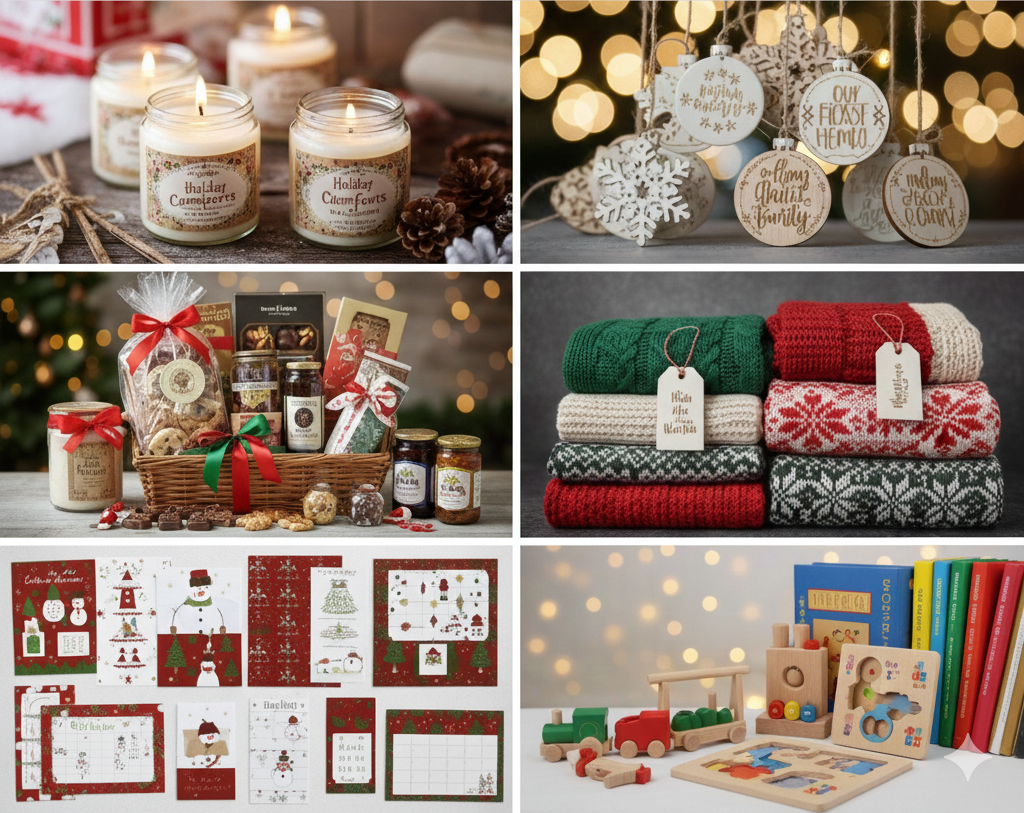
Evergreen holiday product categories are the quiet millionaires of the reselling world. While 95 % of sellers pack up their Christmas inventory on December 26 and pray for next November, a small, savvy group keeps the sales notifications buzzing in March, July, and even October — and they do it with a smile and a much smaller workload.
Let us introduce you to Lauren Carter, a 36-year-old former third-grade teacher from Charlotte, North Carolina, who turned a $400 January experiment into a six-figure, location-independent business built almost entirely on evergreen holiday product categories.

Three years ago Lauren was exhausted. She spent October through December working 80-hour weeks, wrapping fragile ornaments at 2 a.m., racing to the post office before cutoff, and still barely breaking even after fees and shipping. January hit like a brick wall — sales dropped 92 %, and she seriously considered going back to the classroom.
Then a friend mentioned seeing a 1970s ceramic Christmas tree sell for $280… in April. Lauren dug deeper, and what she found changed everything: an entire underground economy of evergreen holiday product categories that collectors, interior designers, gift shoppers, and nostalgia lovers buy 365 days a year.
Today Lauren works about 25 hours a week, travels four months a year, and her single best sales month of 2024 was — you guessed it — February. Here’s the exact playbook she uses (and the same categories thousands of other full-time sellers swear by).
1. Vintage & Antique Christmas Ornaments – The Tiny Time Capsules That Pay Rent
There’s something magical about a hand-painted glass ball from 1958. It doesn’t just decorate a tree — it teleports the owner straight back to childhood living rooms filled with tinsel and Perry Como records.
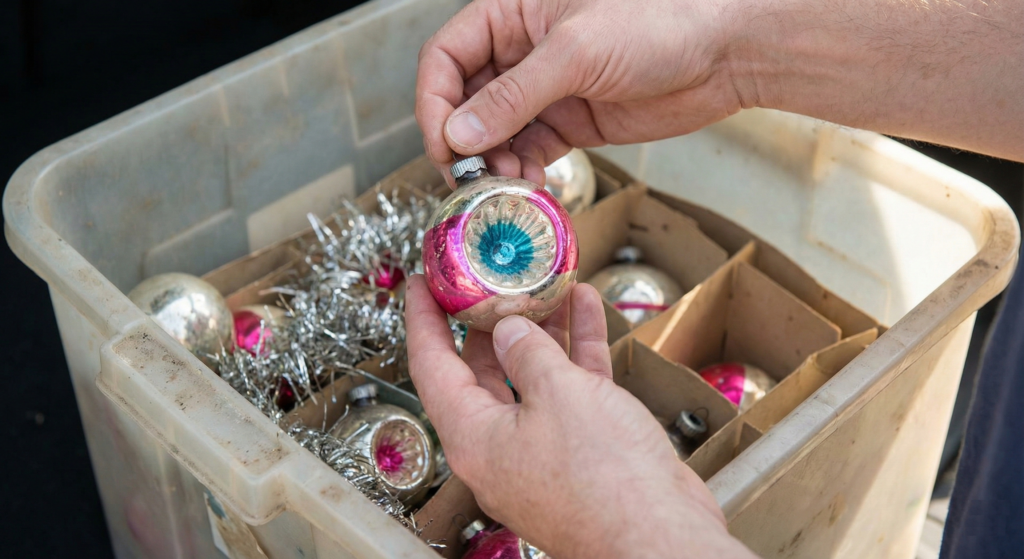
That emotional rocket fuel is why these searches never slow down:
- “vintage christmas ornaments lot”
- “shiny brite ornaments”
- “poland indent ornaments”
- “west germany indent ornaments”
- “made in japan christmas ornaments”
- “figural christmas ornaments vintage”
Real sold prices from the last 12 months (outside of November/December):
- Mixed lots of 25–50 average ornaments → $280–$920
- Premium boxed Shiny Brite sets (12–24 count) → $420–$1,650
- Single rare shapes (mushroom clip-ons, lanterns, double indents, bells with clappers, churches) → $55–$195 each
- Anything still in original cardboard dividers → instant 2–4× multiplier
Lauren’s all-time favorite score: a cracked Tupperware bin at a church rummage sale marked “$15 – Christmas junk.” Inside were 63 pieces, mostly 1950s–60s Shiny Brite and Poland indents. Total profit after slow-selling individually over eight months? $2,837. One lone red mushroom clip-on sold in August for $138 to a bride who wanted it for her winter wedding tree.
Sourcing secret most people miss: Hit neighborhood “curb alerts” on Facebook Marketplace in late January. Families drag entire tubs to the street after the holidays. Lauren has pulled $3,000+ worth of ornaments from the curb — for free.
2. Light-Up Ceramic Christmas Trees – Grandma’s Glow Is Now Gen-Z Gold
If you thought these trees peaked in 1978, think again. TikTok and Pinterest revived them, and now every 25-year-old with a studio apartment wants the glow.
Searches that stay red-hot year-round:
- “ceramic christmas tree vintage”
- “atlantic mold ceramic tree”
- “lighted ceramic christmas tree”
- “small ceramic christmas tree”
- “musical ceramic christmas tree”
Current non-holiday price ranges (verified January–October 2025 data):
- Large 18–26 inch trees, 90 %+ bulbs, working light → $240–$580
- Tabletop 8–15 inch trees → $98–$295
- Rare colors (white, bisque, flocked, blue) → $380–$920
- Musical bases (even if tree is rough) → $250–$600 for the base alone
Lauren sold a 12-inch tree missing 11 bulbs and sporting a hairline crack for $212 in June. Buyer message: “My mom threw hers out in the 90s and has regretted it ever since. Surprise gift — she cried happy tears.” That’s the kind of feedback that reminds you why evergreen holiday product categories feel so good to sell.
Bonus hack: Buy the bases separately when you find them. People break trees but keep the musical/light base. Those bases alone sell for $120–$350 all year.
3. Vintage Aluminum Christmas Trees – The Sparkling Silver Cash Machines
Nothing screams mid-century cool like a 7-foot silver tinsel tree slowly rotating under a four-color wheel. Interior designers, Airbnb hosts, and retro enthusiasts pay stupid money for the real deal.
Searches that never sleep:
- “vintage aluminum christmas tree”
- “evergleam aluminum tree”
- “aluminum christmas tree color wheel”
- “sparkler pom pom tree”
- “aluminum tree rotating stand”
2024–2025 sold data:
- Complete 6–7 ft Evergleam or Sparkler with original box, sleeves, stand, and working color wheel → $720–$1,680
- Tree only (no wheel) → $320–$680
- “For parts or repair” trees → $180–$490
- Stand-alone original color wheels → $190–$445
Lauren’s funniest flip: a garage-sale owner said, “Take this ugly silver thing for $40, just get it out of my sight.” It was a 6 ft Evergleam missing 30 branches. She sold the intact color wheel for $385 in July and the remaining branches/sleeves as a restoration lot for another $340. Total profit on something someone considered trash: $725.
4. Department 56, Lemax, and Christmas Village Collectibles – The Collection That Never Ends
Start a village, and you’re hooked for life. Collectors are always missing that one retired bakery, the animated ski hill from 2004, or the limited-edition church with the fiber-optic steeple.
These pieces sell strong year-round:
- Department 56 Snow Village, North Pole, Dickens, New England, Alpine Village
- Lemax Caddington, Spooky Town, Sugar N Spice, Carnival
- Retired animated/musical buildings → pure profit rocket fuel
Average sold prices (non-holiday months):
- Standard retired buildings → $80–$420
- Animated, musical, or lighted rare pieces → $480–$1,800
- Full collections (20–60 pieces) bought cheap → parted out for 4–8× return
Lauren’s record: bought a 48-piece Department 56 Snow Village collection in March for $1,100 from a couple moving to Florida. She’s already cleared $7,400 and still has 11 pieces left. That’s what evergreen holiday product categories do — turn one smart buy into a year of paychecks.
5. The Nightmare Before Christmas Collectibles – The Category With Two Peak Seasons and No Off-Season
Jack Skellington doesn’t do “slow months.”
Top movers that sell in every season:
- 1993 NECA coffin-box Jack (MIB)
- Department 56 Nightmare village pieces
- Early Jun Planning figures
- Hot Topic and Disney Store exclusives 1995–2005
- Limited Funko Pops and pins
A single mint 1993 coffin-box Jack sold for $682 in May 2025. Buyer note: “For our Halloween-themed wedding altar — thank you for keeping it perfect!”
Because this category spikes hard for both Halloween and Christmas yet maintains a healthy baseline the other ten months, it’s arguably the single best example of true evergreen holiday product categories.
Why These Five Evergreen Holiday Product Categories Will Still Be Hot in 2030
They check every box that creates unbreakable demand:
- Irreplaceable nostalgia (you can’t manufacture “childhood”)
- Permanently limited supply (factories closed decades ago)
- Passionate, well-funded collectors who buy constantly
- Instagram-worthy photos that stop the scroll
- Small, lightweight, easy (and profitable) to ship
How Lauren Went From Burnt-Out Teacher to Six-Figure Reseller Without Working Harder
The turning point wasn’t finding better products — it was finding a better system.
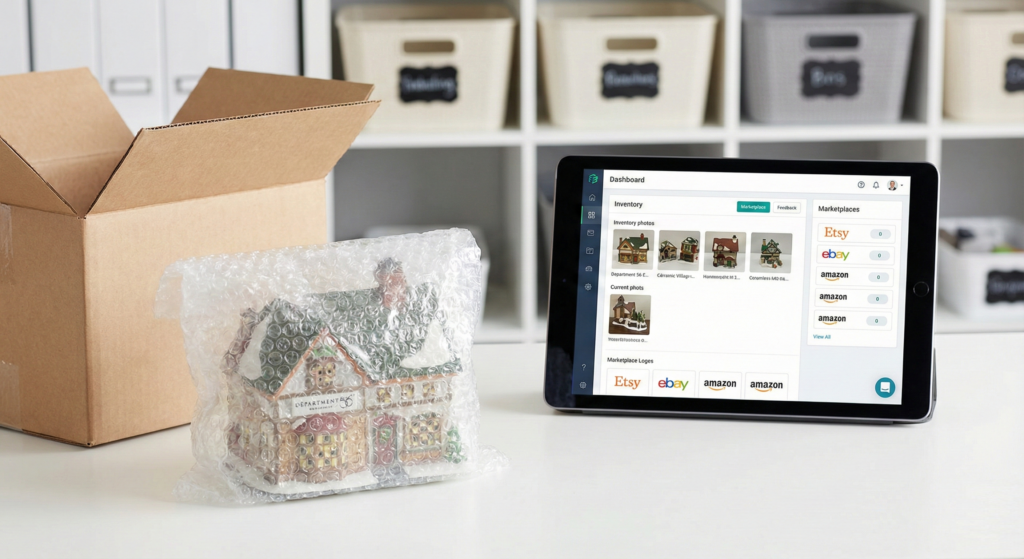
Lauren used to list the same ceramic tree four times — once on eBay, once on Etsy, once on Shopify, once on Amazon. Every sale meant manually ending the other three listings. One mistake cost her $340 and a nasty feedback.
Now she uses a single dashboard that automatically publishes listings to Shopify, Amazon, eBay, Wix, Etsy, Square, and WooCommerce all at once. When that $289 tree sells on Etsy at midnight, the system instantly removes it from the other six platforms. Stock never goes negative. Orders land in one place. Price changes take three clicks. She gained an extra 20–30 hours a week and doubled her revenue in the same year.
Ready to make your holiday inventory work harder than ever?
→ Enjoy a 10% discount on any subscription level you choose and lock in the savings for life.
Your Step-by-Step 90-Day Plan to Dominate Evergreen Holiday Product Categories
- Weeks 1–4: Source aggressively in January–March (best months for deals).
- Weeks 5–8: Photograph everything in bright natural light, write titles using the exact buyer phrases above.
- Weeks 9–12: List 20–30 new items every single week — consistency beats volume.
- Reinvest 70 % of profits into more inventory, 20 % into better photos/lighting, 10 % into yourself (vacation counts!).
- Repeat forever.
Lauren followed this plan with $400 starting cash in 2023. Twelve months later she crossed six figures. Today she mentors new sellers and still follows the same simple system.
Frequently Asked Questions About Evergreen Holiday Product Categories
Q: Is this really still working in 2025–2026?
A: Stronger than ever. Demand grows every year as more Gen Z discovers mid-century and 90s nostalgia.
Q: How much money do I realistically need to start?
A: Lauren started with $400. Most successful sellers begin between $300–$1,000 and scale fast.
Q: What sells the absolute fastest?
A: Small Shiny Brite lots (12–30 pieces) and 9–15 inch ceramic trees — often gone in 3–14 days, even in summer.
Q: Do I need a fancy camera?
A: Nope. Lauren uses her iPhone 13 and a $30 white foam board from Walmart. Good light > expensive gear.
Q: Should I worry about storage space?
A: These categories are compact. Lauren runs her entire six-figure business from a 10×10 spare bedroom.
The truth is straightforward: the smartest resellers stopped chasing seasons and started building businesses around evergreen holiday product categories that deliver joy (and profit) all year long.
Lauren’s final words to anyone still on the fence:
“January used to be my scariest month. Now it’s my favorite. The buyers are already out there — go get them.”
Ready to turn your holiday side hustle into a full-time income that never takes a vacation?
→ Click the button and enjoy a 10% discount on any Quixess plan. One dashboard, every marketplace, and evergreen holiday product categories that finally live up to their name.
Here’s to building a business that keeps giving long after the tree comes down.