
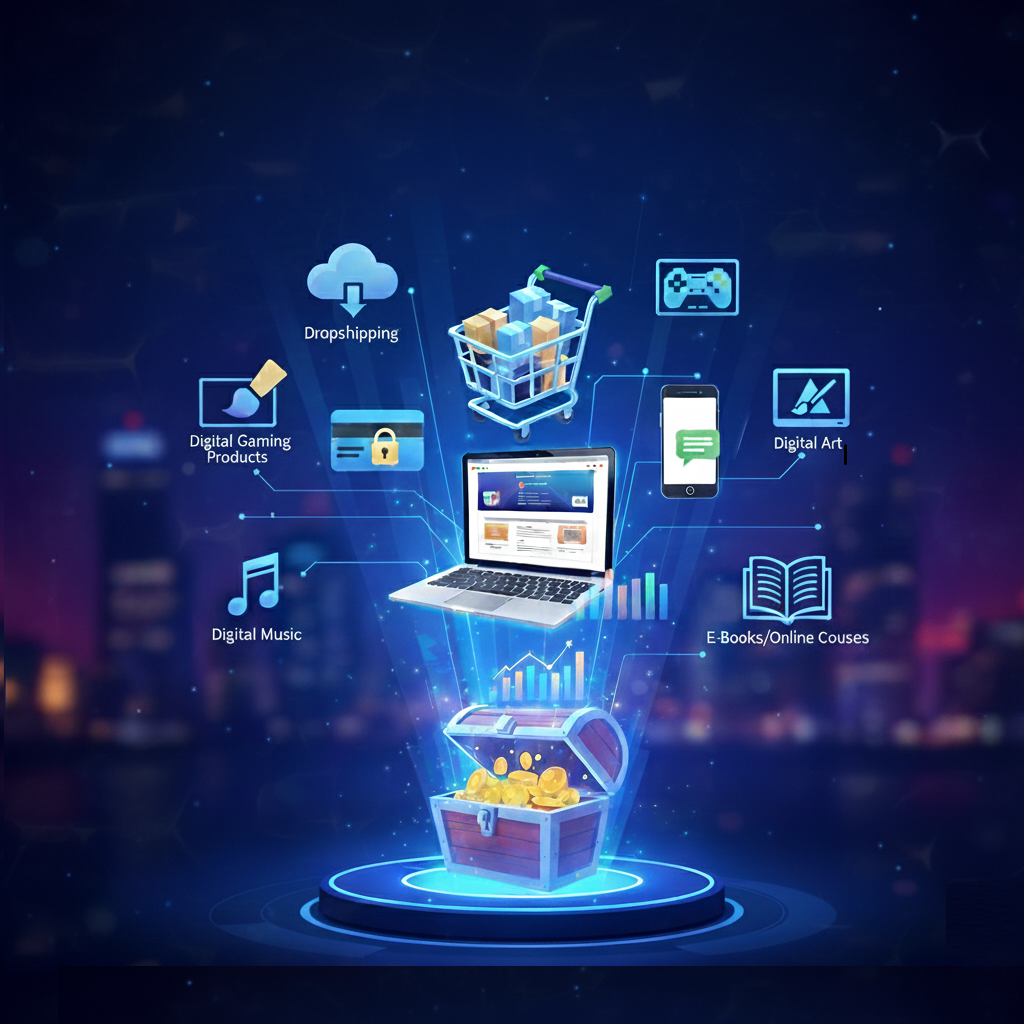
The promise of running a lucrative online store without inventory has never been more attainable, but the path to high-volume e-commerce success requires advanced technological infrastructure.
The traditional barrier of inventory—the cost, the storage, the risk of obsolescence—has long kept aspiring entrepreneurs on the sidelines. In 2025, that barrier is gone.
We are entering the age of the asset-light e-commerce store, where your success is measured not by the size of your warehouse, but by the efficiency of your logistics network and the creativity of your digital marketing.
The modern e-commerce entrepreneur doesn’t just need a dropshipping app; they need a comprehensive business operating system.
This system must eliminate human error, ensure regulatory compliance, and guarantee profit on every single sale.
Quixess Automation is precisely that system—an all-in-one platform built to scale your zero-inventory business far beyond the limitations of manual or semi-automated processes
This detailed guide outlines the advanced strategies and core modules within Quixess that turn a simple dropshipping store into a hands-free, high-profit enterprise.
Furthermore, it addresses the need for multi-channel integration and the development of a unique brand identity, even without holding a single physical product.
This guide is your complete blueprint for building a thriving online business without ever touching a product.
We will dive deep into various business models, explore fulfillment alternatives, walk through the essential 4-step action plan, and look at advanced solutions like the Quixess model that streamline operations for maximum profit and minimum headache.
By the end of this post, you’ll have a clear roadmap to launch your own successful venture and start building your e-commerce legacy, even if you start with a free ecommerce website.
What is Dropshipping?
Drop shipping is how to start an online store without inventory. At its simplest, dropshipping is a retail fulfillment method where a store doesn’t keep the products it sells in stock.
Instead, when the store sells a product, it purchases the item directly from a third party—the supplier or manufacturer—and has it shipped directly to the customer.
The key benefit is that the seller never handles the product. Your role shifts from managing stock and logistics to focusing purely on two things: marketing and customer service.
You are the intermediary, the brand, and the customer interface, while your partners handle the physical goods.
This model is the cornerstone of the inventory-free e-commerce movement, offering unparalleled flexibility and low startup costs.
Building Your Online Store Without Inventory
Moving to a zero-inventory model isn’t just about dropshipping; it’s a strategic shift in how you view the retail supply chain. It means decoupling your capital from physical goods.
Instead of using money to purchase inventory (which can sit on shelves), you use your capital for marketing and platform development.
This dramatically lowers the risk profile of your business. If a product doesn’t sell, you haven’t lost money on buying hundreds of units. You simply stop marketing it and move on to the next trend.
Pros and Cons of Selling Online Without Inventory
Every powerful business model has trade-offs. Understanding these is crucial for long-term success.
Pros: The Freedom and Flexibility
- Low Startup Costs: This is the most significant advantage. There’s no need for major upfront investment in inventory, warehouse space, or packaging materials. This makes e-commerce accessible to nearly anyone—perfect for launching a free online store without inventory or even a free ecommerce website.
- Flexibility and Variety: You can offer a massive range of products instantly. Testing new niches, swapping out failing products, or following fast-moving trends is immediate and painless, allowing you to react to the market much faster than traditional retailers. Communities like online store without inventory reddit threads highlight how entrepreneurs use this to pivot quickly.
- Location Independence: Since you don’t handle physical goods, you can run your entire business from anywhere in the world with an internet connection.
- Scalability: When a product hits, scaling is often as simple as increasing your marketing budget and notifying your supplier. There are no physical limits (like warehouse size) immediately holding you back. Building Your Online Store Without Inventory with tools like Pry enables seamless growth without stock headaches.
Cons: The Trade-Offs
- Lower Margins: Because you’re paying a supplier to handle the product, fulfillment, and shipping, your wholesale cost is generally higher than if you purchased in bulk. This necessitates a strong pricing and marketing strategy.
- Inventory Control Issues: This is the biggest operational challenge. You are reliant on your supplier’s inventory data, which can sometimes be delayed or inaccurate, potentially leading to overselling a product that is out of stock.
- Shipping and Fulfillment Complexity: You often deal with multiple suppliers, leading to varying shipping times and costs. If a customer orders two items from two different suppliers, they receive two separate packages, but you must manage the customer experience as a single transaction.
- Quality Control: Since you never see the product, ensuring consistent quality is a challenge. Finding reliable, high-quality suppliers is the most critical factor for success in any online store without inventory setup.
Best online store without inventory – Discover how to start an online store without inventory for free using powerful, low-risk models. Build a free ecommerce site today with zero stock, minimal upfront costs, and scalable profits.
I. Various Business Models for Selling Without Inventory
While dropshipping is the most famous, several other powerful models allow you to sell online without owning physical stock. Choosing the right model depends on your skills, capital, and branding goals.
Dropshipping
This is the pure play. As covered, you list, market, and sell a product, and a third-party supplier handles the rest.
- Steps: Setting up your dropshipping website, Finding products and inventory to sell, Marketing your dropshipping business.
- Deep Dive: Success in modern dropshipping hinges on niche selection (avoiding oversaturated markets like general electronics) and supplier vetting (prioritizing fast, reliable shipping and high product quality over the absolute lowest price).
What is Print-on-Demand (POD)?
Print-on-Demand is a variant of dropshipping focused specifically on customized products, such as apparel, mugs, phone cases, and wall art – perfect for launching a best online store without inventory.
- The Model: You create the designs (or hire a designer), and a POD company (like Printify or Printful) integrates with your online store. When a customer buys a t-shirt with your design, the POD company prints the design onto the blank item, packages it, and ships it directly to the customer.
- Key Advantage: You create your own unique, branded product line. This solves the dropshipping challenge of selling generic, commodity products. You own the intellectual property (the design), leading to higher margins and a stronger brand identity.
- Steps:
- Design unique graphics or slogans.
- Integrate your e-commerce store with a POD platform.
- Create mock-ups of your products using the platform’s tools.
- Market your branded collection.
This is also a great way to learn how to start an online clothing store without inventory or even how to start an online boutique without inventory, as it allows full creative control over fashion and apparel items.
What is an Affiliate Store?
The affiliate model is the most capital-light of all – an ideal way to start an online store without inventory for free.
You don’t sell products; you simply refer customers to another retailer’s website (like Amazon, a software company, or a major clothing brand) and earn a commission on any resulting sales.
- The Model: You create a content platform—a blog, a review site, a YouTube channel, or a specialized product comparison tool. Your goal is to drive high-intent traffic to your platform, where you link out to the final retailer using unique affiliate links.
- Key Advantage: Zero logistics, zero customer service, zero inventory. Your only job is content creation and traffic generation.
- Steps:
- Choose a focused niche (e.g., “Best Eco-Friendly Hiking Gear”).
- Create valuable content (reviews, guides, comparisons).
- Apply to relevant affiliate programs (Amazon Associates, ShareASale, etc.).
- Insert affiliate links into your content.
This is a proven method for selling products without inventory and generating passive income.
What is Digital Products and Services?
Why sell a physical product at all? Digital products are pure profit once they are created, with zero fulfillment costs – making them a top choice for a free ecommerce site.
- The Model: Sell downloadable goods or recurring services. Examples include e-books, online courses, software subscriptions (SaaS), graphic design templates, stock photos, fitness plans, or budgeting spreadsheets.
- Key Advantage: Infinite scale and 100% profit margin after initial development costs. Delivery is instantaneous and automatic.
- Steps:
- Identify a problem or a skill gap in a market.
- Develop a high-value solution (e-book, course, template).
- Host the file/service on your e-commerce platform.
- Use email marketing and social media to sell access.
This model is ideal for entrepreneurs looking to build an online store no inventory based entirely on knowledge and creativity.
II. Fulfillment and Logistics Models (Alternatives to Inventory)
Even when you’re not stocking inventory, you need a robust plan for how the product does get to the customer. These models define the logistical relationship you have with your partners.
How to sell on Amazon without inventory is simple with models like dropshipping, Amazon Merch, or Kindle Direct Publishing.
Build a free online store creator using a free online shop builder or web store builder free to launch your e-commerce business with zero upfront inventory costs.
Focus on models like dropshipping, print-on-demand, or digital products to sell without ever touching stock.
What is Fulfillment by Amazon (FBA)?
FBA is Amazon’s service where you send your inventory to Amazon’s fulfillment centers. While this technically involves buying inventory upfront, the day-to-day operation is hands-off for the seller.
- The Model: You source and purchase products (often internationally). You prepare and ship those products in bulk to an Amazon warehouse. When a customer buys your product on Amazon (or even your own website, using FBA Multi-Channel Fulfillment), Amazon picks, packs, and ships the item, and handles customer service and returns for you.
- Key Advantage: Access to Amazon’s world-class logistics network and the crucial Prime badge, which significantly boosts conversion rates.
- Steps:
- Source a product and vet the supplier.
- Create an Amazon Seller Central account.
- Prepare and label your inventory according to Amazon’s strict guidelines.
- Ship the inventory to the designated Amazon FBA warehouse.
What is a Third-Party Logistics (3PL) Company?
A 3PL is a company that provides outsourced logistics services. This is essentially a professional dropshipping model, often used when scaling beyond the capacity of a single manufacturer.
- The Model: You purchase inventory and ship it to the 3PL’s warehouse. The 3PL then acts as your dedicated fulfillment partner, integrating directly with your e-commerce store (e.g., Shopify). They store your products, and when an order comes in, they pick, pack, and ship it under your brand’s name.
- Key Advantage: You maintain greater control over packaging, branding, and shipping speed than traditional dropshipping, as you own the relationship with the 3PL. It allows you to buy in bulk (getting better margins) without managing the physical warehouse yourself.
- Steps:
- Source and buy your inventory in bulk.
- Negotiate rates and integrate your store with a 3PL partner.
- Ship your bulk inventory to the 3PL’s warehouse.
- They handle all subsequent fulfillment, often offering faster delivery than most international dropshipping suppliers.
What is Multi-level Marketing (MLM)?
Also known as network marketing, this model relies on a decentralized, commissioned sales force (distributors) to sell products, often directly to their social circles.
- The Model: You join an existing company (the parent company) and sell their products. You typically do not hold inventory; you simply place orders with the parent company, which then fulfills them. Your sales are driven by direct, personal outreach.
- Key Advantage: You bypass the need for traditional e-commerce marketing and leverage a personal network.
- Steps:
- Join an established MLM company (due diligence is essential).
- Purchase a starter kit (often required).
- Market products directly to your social network.
- Enroll new distributors beneath you to earn commission on their sales (the “multi-level” component).
III. How to Sell Online Without Inventory in 4 Steps
Regardless of which inventory-free model you choose, the path to launching your online store without inventory follows a clear, four-stage process.
Step 1: Setting up your ecommerce store (Selecting platform)
Your store is your brand headquarters. It must be professional, easy to navigate, and capable of integrating with your chosen suppliers and fulfillment partners.
- Platform Choice:
- Shopify: The industry standard for dropshipping and POD. It’s highly user-friendly, has a massive app marketplace for integrations, and is designed for e-commerce conversion.
- WooCommerce: A flexible, open-source option for those using WordPress. It offers greater customization but requires more technical expertise and management.
- BigCommerce: A robust platform favored by larger, scaling businesses that need advanced API integrations and multi-channel selling.
- Domain and Branding: Choose a name that is memorable, relevant to your niche, and available as a domain name (.com is always preferred). Design a clean logo and choose a color palette that evokes trust and professionalism.
- Essential Pages: You must have a clear About Us, Contact, FAQ, and, most importantly, transparent Shipping and Return/Refund Policies. Since you are not controlling the logistics, your policies must explicitly address the realities of your fulfillment model (e.g., dropshipping shipping times).
Step 2: Finding products and inventory to sell (Choosing model & suppliers)
The product is everything. It must solve a problem, tap into an emotional desire, or offer a superior version of an existing product.
- Product Selection Strategy: Avoid “me too” products. Look for under-served niches (e.g., specialized equipment for a rare hobby) or products with a “Wowed” factor (something that looks unique in a video ad). Use tools like Google Trends, social media analytics, and marketplace best-seller lists for research.
- Vetting Suppliers:
- Order Samples: Always order samples from prospective suppliers to verify product quality, packaging, and real-world shipping speed before listing the item.
- Communication: Gauge their responsiveness. Are they quick to answer? Do they speak clear English (or your operating language)? Poor communication is a massive red flag.
- Shipping Reliability: Use a supplier that offers tracked, reliable shipping options, even if they cost a little more. Slow, untrackable shipping is the number one cause of customer complaints and chargebacks.
- Inventory Management (The Zero-Inventory Paradox): Even without stock, you must manage your supplier’s stock. Use integration software (like Oberlo for dropshipping) to automatically sync your online store without inventory with the supplier’s inventory feed to prevent overselling.
Step 3: Marketing your dropshipping business (Traffic generation)
In an inventory-free model, marketing is your primary business function. You are the architect of demand.
- Define Your Ideal Customer: Who are they? Where do they hang out online? What are their pain points? Your marketing message must be tailored to this persona.
- Paid Traffic (The Quickest Start):
- Facebook/Instagram Ads: Still the top choice for dropshipping. Use compelling video ads to demonstrate the product’s “Wow” factor or pain-solving benefit. Target specific, small interest groups rather than broad demographics.
- TikTok Ads: Ideal for impulse buys and fast-moving trends. Focus on short, engaging, native-looking content.
- Google Shopping Ads: Excellent for high-intent traffic (“I need X product”). These work well for established products that customers are actively searching for.
- Free Traffic (The Long-Term Asset):
- Search Engine Optimization (SEO): Create detailed product reviews and guides on your blog to attract organic search traffic.
- Social Media Content: Build a genuine following on platforms like Instagram or Pinterest by creating lifestyle content around your niche, not just direct sales pitches.
Step 4: Managing Logistics and Scaling (Fulfillment and scaling strategies)
Once the orders start coming in, operational efficiency becomes paramount.
- Fulfillment Automation: Use apps and software to automatically send customer orders to your supplier the moment they are placed. This eliminates manual error and speeds up fulfillment.
- Customer Communication: Proactively manage expectations. Send an order confirmation email immediately. Send a second email with tracking information as soon as it’s available. If you have international shipping times (3-4 weeks), state this clearly on the product page, checkout page, and in your FAQ. Over-communicate to prevent frustration.
- Handling Returns: Even with great products, returns happen. Your returns process needs to be seamless. In many dropshipping cases, it’s more cost-effective to simply refund the customer without requiring the product to be shipped back, especially for low-cost items, as international return shipping is often prohibitive. For high-value items, you must establish a clear return address (your supplier’s or a 3PL’s).
- Scaling Smartly: As volume increases, transition from single-item sourcing to a dedicated agent or 3PL. This ensures better pricing, unified packaging, and reliable shipping, transforming your online store without inventory from a basic dropshipper into a professional retailer.
IV. Leveraging Quixess Automation (The Quixess Model)
Discover how Quixess empowers you to launch and scale a thriving e-commerce business without the burdens of stock, storage, or upfront costs.
This innovative platform automates every step, from product sourcing to global fulfillment, making it the ultimate solution for inventory-free success.
The Quixess model represents the next evolution of inventory-free commerce.
It moves beyond simple dropshipping by integrating a full-stack automation layer that tackles the biggest pain points of the business: lack of control, risk of overselling, and compliance hurdles.
How to Open an Online Store Without Inventory Using Quixess
How to start an online store without inventory for free – Quixess simplifies the process with intuitive, no-code tools that let you set up a professional shop in minutes, often with free tiers or trials to get started without investment.
The Quixess platform provides an end-to-end framework, often centered around a specialized POD or custom fulfillment ecosystem, that eliminates many of the complexities faced by entrepreneurs piecing together solutions from various third-party apps and suppliers.
By offering a unified system, Quixess aims to replace the disparate tools needed for traditional scaling, such as separate apps for inventory syncing, dynamic pricing, and compliance checking.
Free online shop builder features include drag-and-drop store customization, automated product listings, and seamless integration with marketplaces like Shopify or Etsy, all accessible via Quixess’s no-code dashboard.
Differentiation Through Virtual Kit Creation
This feature is a key differentiator, allowing e-commerce stores to combine multiple individual products (sourced or POD items) into a single, cohesive, branded offering, or “Virtual Kit.”
- Concept: A customer purchases a “Complete Home Workout Kit.” The system simultaneously triggers the creation of the unique items from different supply points—a custom-branded yoga mat from Supplier A, a downloadable 30-day fitness guide (digital product), and a set of resistance bands from Supplier B. Quixess’s real-time automation ensures synchronized sourcing across marketplaces, preventing delays or mismatches.
- Benefit: It increases the Average Order Value (AOV), creates a unique, defensible product that competitors cannot easily copy (as the unique combination is the product), and allows the store owner to charge a premium for the curated value. The system manages the complex logistics of ensuring all kit components are accounted for and potentially unified in transit, or at least tracked under a single order reference.
Advanced Financial and Scaling Strategies
The platform’s financial components are designed to provide the clarity and controls necessary to move from a small startup to a global e-commerce enterprise.
- Business Intelligence and Performance Ranking:
- The system moves beyond basic sales reports to provide a ranking of products, suppliers, and marketing channels based on true profitability after all costs (shipping, returns, transaction fees, and ad spend) are factored in.
- It offers insights into the lifetime value (LTV) of customers acquired through specific channels, allowing capital to be intelligently re-allocated to the most profitable areas of the business. Web store builder free options in Quixess include built-in analytics dashboards that update in real-time, helping you optimize without additional software.
- Geo-Targeted Scaling for Global Reach:
- Quixess facilitates expansion into new international markets by providing localized fulfillment solutions. Instead of shipping every order from a single international supplier, the system can automatically route the order to the nearest, qualified fulfillment partner in the customer’s region (e.g., fulfilling a UK order from a UK-based POD partner).
- This dramatically reduces shipping times, lowers shipping costs, and addresses customer expectations specific to local markets, providing a genuine advantage over competitors using a single, distant supplier. Free web shop builder capabilities extend to multi-currency support and automated tax compliance, ensuring smooth global operations from day one.
Automation Advantage – Building Your E-commerce Legacy
The primary promise of this level of automation is the shift in the entrepreneur’s role.
By offloading complex and high-risk operational tasks—like compliance checks, real-time stock monitoring, and pricing adjustments—the founder is free to focus entirely on vision, brand development, and strategic marketing.
This is how a small operation can rapidly scale into a legacy brand without drowning the founder in daily administrative minutiae.
- What Do You Get When Choosing Quixess?
- Freedom to sell on your own terms: You choose the niche and the branding, while the platform handles the complexity.
- An experienced printing partner: Access to a vetted network for high-quality, reliable Print-on-Demand execution.
- Automatic order fulfillment: Orders are processed, tracked, and shipped without manual intervention.
- Skip inventory management: The platform handles the inventory monitoring and overselling prevention logic.
- Custom branding options: Tools to ensure consistency in packaging and labeling, building a stronger brand identity.
- Sell locally and globally: Integrated logistics to service customers efficiently regardless of their geographical location.
With Quixess, you’re not just building a store—you’re automating a scalable empire. Start today and transform your entrepreneurial dreams into reality, all without touching a single box of inventory.
The Core Tenets of Quixess Automation
The foundation of Quixess lies in solving the three most critical challenges facing any online store without inventory: overselling, non-compliance, and unpredictable profitability.
By mastering these three areas through automation, a seller can shift their focus entirely to marketing and brand development, leading to exponential growth.
Real-Time Inventory Brain (R-TIB): The Overselling Shield
Overselling—the act of selling a product a supplier just sold out of—is the single fastest way to damage your marketplace account health and destroy customer trust.
It leads to cancellations, negative reviews, and a high Order Defect Rate (ODR), which are fatal for an Amazon or eBay seller.
- Low-Latency API Synchronization: Unlike basic tools that poll data every hour, the R-TIB maintains a persistent, low-latency API connection with approved supplier networks. This ensures product availability is updated on your sales channels (Amazon, Shopify, etc.) in near-real-time. Consequently, the window for an oversell event is drastically reduced, helping you achieve a seamless, satisfying customer experience and a high Valid Tracking Rate (VTR).
- Proactive Stock Reservation Logic: You can set a safety buffer (e.g., 5-10 units). If the supplier’s stock dips below this count, Quixess automatically unpublishes the listing or sets the quantity to zero on all your storefronts. This is a critical example of workflow automation. Therefore, you never sell the last unit, eliminating the risk of a cancellation due to stockout and helping to streamline the fulfillment process. The platform’s ability to sync across multiple marketplaces (a crucial challenge in zero-inventory e-commerce) ensures stock accuracy everywhere, not just on your primary website.
Dynamic Pricing for Guaranteed Profit (DPGP)
A successful online store without inventory operates on thin margins and high volume.
The DPGP module ensures that profitability is non-negotiable for every transaction, preventing the seller from chasing sales at a financial loss.
- Mandatory Profit Floor (MPF): Before any repricing action, you define your Minimum Profit Threshold (MPF). This comprehensive calculation accounts for the supplier cost, shipping, Amazon/Shopify fees, and even advertising cost of sale (ACOS) if you run paid ads. In short, you get enhanced decision-making with a data-driven approach to profitability, allowing for truly rules-based decision making in pricing.
- Intelligent Competitive Ceiling: The system continuously monitors the price of your competitors. If the price required to win the Buy Box or secure a sale falls below your pre-set MPF, the Quixess system will automatically stop lowering the price. This sophisticated logic prevents the typical downfall of new sellers. Thus, it preserves your margin, choosing to forego an unprofitable sale rather than participating in a race to the bottom, which is crucial for price optimization and maintaining competitive pricing while adhering to the profitability safeguards of the platform.
Advanced Compliance and Risk Mitigation
Operating an online store without inventory on platforms like Amazon requires stringent adherence to rules regarding shipping and returns.
The penalties for non-compliance are severe, often resulting in account suspension. Quixess provides specialized tools to handle these requirements autonomously, ensuring your business is always operating within the lines.
Compliance Shield Technology (CST) and the Shipper of Record
Amazon’s policy dictates that the seller must be the Shipper of Record, meaning all packaging and documentation must list your business, not the third-party retailer (like Walmart or Home Depot).
Violating this is the single most common cause of suspension.
- Vetted Supplier Network: Quixess provides exclusive access to vendors who guarantee plain-box shipping and ensure that your business is explicitly listed as the shipper on the packing slip. This avoids the primary reason for Amazon account suspension in dropshipping. This supplier verification is a core component of policy compliance strategies and risk mitigation.
- Automated Audit Reporting: The CST proactively audits fulfillment data for known violations. If a supplier attempts to ship an order with a non-compliant label or retailer branding, the system flags the order and generates a Risk Alert, allowing you to sever ties with the non-compliant supplier immediately. Consequently, you maintain a healthy account status, demonstrating proactive account management and the ability to detect and correct violations before Amazon’s algorithms do.
Automated Returns Management Authorization (RMA) Module
Returns processing is a major source of customer dissatisfaction and wasted time in an online store without inventory model.
Manual returns processing is not scalable. The RMA module automates this entire logistics chain, supporting a streamlined supplier invoicing and payouts process.
- Zero-Touch Reverse Logistics: When a customer initiates a return, the Quixess system automatically generates a supplier-specific RMA number and a pre-paid shipping label. This label directs the item straight back to the supplier’s warehouse, dramatically improving post-purchase engagement. Therefore, it helps to monitor and maintain key account metrics by ensuring returns are processed quickly and efficiently, reducing the chance of negative feedback.
- Conditional Refund Trigger: The customer is only issued a refund once the Quixess system receives confirmation that the item has been scanned and received at the supplier’s facility. This prevents refunding items that are never returned. In addition, this process removes all manual steps for the seller, ensuring fast customer service and protecting your funds from premature refunds, thus enabling end-to-end dropshipping automation from sale to return.
Differentiation Through Virtual Kit Creation
To escape price competition and establish a truly unique brand, an online store without inventory must sell unique products.
Selling the same items as everyone else is a recipe for low margins. Quixess’s Virtual Kit Creation module enables this without ever touching physical goods.
- Multi-Vendor Bundling: This powerful feature allows you to create a single product listing (e.g., a “Premium Coffee Lover’s Bundle”) composed of two or more individual products sourced from different dropshipping suppliers. It is a sophisticated form of dropshipping order automation that creates a unique and high-value customer offering, enabling more efficient merchandising.
- Intelligent Split Fulfillment: When the virtual kit sells, the Quixess system automatically splits the single order into separate Purchase Orders. It instantly routes each part to the correct supplier for fulfillment, then manages the consolidation of tracking numbers and customer communication. For instance, you can bundle a unique coffee maker from Supplier A with a custom-branded coffee mug (via Print-on-Demand integration) from Supplier B, creating a high-margin, exclusive product. This strategy is essential to achieve a best online store without inventory reputation by leveraging conditional logic in order routing and allowing for personalization at scale.
Advanced Financial and Scaling Strategies
Scaling to high figures, such as how to make up to $10,000 per month on Amazon without selling physical products, is a game of data analysis and automation reinvestment.
This level of growth is impossible without a central data hub.
Business Intelligence and Performance Ranking
The Quixess dashboard is your central business intelligence hub, providing critical performance data that traditional dropshippers often miss.
This functionality is essential for sustained growth and profit optimization.
- Unified Profit & Loss Reporting: It provides a consolidated view of your P&L across all channels (Amazon, Shopify, etc.), showing true profit after all fees, costs, and shipping are accounted for. This functionality represents centralizing with Quixess and unifying management, eliminating the need for complex, manual spreadsheets.
- Profitability vs. Volume Ranking: The system clearly ranks your products not only by sales volume but also by actual profit margin. Consequently, you can easily identify your most valuable inventory and allocate more advertising spend to high-margin winners, improving analytics and reporting. The platform also features supplier performance ranking, rating vendors based on speed, accuracy, and return rate, which is a key factor in improving your ODR and overall customer satisfaction.
Geo-Targeted Scaling for Global Reach
- Supplier Localization Logic: As you scale globally, Quixess automatically applies intelligent order routing. For example, a sale made to a customer in the EU will be routed to an approved EU supplier if one is available, drastically cutting shipping times and costs compared to shipping from the US or China. This strategic advantage enables efficient international expansion for your online store without inventory by relying on real-time event monitoring and sophisticated fulfillment logic to maintain speed and efficiency across all markets. This is how high-level sellers leverage Quixess for scalable e-commerce automation.
The success of a zero-inventory business is no longer about finding a winning product; it is about deploying an automation system that guarantees efficiency, compliance, and profit on a massive scale.
Quixess Automation provides the blueprint for a truly passive, scalable e-commerce future, transforming the chaos of multi-vendor dropshipping into a predictable, high-profit machine.
Automation Advantage – Building Your E-commerce Legacy
You now possess the complete strategic framework for launching and scaling a high-profit, online store without inventory.
The days of manual data entry, panicked inventory checks, and constant risk are over. The true differentiator in modern e-commerce is not the product you sell, but the efficiency of the engine that powers the sale.
Quixess Automation provides this engine, transforming your business model from a precarious dropshipping venture into a robust, hands-free financial asset.
The core takeaway is that passive income in e-commerce is not achieved by working less, but by automating smarter.
Every advanced feature detailed in this guide—from the Real-Time Inventory Brain (R-TIB) that prevents costly overselling, to the Dynamic Pricing for Guaranteed Profit (DPGP) that ensures margin on every click, and the Compliance Shield Technology (CST) that safeguards your marketplace accounts—is designed to eliminate the need for your daily intervention.
This frees up your most valuable resource: your time. By utilizing Quixess to handle logistics, compliance, and real-time profitability, your new focus becomes 100% strategic.
You transition from an operator to an entrepreneur, directing your energy toward virtual kit creation for brand differentiation, geo-targeted scaling for market expansion, and high-level business intelligence to maximize ad spend.
This is the blueprint for how to make up to $10,000 per month on Amazon without selling physical products—not through luck, but through systematic automation.
The opportunity to build a best online store without inventory is accessible right now. Stop relying on outdated spreadsheets and risky manual processes.
The most successful sellers are not the most tireless; they are the most automated.
Are you ready to stop trading hours for dollars and build a truly scalable e-commerce legacy? Don’t let your competitors capture market share with superior technology.
Click here to explore the advanced features of Quixess Automation and download your free 30-Day Automated Store Launch Blueprint. Begin your journey to a fully automated, high-profit online store without inventory today!
What Do You Get When Choosing Quixess?
- Freedom to sell on your own terms: You choose the niche and the branding, while the platform handles the complexity.
- An experienced printing partner: Access to a vetted network for high-quality, reliable Print-on-Demand execution.
- Automatic order fulfillment: Orders are processed, tracked, and shipped without manual intervention.
- Skip inventory management: The platform handles the inventory monitoring and overselling prevention logic.
- Custom branding options: Tools to ensure consistency in packaging and labeling, building a stronger brand identity.
- Sell locally and globally: Integrated logistics to service customers efficiently regardless of their geographical location.
FAQs: Starting an Online Store Without Inventory
This section covers the essential questions for entrepreneurs looking to start an Online Store Without Inventory, focusing on the asset-light models like ecommerce dropshipping
Key Questions on Inventory-Free E-commerce
What are the pros and cons of not having inventory? The primary pros are near-zero financial risk, minimal startup capital, and exceptional flexibility to test products and niches. The major cons involve the logistical challenges of relying on third-party suppliers, which result in lower profit margins, less control over shipping speed, and vulnerability to product quality issues. This necessitates a proactive approach to supplier and risk management, which is simplified by Quixess’s comprehensive automation for your Online Store Without Inventory.
How do you open an online store? The process begins with market research to select a profitable niche and choose a corresponding asset-light model (dropshipping, POD). The next step is technical: selecting your e-commerce store platform (e.g., Shopify), securing a domain, and establishing a professional brand presence. Crucially, you must then vet and integrate with high-quality suppliers, ideally using an automated system like Quixess, before initiating targeted marketing campaigns to validate the product with real sales data.
What should you consider when starting an online store without inventory? The paramount consideration is supplier reliability. Poor quality or slow shipping will destroy your brand faster than any marketing error. You must also implement clear, honest shipping policies to manage customer expectations proactively. Finally, automate your core operations—especially inventory synchronization and order routing—to mitigate human error and focus on strategic growth. This level of automation is best achieved using Quixess to manage your Online Store Without Inventory.
Can you sell online without inventory? Yes, unequivocally. This is the definition of dropshipping, Print-on-Demand (POD), and the sale of Digital Products and Services. Modern e-commerce is largely built on these asset-light fulfillment models. To scale these models reliably, the automation provided by Quixess is key for any successful Online Store Without Inventory.
Platform and Budget Questions (Free E-commerce Website Focus)
Can I sell on Amazon without inventory? While theoretically possible via Fulfillment by Merchant (FBM) dropshipping, it is extremely high-risk. Amazon’s strict performance metrics for shipping speed and tracking compliance are almost impossible to meet consistently with typical international dropshipping suppliers, leading quickly to account suspension. It is safer to use your own branded site where you control the customer policies and use Quixess to ensure the automated, compliant fulfillment needed for your Online Store Without Inventory.
Can I sell on Shopify without inventory? Yes, Shopify is the industry-leading platform for inventory-free models. Its extensive App Store provides native integrations with virtually all major dropshipping, POD, and automation services, making it the most accessible and scalable option for this business structure. Integrating Quixess turns your Shopify site into a fully automated, risk-minimized Online Store Without Inventory.
Is $100 enough for dropshipping? No. While it might cover initial fees, it is insufficient for the most critical step: product validation. A minimum budget of $500 to $1,000 is required to purchase test samples, cover platform fees, and run targeted advertising campaigns necessary to confirm product-market fit and a profitable Return on Ad Spend (ROAS). Using Quixess reduces wasted ad spend by eliminating operational errors in your Online Store Without Inventory.
Can I make $10,000 per month dropshipping? Achieving $10,000 in monthly revenue is highly realistic with one or two successful products. Achieving $10,000 in monthly profit is a significant milestone that requires superior strategic execution, including high profit margins (35%+), extremely low customer acquisition costs (CAC), and the use of efficient Automated Management systems to minimize operational overhead. Quixess provides the efficient systems required to make this profitable with an Online Store Without Inventory.
Where do most dropshippers fail? The majority fail due to a breakdown in one of two areas: Marketing Failure (inability to find a profitable ad/product combination) or Operational Failure (poor supplier selection, resulting in slow shipping, low quality, and high customer complaints). Quixess eliminates the operational failure risk for your Online Store Without Inventory.
Why do 90% of dropshippers fail? This high failure rate is often attributed to a short-term, get-rich-quick mindset. Founders lack persistence, give up after initial ad failures, and refuse to professionalize their operations—prioritizing the lowest supplier price over quality and speed, which ultimately destroys brand reputation. By forcing professional, automated fulfillment from the start, Quixess helps you beat the odds for your Online Store Without Inventory.
Can you make $1000 a month dropshipping? Yes, this is an excellent and highly realistic initial goal. It can be achieved by successfully validating just one single product that generates a modest daily profit (e.g., $35), proving the concept and providing seed capital for further scaling. Quixess ensures that the profit is not lost due to fulfillment errors in your Online Store Without Inventory.
How do I start an online store with no money? (free ecommerce website) To truly start with zero capital, you must bypass all paid costs by focusing on Affiliate Marketing or selling Digital Products while exclusively using organic traffic generation (SEO, free social media content) and leveraging all available free trials for platforms and tools. Look for a free ecommerce website or a free website store builder option (like a free online shop maker or free online store creator) to launch your Online Store Without Inventory and integrate with Quixess when you begin accepting orders. A free web shop builder or online store builder free is a great start, but Quixess is the key to managing sales volume.
How many items should you start an online store with? Start with one to three highly focused, promising products within a tight niche. Resist the urge to launch a large, generic store. Concentrate all initial testing budget and effort on validating these few items to ensure you find a “winner” before expanding your catalog. Quixess makes managing the fulfillment for those first few “winner” products seamless for your Online Store Without Inventory.
Automation and Scaling
Why start selling online with Quixess? Quixess is the comprehensive automation solution designed to eliminate the technical and logistical risks inherent in inventory-free commerce. By providing a centralized system for real-time inventory tracking, seamless supplier integration, automated fulfillment, and compliance management, Quixess frees the entrepreneur from manual tasks, allowing full focus on marketing and strategic scaling—the only activities that truly build long-term e-commerce wealth. Use Quixess to professionalize your Online Store Without Inventory from day one.
Experience our premier-level service for free, giving you access to cutting-edge tools and support to elevate your business. After the beta period, enjoy a 10% discount on any subscription level you choose, ensuring ongoing value.