
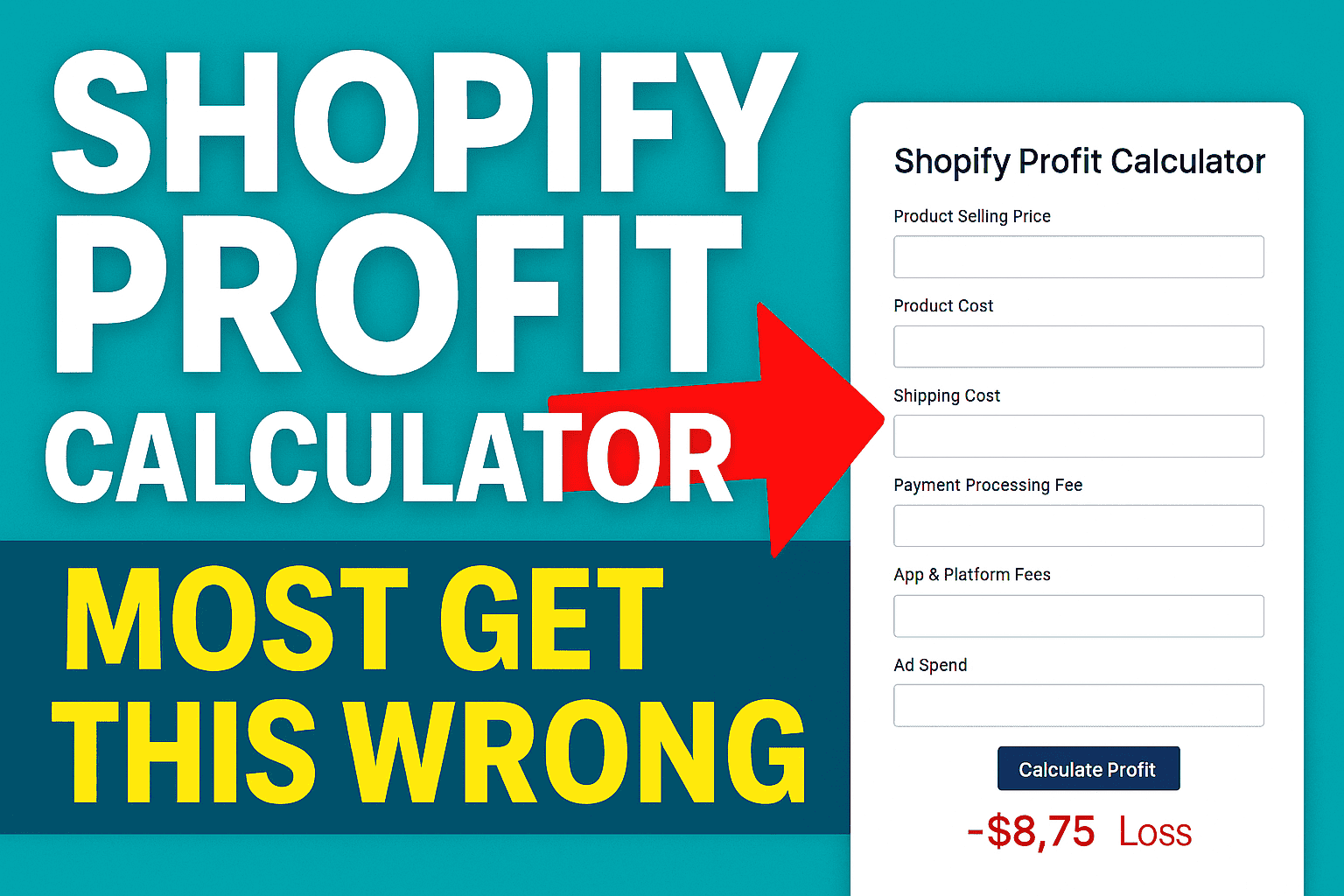
Many store owners believe their Shopify profit is healthy until they take a closer look. Sales volume, traffic, and revenue growth can feel reassuring, but revenue is not profit. For many Shopify businesses, the difference between the two is where margins quietly disappear.
Misunderstanding Shopify is one of the most common and expensive mistakes store owners make, especially as ad costs rise and competition increases.
The Hidden Reality Behind Shopify Profit
At first glance, Shopify appears simple. You sell a product, process a payment, and collect revenue. What often gets overlooked is how many costs are involved in every transaction.
Shopify plans affect platform fees. Payment methods determine processing rates. Shipping costs fluctuate. Apps introduce per-order expenses. Advertising quietly eats into margins. Individually, these costs seem manageable. Combined, they can dramatically reduce real Shopify profit.
This is why many products that appear profitable on paper struggle once traffic increases or ad spend scales.
Where Shopify Stores Lose Profit Without Realizing It
Most Shopify profit issues do not come from a single large expense. They come from multiple smaller costs that compound over time.
Shopify plan fees influence transaction costs. Payment method selection, whether online or in-person, changes processing fees. Shipping costs vary by carrier and destination. Advertising spend reduces profit with every order. App fees quietly add recurring per-sale costs.
When even one of these factors is ignored, store owners often scale products that were never truly profitable.
Why Shopify Profit Problems Appear During Scaling
Shopify miscalculations rarely show up early. They appear when stores begin to scale.
Increasing ad spend, adding more products, expanding fulfillment, or driving higher traffic exposes margin weaknesses that were previously hidden. At that point, losses can grow faster than revenue, and what looked like growth becomes financial pressure.
This is why many Shopify stores plateau or struggle — not because demand disappears, but because Shopify was misunderstood from the start.
Shopify Profit Clarity Changes Business Decisions
When store owners clearly understand their Shopify profit, decision-making improves across the board. Pricing becomes intentional instead of reactive. Ads are evaluated realistically. Underperforming products are identified earlier. Capital is allocated with confidence.
Profit clarity doesn’t just protect margins. It protects long-term sustainability.
Why Shopify Profit Tools Matter More Than Estimates
Selling on Shopify today leaves little room for guesswork. Customer acquisition costs are higher, margins are thinner, and competition is constant.
Using a dedicated Shopify calculator allows store owners to evaluate real margins instead of relying on assumptions or incomplete math. Accurate profit visibility helps reduce risk before increasing ad spend, ordering inventory, or launching new products.
You can evaluate your margins using the Quixess Shopify Profit Calculator, built to account for Shopify plans, payment methods, shipping, ads, and processing fees.
https://tools.quixess.com/tools/shopify-profit-calculator
Profit Awareness Is a Competitive Advantage
Many Shopify businesses focus on traffic and conversions while overlooking margin structure. Over time, this creates stores that look successful on the surface but struggle under financial pressure.
Understanding Shopify at a deeper level creates a competitive advantage. Store owners who know their true numbers can move faster, scale smarter, and avoid costly mistakes that stall growth.
Final Thoughts on Shopify Profit
Most Shopify stores don’t fail because they can’t sell products. They fail because they scale without understanding their true profit.
Profit isn’t what’s left over. It’s what you calculate correctly — consistently.
Quixess exists to help store owners sell more with less effort by replacing guesswork with clarity.