
Many store owners believe their WooCommerce profit is healthy simply because sales are coming in. Revenue dashboards look promising, orders are consistent, and traffic appears to be growing. But revenue is not profit — and for many WooCommerce stores, that misunderstanding becomes expensive over time.
Profit issues on WooCommerce rarely appear immediately. They surface during growth, when costs scale faster than margins.
The Reality Behind WooCommerce Profit
WooCommerce offers flexibility and control, but that freedom comes with complexity. Unlike marketplaces with bundled fees, WooCommerce profit depends on how multiple components work together.
Payment gateways charge processing fees. Shipping costs fluctuate. Advertising expenses scale with traffic. Hosting, plugins, and extensions introduce recurring costs. Individually, these expenses may seem small. Together, they quietly erode WooCommerce.
This is why many stores that appear successful struggle to maintain consistent margins.
Why Payment Processing Plays a Bigger Role Than Expected
One of the most overlooked factors in WooCommerce profit is payment processing. Different gateways, such as Stripe or PayPal, apply different transaction fees. These fees apply to every order and increase as sales volume grows.
Because payment fees scale automatically with revenue, they often become a silent margin killer. Store owners who fail to account for them accurately tend to overestimate real profit.
Shipping, Ads, and the Margin Compression Problem
Shipping costs are another major factor affecting WooCommerce profit. Even when stores offer free shipping, the cost still exists — it’s simply absorbed into the margin.
Advertising compounds the issue. Paid traffic is essential for growth, but ad spend reduces profit on every sale. As ad costs increase, margins tighten. Without clear visibility, stores often scale products that were never profitable to begin with.
Why WooCommerce Profit Issues Appear During Scaling
WooCommerce profit problems rarely show up at low volume. They appear when stores increase ad spend, add more products, or push higher order volume.
At that stage, small miscalculations turn into large financial gaps. Stores grow revenue but struggle with cash flow, inventory planning, and sustainability. What feels like growth becomes pressure.
Profit Visibility Changes Decision-Making
When store owners understand their true WooCommerce profit, decisions become clearer. Pricing becomes intentional. Ads are evaluated realistically. Products with weak margins are identified early. Resources are allocated more efficiently.
Profit clarity is not just about protecting margins — it’s about building a store that can scale without breaking.
Why Accurate WooCommerce Profit Tools Matter
Guesswork is no longer enough in modern eCommerce. Rising ad costs and competition leave little room for error.
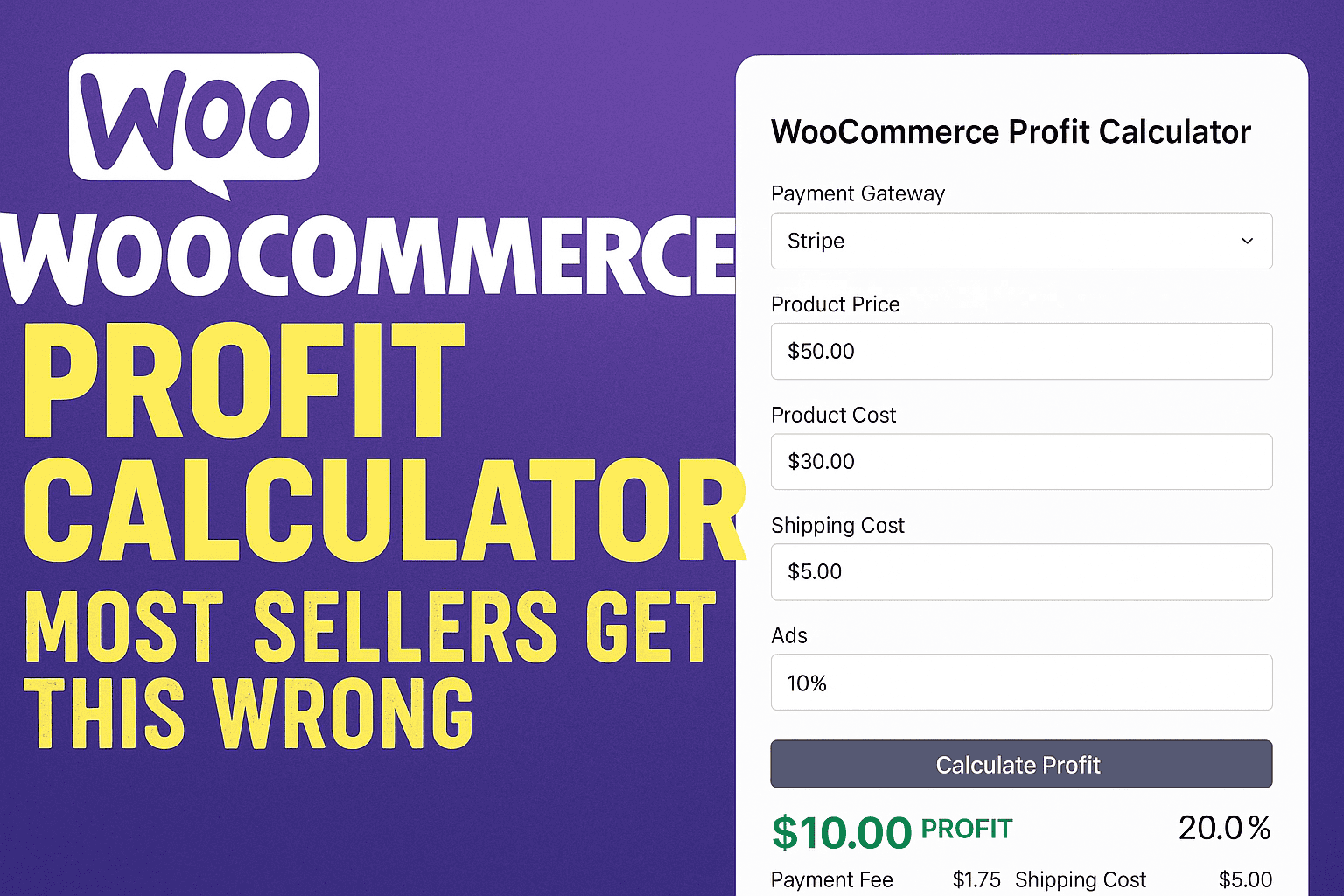
Using a dedicated WooCommerce calculator allows store owners to evaluate real margins by accounting for payment processing, shipping, ads, and other costs that are often overlooked.
You can assess your margins using the Quixess WooCommerce Profit Calculator, built to help sellers understand real profit before scaling.
https://tools.quixess.com/tools/woocommerce-profit-calculator
WooCommerce Profit as a Competitive Advantage
Many WooCommerce stores focus heavily on traffic and conversions while ignoring margin structure. Over time, this creates businesses that look successful on the surface but struggle behind the scenes.
Understanding WooCommerce profit creates a competitive advantage. Stores that know their numbers can scale confidently, adjust pricing faster, and avoid the mistakes that stall growth.
Final Thoughts on WooCommerce Profit
Most WooCommerce stores don’t fail because they can’t sell products. They fail because they scale without understanding profit.
Profit isn’t what’s left over. It’s what you calculate correctly — consistently.
Quixess helps store owners sell more with less effort by replacing assumptions with clarity.